The monster is a mystery with a human-sized answer
A masked villain lets a Scooby-Doo story begin as a creature feature and end as a detective story. The gang first encounters something that seems impossible to reason with: a ghost appears in a spooky place, or a monster seems to have abilities no ordinary person could possess. That fear gives the mystery urgency. The chase scenes keep it lively while the gang gathers clues.
The disguise also makes the puzzle fair. A supposedly supernatural figure can appear and vanish, but the episode can leave behind ordinary traces: a footprint, a costume part, or evidence that someone had access to a room. Once the gang connects those details, the monster’s apparent powers become tricks a person could manage.
Why a culprit would want the disguise
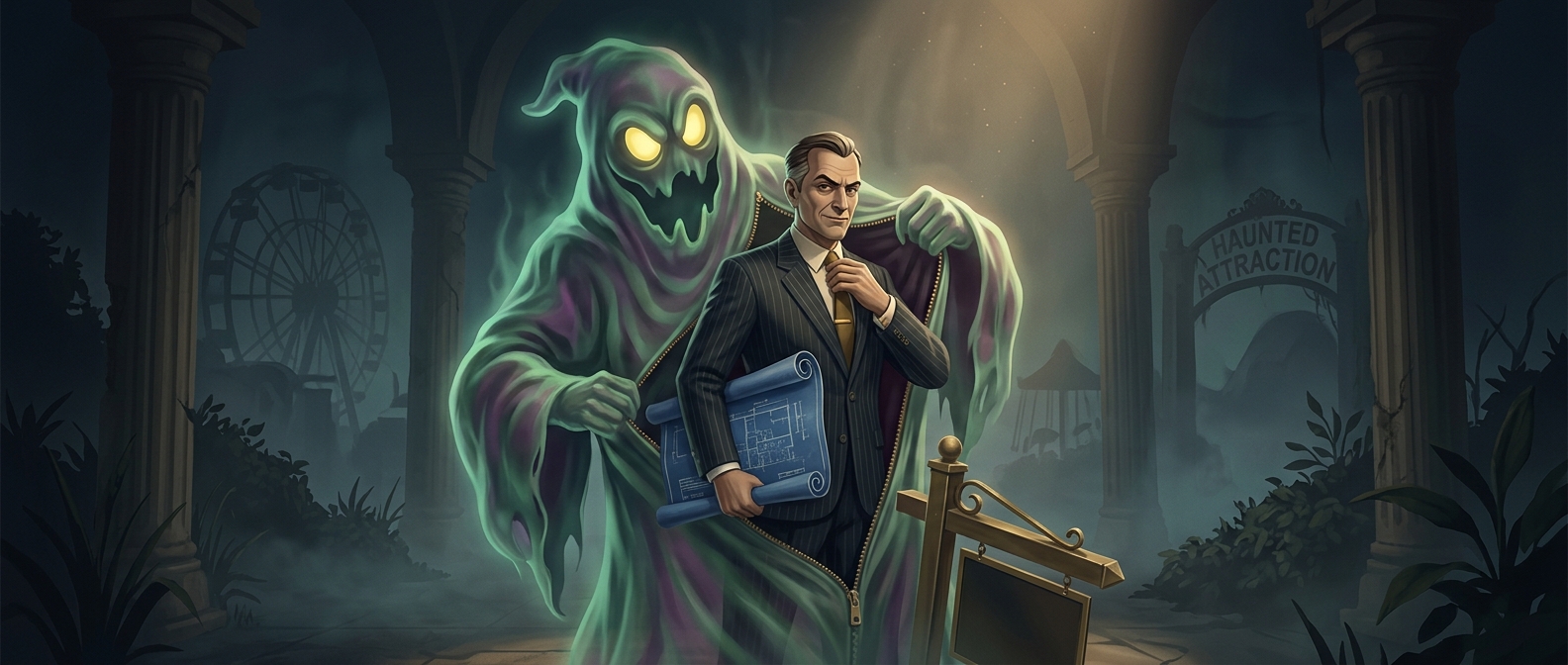
The unmasking works best when the creature is not just a costume but a tool. A frightening reputation can keep people away from a building or a stretch of land, making it easier for a schemer to pursue a practical goal—such as taking control of property—without interference. The disguise hides the culprit while making witnesses less likely to investigate closely.
That motive gives the mystery a satisfying change of scale: the threat looks otherworldly, but the explanation is recognizably human. The gang does not defeat magic; it uncovers what someone stood to gain and how the scare was staged.
The reveal is part of the pleasure
Because viewers know a person is likely behind the mask, they can watch for clues and suspect the characters they meet along the way. The final unmasking resolves two questions at once: who was creating the frightening spectacle, and why? It also restores a world where eerie appearances can be questioned—and where a monster’s most revealing feature may be the ordinary motive underneath.