How a British cartoon can enter an American toddler’s vocabulary
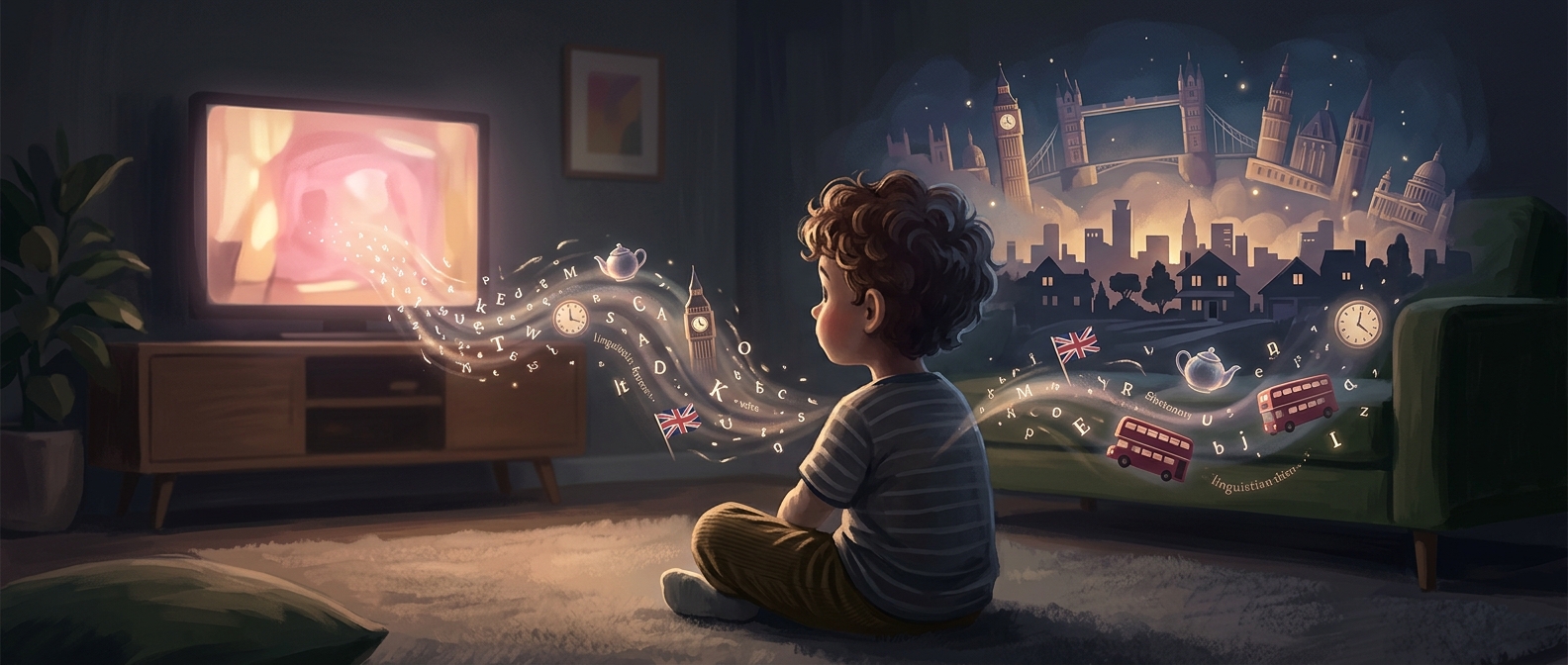
Toddlers learn words by hearing them used in situations they can understand. In Peppa Pig, British characters repeatedly talk about ordinary things—such as going on holiday—while the story shows what those words mean. A child may pick up the word along with the scene, even if adults at home usually say “vacation.”
The same goes for pronunciation. Repeatedly hearing a character say “tomato” in a British accent can give a toddler another sound pattern to imitate. Young children often copy speech they hear from familiar voices; they are practicing language, not making a deliberate choice about which national accent to use.
A borrowed word is not a changed dialect
A child might use “holiday” for a family trip and still use American words and pronunciations elsewhere. Early vocabularies are assembled from many sources—family, childcare, books, and screens—and children may try out a word from one source without adopting its wider dialect.
That makes a small linguistic switch a useful reminder of how learning happens: a cartoon does not need to teach a lesson explicitly. A character’s recurring phrase, attached to a clear and memorable event, can be enough for a toddler to carry the word into everyday conversation.