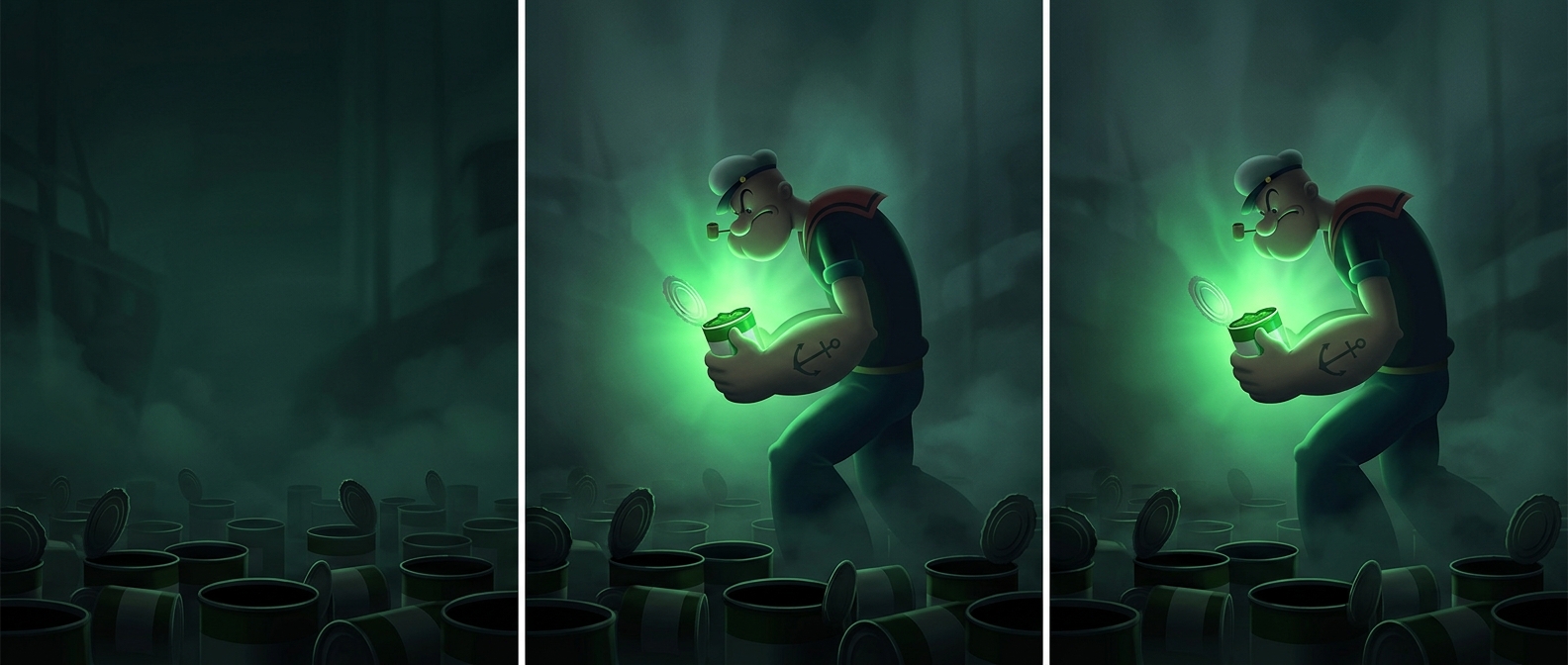
A can turned spinach into a superpower
Popeye did more than eat spinach: he made it the visible cause of his sudden strength. When trouble arrived, he would gulp down a can, his muscles would swell, and he could take on an opponent. The repeated sequence gave children a simple, memorable reason to care about a vegetable they might otherwise have found unappealing.
The canned spinach mattered, too. It was a ready-to-eat prop Popeye could produce and consume in the middle of a tussle, making the transformation quick enough for a comic gag or cartoon scene. The can became part of the character’s identity, so the message traveled far beyond any single story: spinach was what powered Popeye.
From screen joke to dinner-table influence
Children who watched or read Popeye could carry that association into everyday life. Asking for spinach—or being more willing to try it—let them imitate a favorite character. For parents, the same story offered a convenient pitch: eat the vegetable and you might feel strong, too. That is how entertainment could influence demand without functioning as a formal advertisement.
The effect was cultural, not a guarantee that every child changed their diet. Popeye helped make spinach unusually recognizable and gave it a positive, action-packed image. A vegetable became easier to sell to children when it came with a hero, a can, and an instantly visible payoff.