A story built around a toy shelf
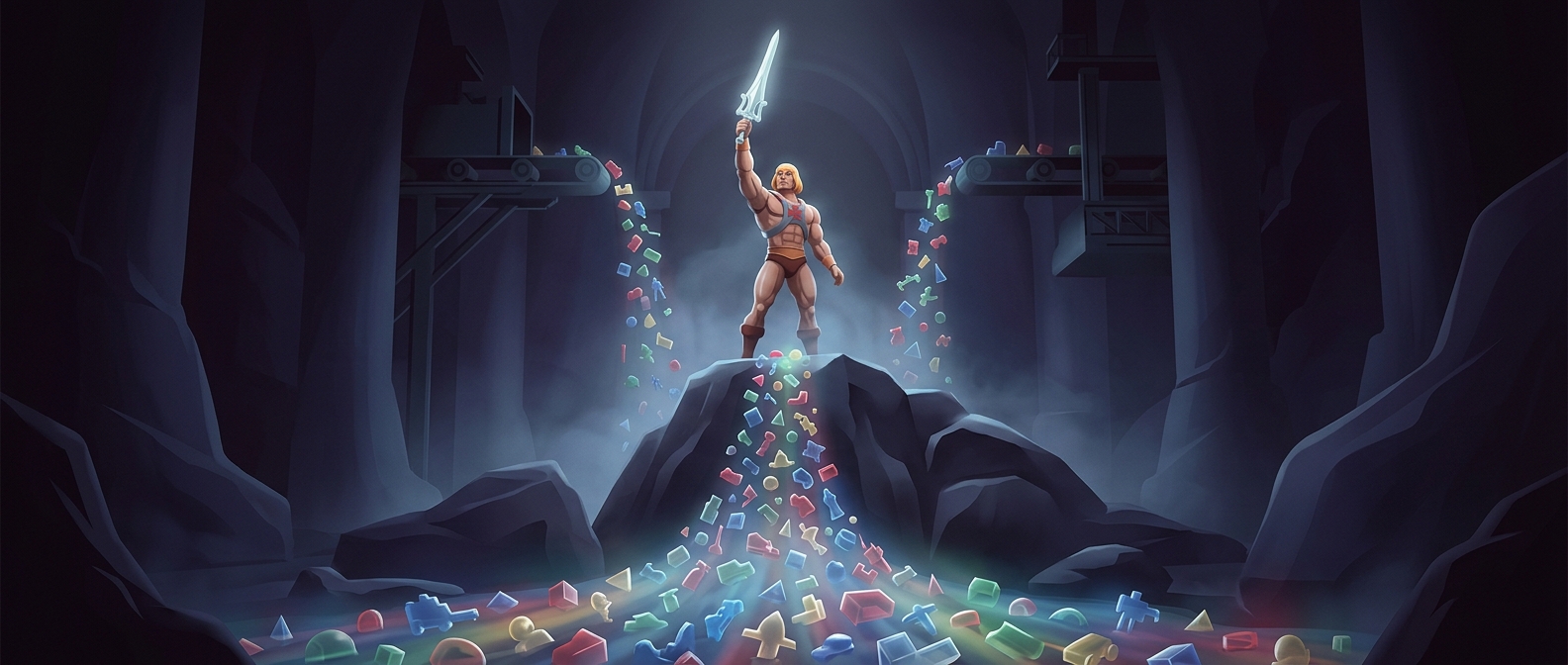
When Mattel developed Masters of the Universe, the first challenge was not to invent a complete fantasy world. It was to make a new action-figure line that could stand out in a crowded toy aisle. The figures’ exaggerated builds and strong silhouettes made them easy to recognize, while weapons and accessories gave children something to do with them beyond simply pose them.
That product-first approach shaped the fiction. He-Man, Skeletor, and the other characters were designed as distinct play roles—hero, villain, ally—so a child could stage a conflict using the toys. Eternia gave those clashes a setting, and Castle Grayskull supplied a dramatic prize to fight over. The lore turned separate figures into pieces of one expandable play world.
The package helped tell the tale
Early figures came with illustrated mini-comics that introduced characters and suggested adventures. These short stories did practical work: they gave a child a reason to imagine how the toys fit together, and they made each new character feel like part of a larger cast. The fiction was not an afterthought in the sense of being useless; it was a way to make the products more inviting and easier to play with.
The animated series that followed carried the same world to a much larger audience. It could give characters voices, motives, and recurring conflicts that a small toy and its packaging could not convey on their own. That helped keep the line’s setting familiar as new figures appeared.
The result was a feedback loop: toys introduced characters, stories made children care about them, and that interest made additional toys more appealing. In Eternia, a castle was a place in the story; on a child’s floor, it was also a reason to bring the figures together.