What moves from the vegetable into the water
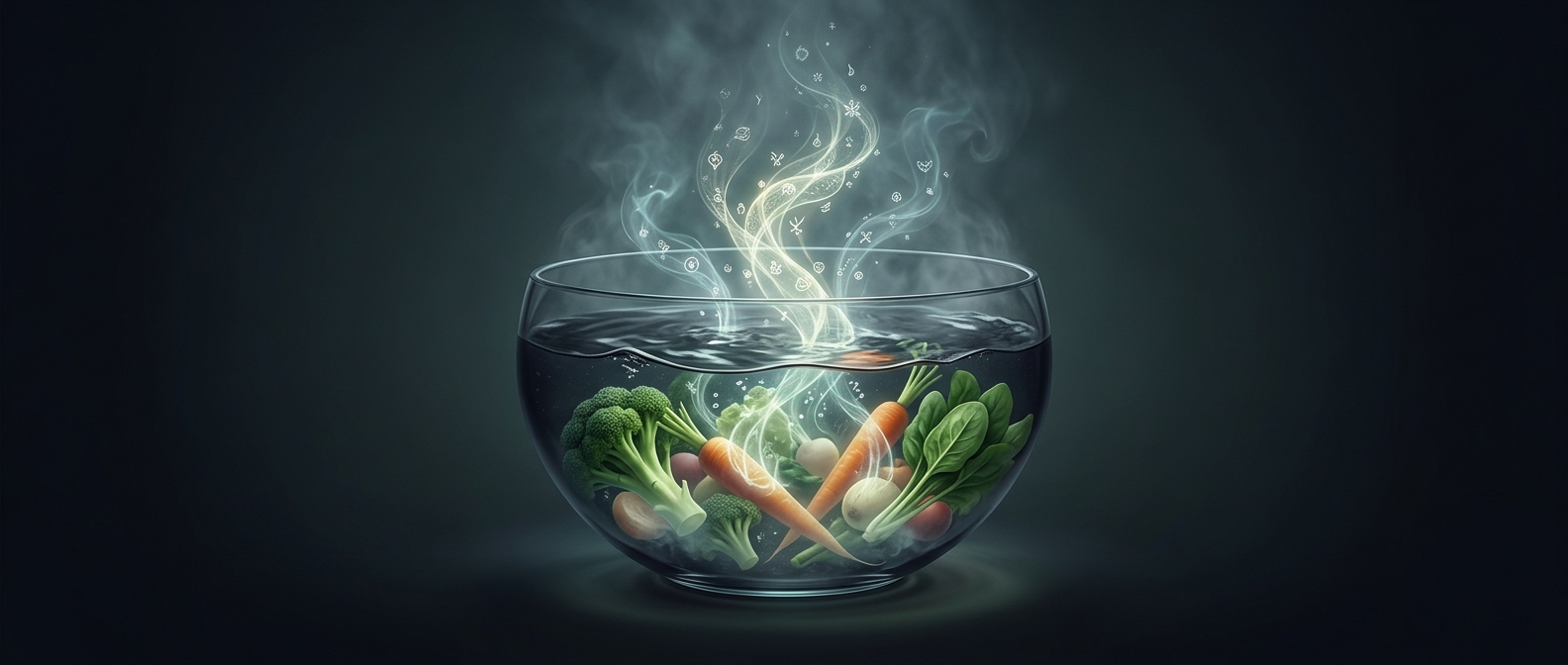
When vegetables are cut and heated in water, their cells soften and their structure becomes more permeable. Some water-soluble nutrients—especially vitamin C and several B vitamins—can then pass from the vegetable into the surrounding water. Minerals can leach out as well. The process is a transfer, not necessarily destruction: the cooking liquid may contain some of what the vegetables lost.
How much moves depends on the vegetable, how small it is cut, how long it cooks, and how much water surrounds it. Smaller pieces expose more surface to the water, while longer boiling gives dissolved nutrients more time to escape. Heat can also break down some sensitive vitamins, so not everything that leaves the vegetable remains intact in the pot.
The liquid determines what you keep
If the cooking water is poured down the drain, nutrients dissolved in it go with it. In soups and stews, the broth is eaten too, so those nutrients can still be part of the meal. Steaming or microwaving with little water generally limits the amount available to leach away; shorter cooking also reduces exposure to heat and water.
Boiling is not automatically a poor choice. Cooking softens vegetables and can make some compounds easier for the body to access. The practical tradeoff is simple: if you boil vegetables, using the liquid in the dish can turn the pot itself into part of the meal rather than a nutrient-rich drain.