The helicopter made the chase a live broadcast
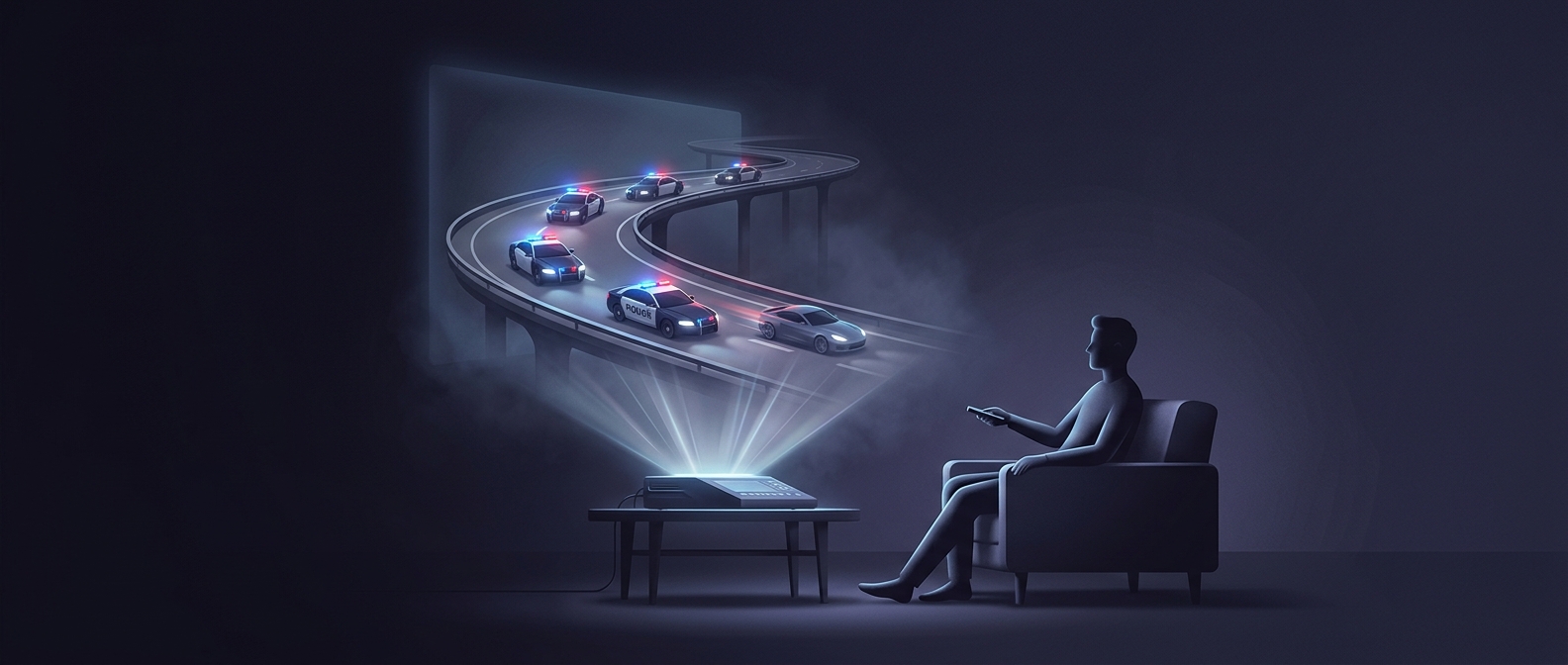
A pursuit that might be hard to follow from the ground became unusually legible from the air. Television helicopters, already used to show traffic conditions, could track a moving car across streets and freeways while sending pictures back to the station. Viewers saw the route unfold in real time, even as the car moved beyond any one neighborhood or camera crew.
That continuous view changed the format of a local news story. Instead of a brief report assembled after the event, broadcasters could stay with one unfolding scene. Anchors filled pauses by describing what the helicopter showed and explaining where the car was headed. The chase itself supplied the next development: a turn, a traffic slowdown, a change in speed, or a stop.
Why stations kept watching
Live pictures gave stations something rare in routine afternoon news: a dramatic event that did not require a reporter to reach the scene before coverage began. The helicopter could provide footage immediately, and the open-ended nature of a pursuit made it easy for a broadcast to continue as long as the story did.
The same qualities that made the coverage compelling also raised a difficult question. A pursuit is a dangerous police operation, not a performance staged for an audience. Continuous coverage could expose viewers to risk in real time, while the attention surrounding a chase could make restraint harder to see than action. The spectacle came from watching an uncertain event unfold—but the people inside it were not playing a role.