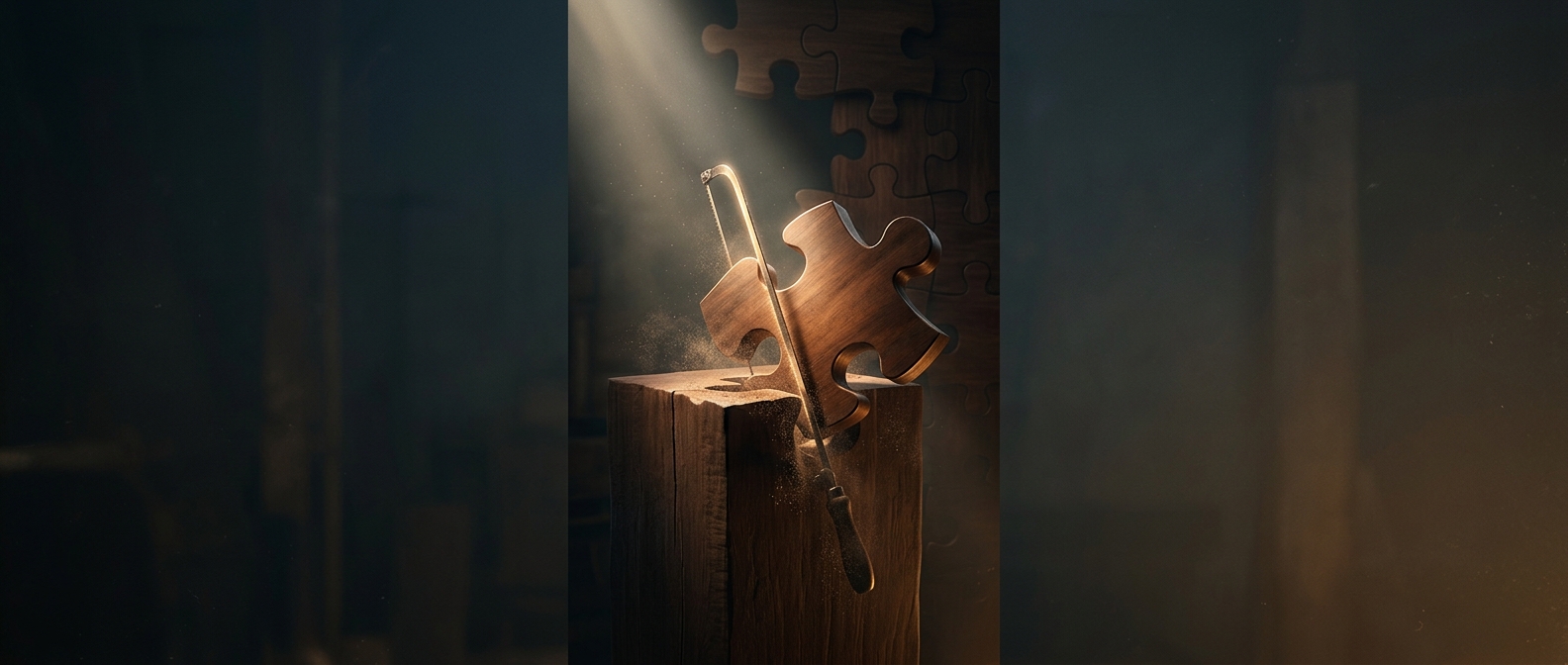
A picture puzzle began as a prepared surface
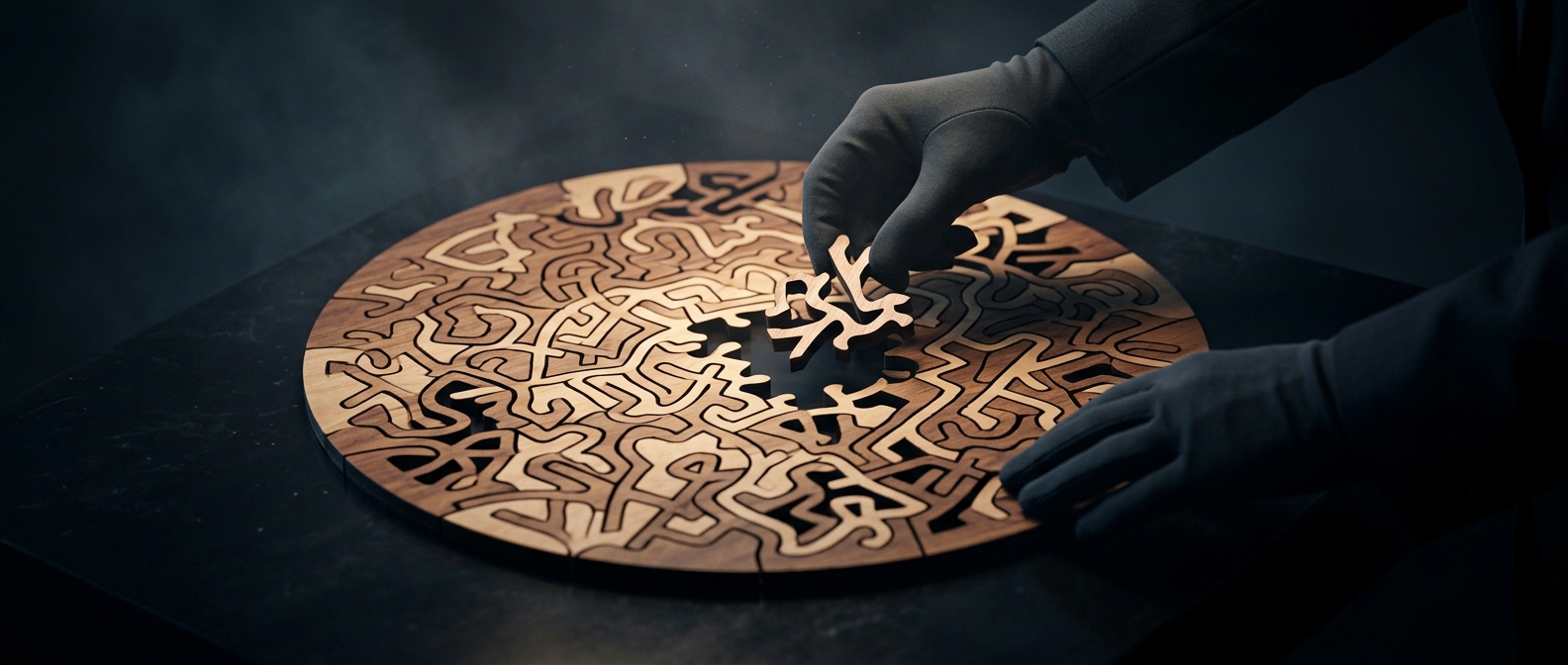
Before puzzle makers could print images cheaply on cardboard, they had to make each one as a small woodworking project. A picture was painted or printed on a wooden panel; a craftsperson then guided a fine saw through it, turning the image into separate pieces. The cut followed the picture rather than being stamped into a standard pattern, so the shapes could be irregular and the finished set unique to that panel.
That method demanded care at two stages. The image had to stay attached to the wood, and each cut had to pass through the panel without splintering or straying far enough to ruin the design. A thin, delicate saw made intricate cuts possible, but the work was slow and depended on skilled hands.
Weight changed how a puzzle was handled
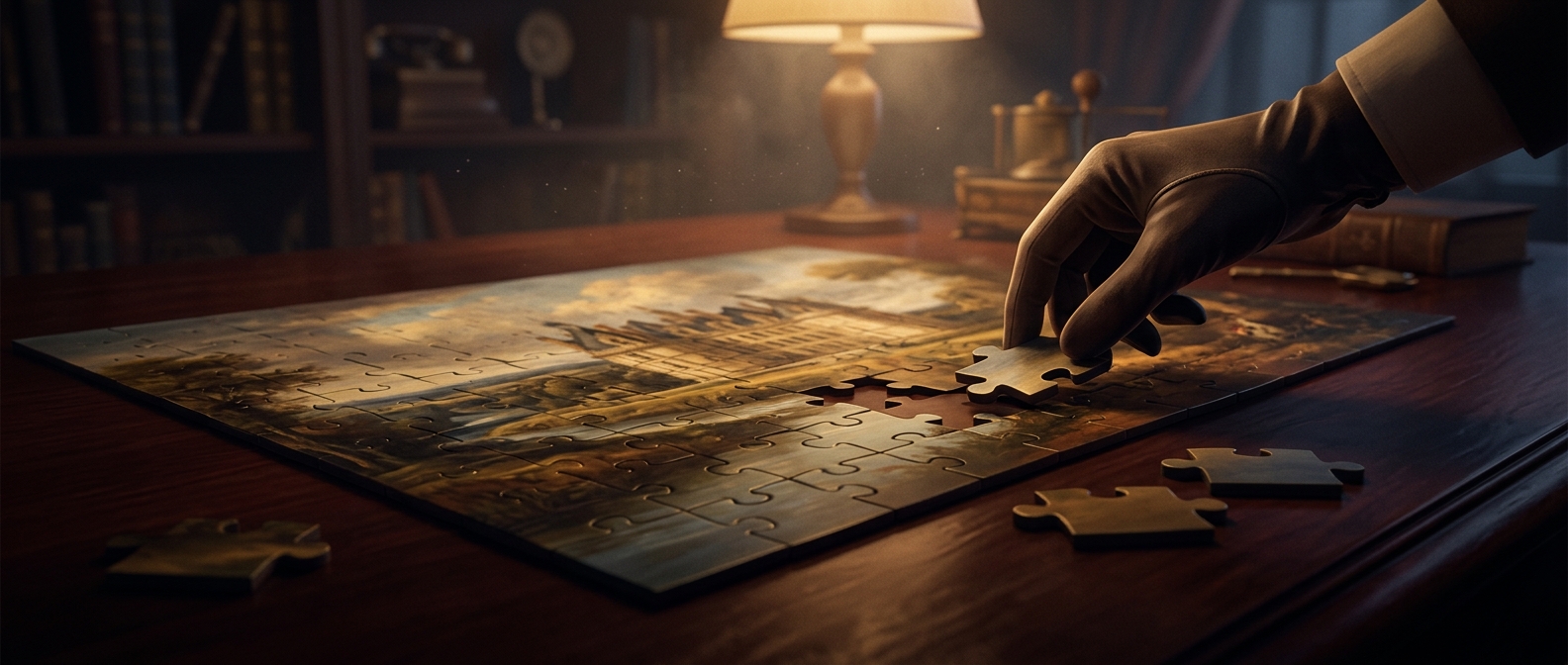
A wooden puzzle was not a lightweight stack to tuck away and bring out anywhere. Its pieces were substantial, and they could not be replaced easily if one went missing or broke. The material also shaped the play: rather than relying on mass-produced interlocking tabs, solvers used the painted image and the fit of individually cut edges to work out where pieces belonged.
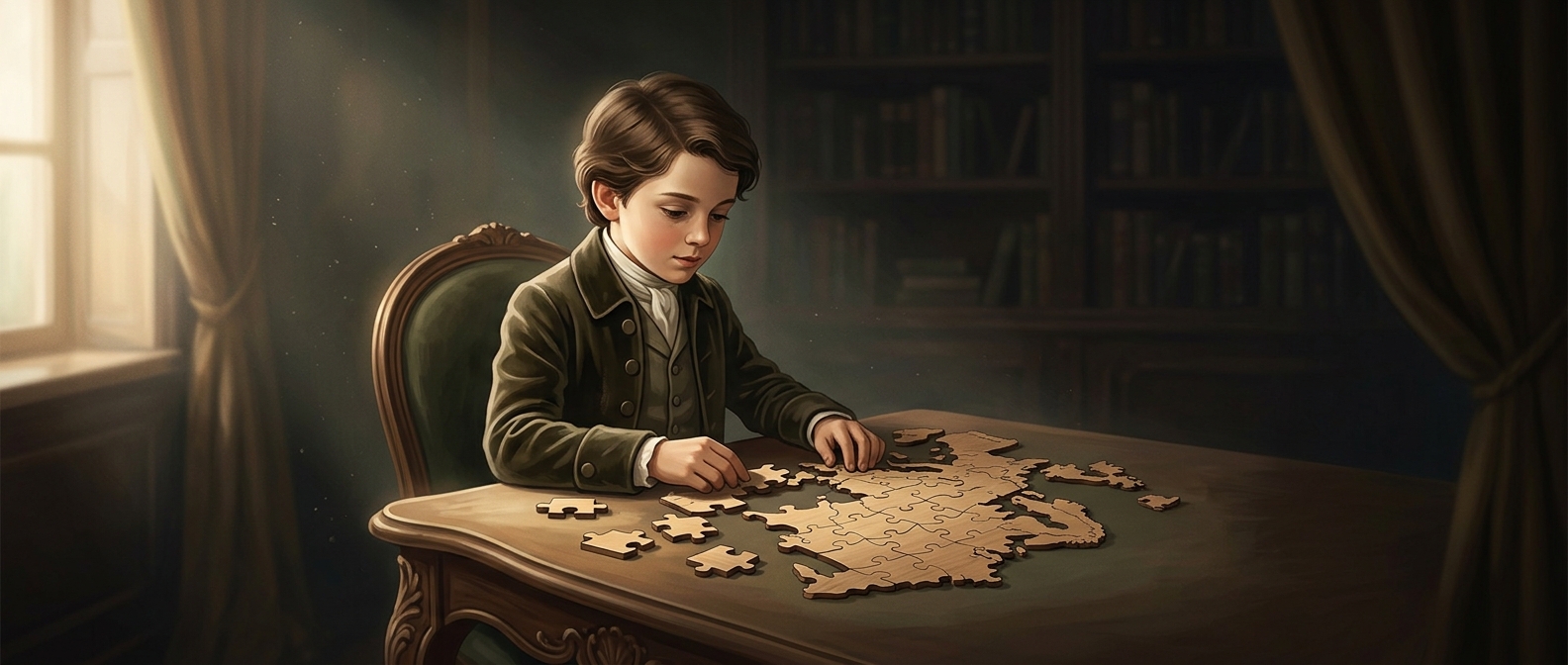
Early picture puzzles were often used to make images—especially maps—into hands-on learning tools. Cutting the picture apart turned looking into an active task: the learner had to reconstruct the whole from its parts. The tradeoff was clear: wood made a durable surface for a hand-crafted image, but every puzzle carried the weight and labor of its making.