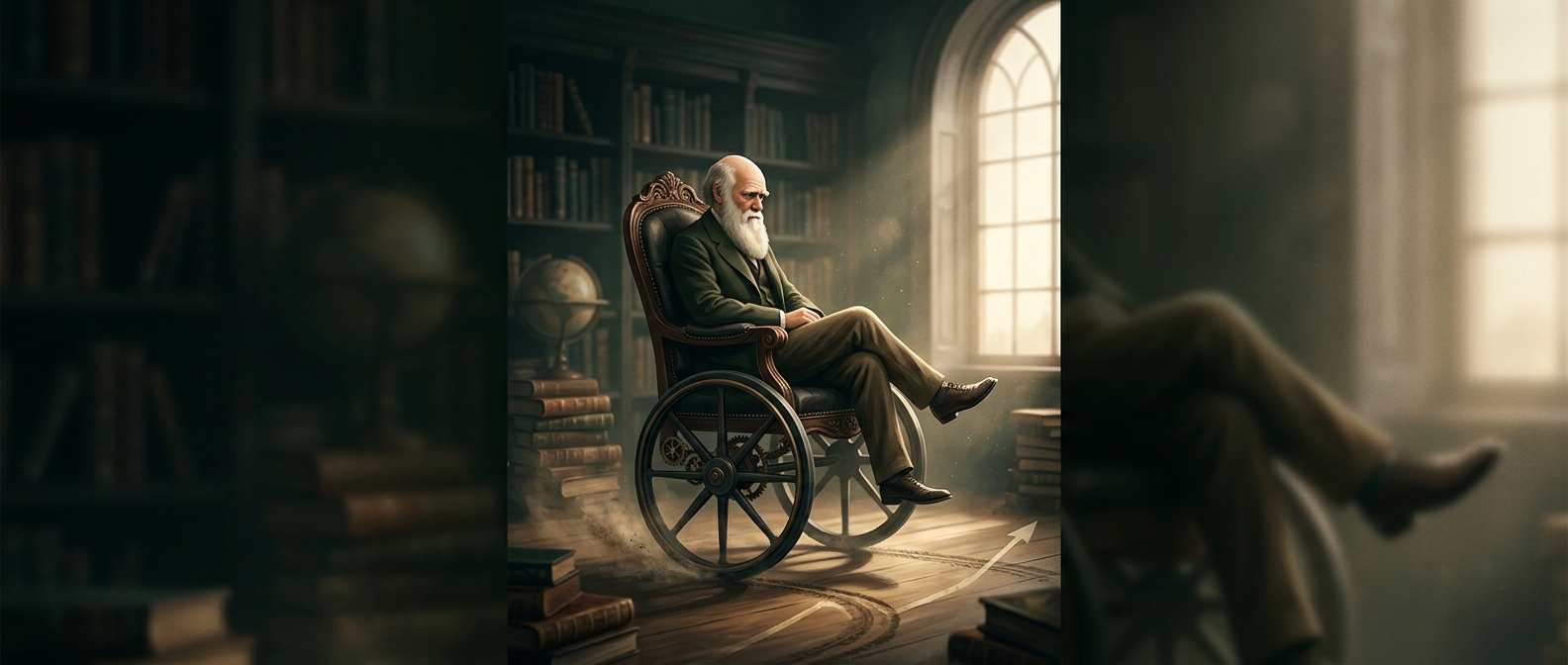
A chair redesigned around the work
Charles Darwin’s rolling chair grew out of a practical problem: his work moved between specimen tables, but an ordinary armchair stayed put. Rather than repeatedly getting up and repositioning himself, he adapted the chair so he could move with less interruption.
The change was simple but consequential. Darwin removed the legs and fitted the chair with iron castors—small wheels mounted to supports. Instead of lifting or dragging the chair, he could roll it across the floor to another table. The chair became a tool for organizing the space around his work, not merely a place to sit.
A small change in how work moved
The idea was not a grand new machine; it was a familiar object modified to solve a specific inconvenience. Its importance lies in that shift: the work area no longer had to remain within reach of a fixed seat. The seat could come to the work.
That is the practical insight behind Darwin’s chair. A few wheels turned the repeated effort of standing, moving, and sitting into a simple roll from one task to the next.