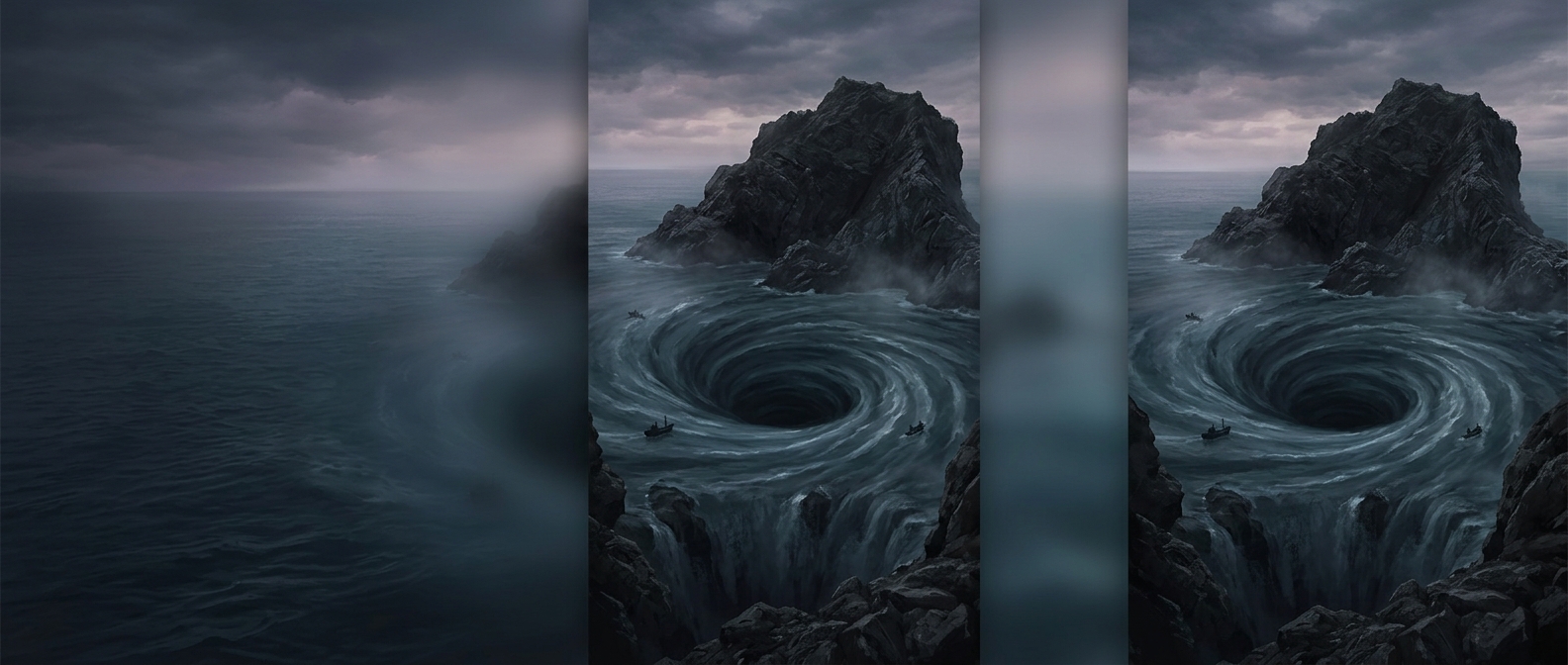
A Hole Shaped by the Surf
Thor’s Well sits on Oregon’s rocky Cape Perpetua shoreline, where waves meet a rough platform of dark volcanic rock. The opening is commonly understood as a sea cave whose roof collapsed, leaving a hole that connects the exposed surface to the ocean below. It is not a pit draining into the earth: seawater moves through it as part of the same restless shoreline.
Why the Water Seems to Vanish
As waves push against the coast, water spills into the opening and is forced upward, sometimes bursting out in spray. When a wave retreats, the water level in the hole falls with it. Repeated surges and withdrawals create the striking cycle: the hole fills, foams, and appears to empty again. A rising tide lifts the water around the well, while individual waves determine the abrupt pulses that make the display so dramatic.
That motion can be hard to judge from a photograph—or from a seemingly calm moment on the rocks. Waves can wash over the ledge, and wet coastal stone offers little secure footing. The well’s appeal comes from watching the ocean’s pressure and retreat meet at one small opening; the same forces that make it mesmerizing can make the edge hazardous.