One creator, many connected jobs
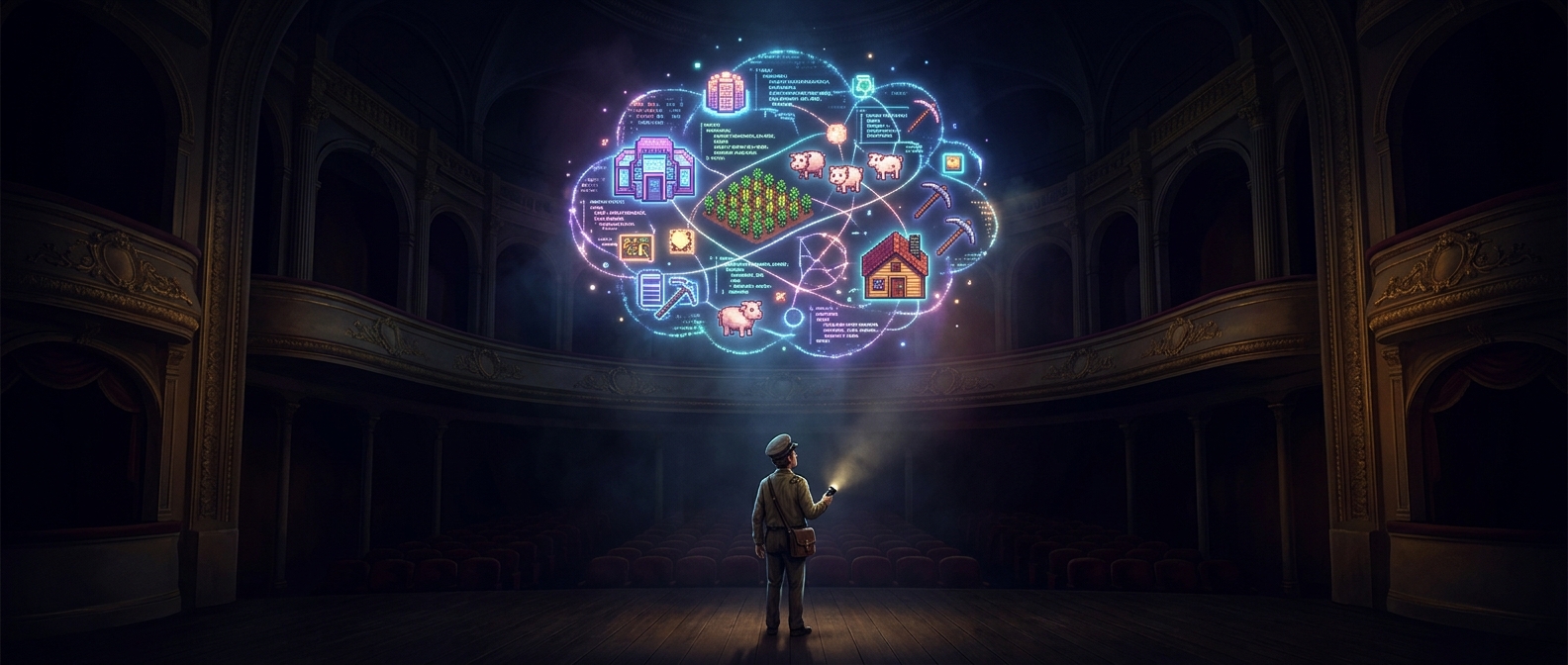
Stardew Valley looks like a farming game, but its small-town world depends on several kinds of work fitting together. Crops grow according to seasons; the player can also fish, explore mines, build relationships, and improve a farm. Each activity needs its own rules, artwork, sounds, and links to the rest of the game.
Eric Barone built those pieces himself. That meant learning not just how to write code, but how to make pixel art, compose music, and create the systems and events that give the town its daily rhythm. The four years of preparation were not simply time spent programming: they were time spent acquiring the different crafts needed to make one coherent game.
Why the pieces had to work together
In a game with changing seasons, a design choice in one area can affect several others. A crop must look right, grow on a schedule, and fit the calendar; the calendar, in turn, shapes what the player can do and when. Town characters and activities give those routines a wider purpose, so farming feels connected to life beyond the fields.
Building this alone gave Barone direct control over how those systems fit, but it also made him responsible for every major creative and technical task. The result is a game whose apparent simplicity rests on many coordinated decisions—and a striking example of how much a single developer can create by teaching himself the skills the project requires.