From a route map to a game of choices
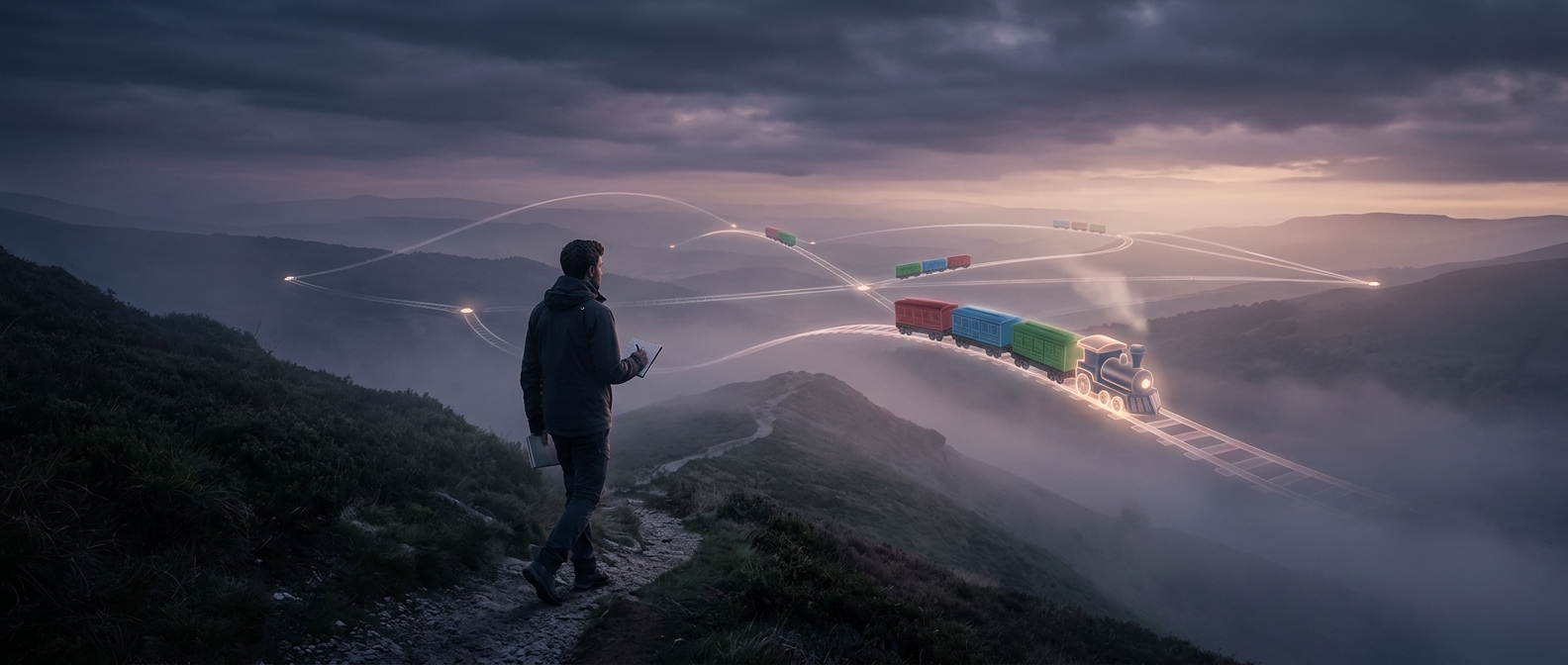
A network of train lines is more than a picture: it gives players a shared space where every connection can help one person and obstruct another. In Ticket to Ride, players collect colored train cards and spend matching sets to claim routes between cities. The map makes the consequences visible. A line that looks like one small step on the board may be the link that completes a longer journey.
Why the network creates tension
Players also have destination tickets—goals that reward connecting particular cities. That gives each player a private reason to care about the public map. A route can advance your own plan, but it can also close off a useful path for someone else. The central decision is whether to claim a connection now, while it is available, or save cards for a more valuable stretch later.
That tension depends on the map’s interlocking routes. If every journey had its own isolated track, players could pursue goals without affecting one another. Shared links make the board feel like a living network: one claimed route changes what remains possible.
The sketch’s lasting shape
The beachside idea became a design built around a simple visual promise: trace a journey from city to city, then compete over the pieces of track that make it possible. The map is not just scenery behind the cards. It is the game’s decision-making surface, where private objectives meet public bottlenecks.