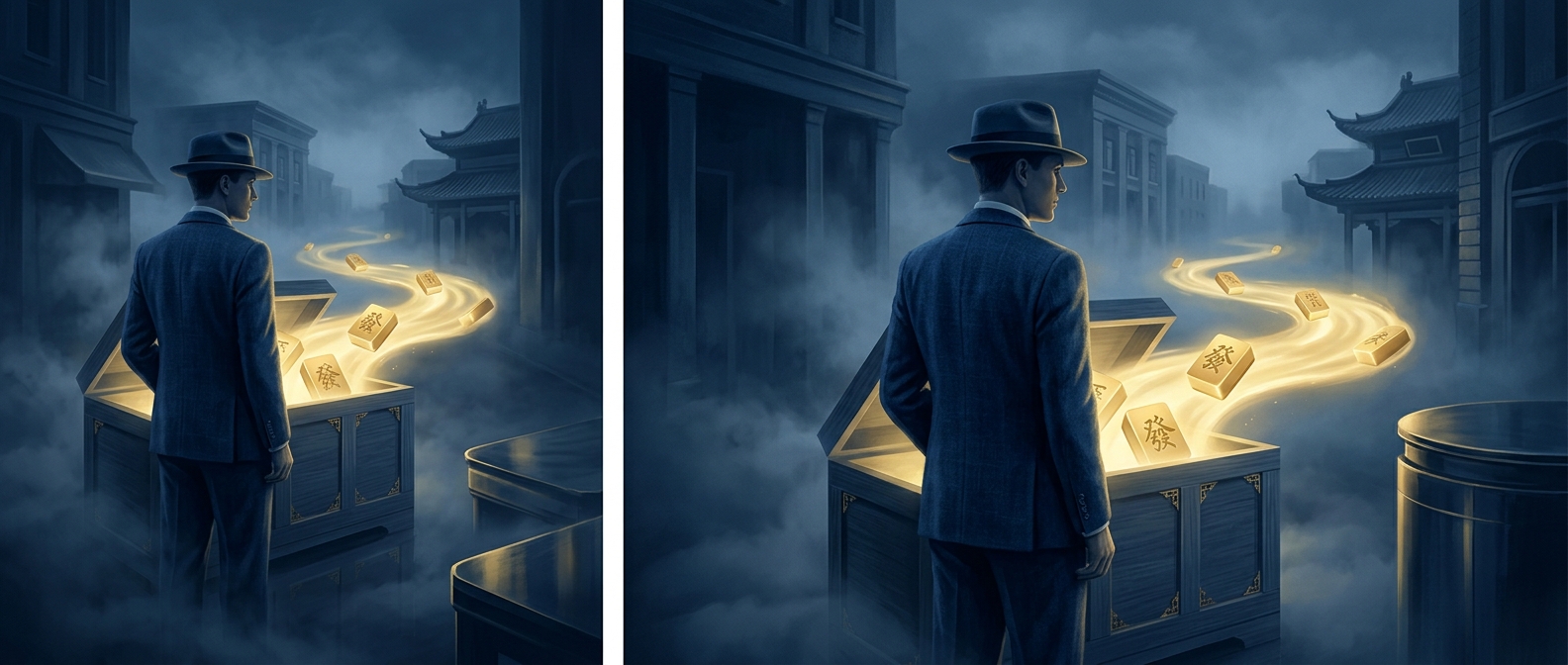
How a game became a living-room purchase
Mahjong was not just a box of tiles. A playable set also needed racks to hold the tiles upright and instructions to help newcomers learn the rules. By stocking these imported pieces, Abercrombie & Fitch made a game that might have seemed unfamiliar easier to take home and try.
That mattered during the 1920s mahjong craze, when the game spread beyond the circles where people already knew how to play. Retailers could meet that interest with a ready-to-use package: customers could buy the equipment and bring the activity into their own homes.
Selling the experience, not just the gear
The set’s parts served different roles. Tiles carried the symbols players matched and arranged; racks kept each player’s hand organized; instructions made the rules more accessible. Together, they turned mahjong from an idea into something a household could set up around a table.
That is how a retailer helped popularize a game without inventing it: by putting the tools and guidance within reach at the moment public interest was growing. Abercrombie & Fitch’s role was not merely to sell objects, but to package a social pastime for customers to adopt.
A different kind of retail identity
The episode also shows why the store’s early identity cannot be reduced to the clothing brand many people know today. In the 1920s, its merchandise could include equipment for leisure and home entertainment. A mahjong set offered more than a purchase—it gave buyers a way to host a game night, with the tiles, racks, and instructions ready to go.