How a Frost Turned Coffee Into a Government Stockpile
The 1975 frost struck Brazil’s coffee industry hard, wiping out a large share of the coffee available for export. With less coffee reaching the market, prices faced sharp upward pressure. The government responded by buying coffee—not to create more beans, but to support prices and cushion the market from the shock.
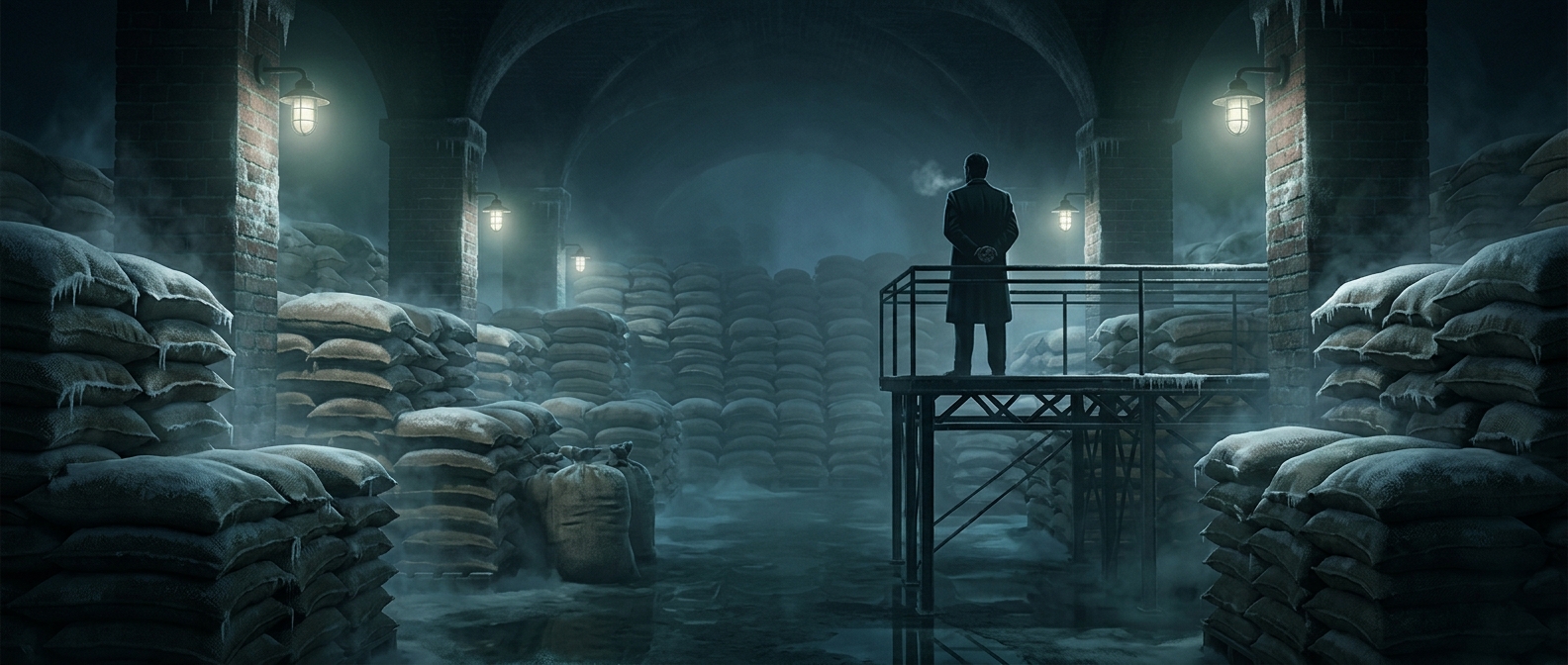
That intervention shifted some of the risk from growers and traders onto the state. When the government purchases coffee, it removes beans from immediate sale, helping prevent a sudden shortage from sending prices even higher. The stored coffee becomes a reserve that can, in principle, be sold later.
Why the Reserve Outlasted the Crisis
A stockpile built for an emergency does not disappear when the emergency passes. Brazil’s coffee production could recover, but officials still had to decide when and how to sell the beans they had bought. Releasing a large reserve all at once could put fresh downward pressure on prices—the very outcome the purchases were meant to prevent.
So the inventory could linger, managed through later sales rather than cleared immediately. Decades on, officials were auctioning some of it as “legacy” coffee: a label that marked the beans as inherited stock, not a fresh harvest. The frost’s effects thus reached beyond damaged crops and lost export income. A policy designed to steady a crisis-era market left the government with coffee to account for long afterward.