A rhythm chart becomes a stage
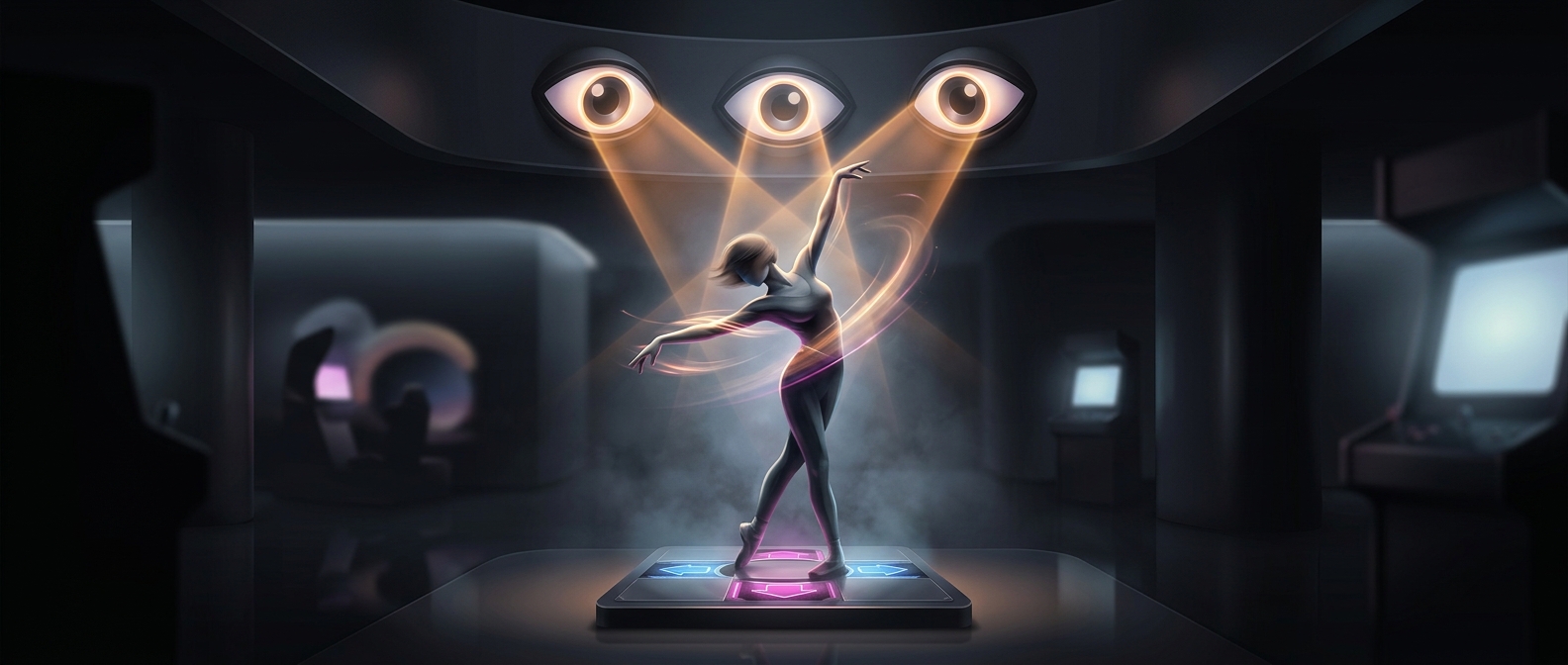
In Dance Dance Revolution freestyle, the arrows still set the task: players must step on the matching panels in time with the music. But a freestyle run is built to read as a performance, not merely a clean sequence of inputs. The player may shape movements between required steps, adding turns, floorwork, or dance gestures that make the routine feel connected to the song.
That creates a balancing act. The chart dictates where the feet must land and when, while the performer decides how to fill the spaces around those demands. A flourish that disrupts timing can cost accuracy; a precise but visually plain run may not make much of an impression. The challenge is to make the two layers look like one choreography.
Why the spectacle matters
Freestyle competitions can reward more than hitting arrows, including presentation and originality. Costumes help establish a character or mood, while breakdance-inspired moves and gymnastics make the player’s body part of the show. These choices are not just decoration: they give judges and spectators something to evaluate beyond the game’s visible timing and scoring.
The dance pad also imposes a real constraint. Its panels occupy fixed positions, and the player must keep returning to them for the chart’s steps. A move that looks dramatic has to fit the available space and leave the performer ready for the next cue. The strongest routines make a demanding game chart look like the music is directing the whole performance—not interrupting it.