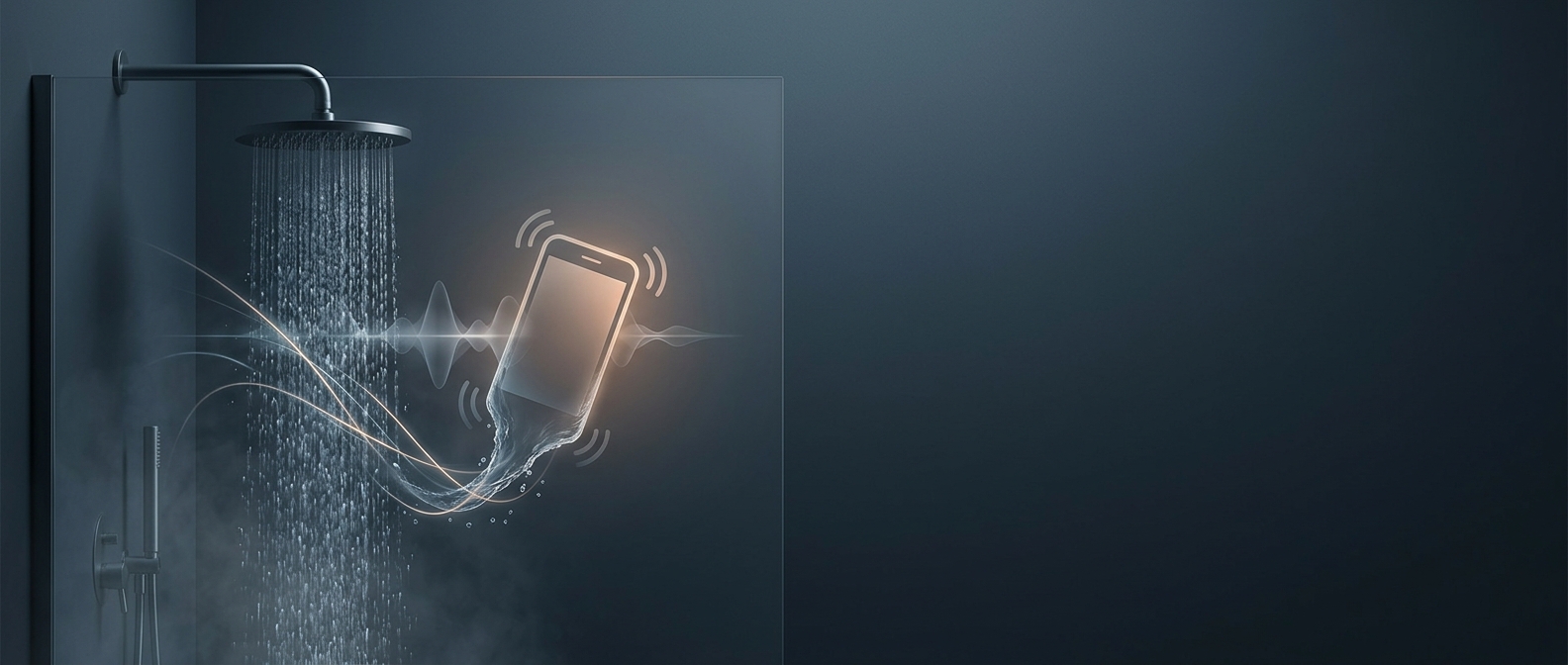
Why a hiss can turn into a ringtone
A shower produces a dense mix of splashes and hiss, with little quiet between sounds. That steady wash can mask other sounds: it makes faint, real signals harder to hear and leaves the soundscape less distinct. Against that blur, small rises, dips, or repeated splashes may resemble the rhythm of a familiar ringtone.
Your brain does more than receive sound
Hearing is not a passive recording. The brain sorts incoming noise into likely sources and patterns, using both the sound itself and what it expects to hear. A ringtone is a pattern you know well, and if you are waiting for a call, that expectation can make a vague sound seem especially phone-like.
This kind of mistaken pattern recognition is sometimes called auditory pareidolia: perceiving a meaningful sound in ambiguous noise. The experience is real, but the apparent ring need not come from an actual phone. A brief splash or change in the water’s pitch can supply just enough of a familiar contour for the brain to complete the pattern.
Why it can feel convincing
The shower’s noise does not literally contain a hidden ringtone. Instead, it makes the evidence harder to interpret, while familiarity and attention steer interpretation toward a likely sound. That is useful in ordinary life—quickly recognizing a voice or alarm can matter—but it also means perception can sometimes settle on a pattern that is not there.
So when the water seems to ring, your brain may be doing what it usually does: making a fast best guess from incomplete sound.