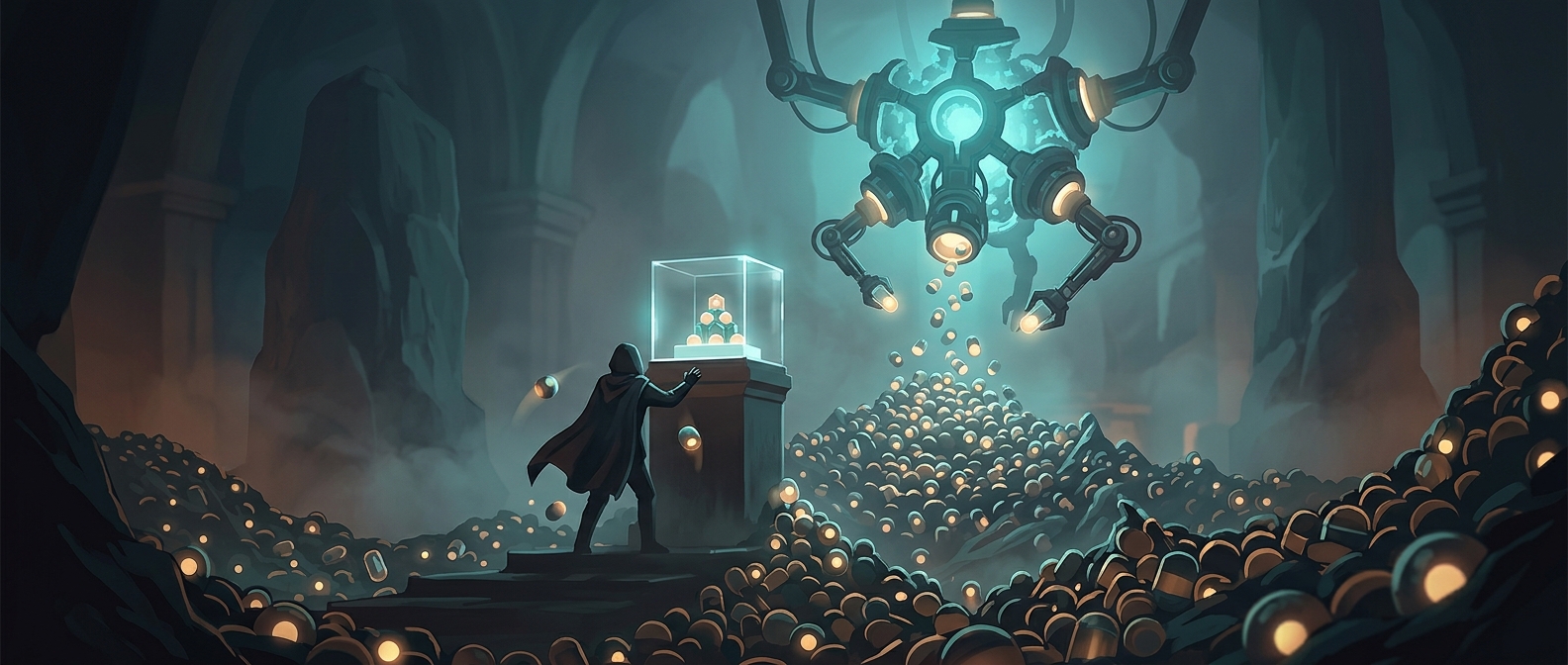
Why rare events appear in large crowds
A “one-in-a-million” chance describes the odds on one attempt, not a limit on how often the event can happen. If a billion separate attempts each have those odds, the expected number of successes is about 1,000. That expectation is an average across many comparable runs: a particular run could produce more or fewer.
The odds of seeing at least one
To estimate whether the event happens at all, it is often easier to count the ways it can fail. On each independent attempt, the chance of no success is 999,999 in 1,000,000. The chance of no success across a billion attempts is that fraction multiplied by itself a billion times—an extraordinarily small number. So while no individual attempt is likely to succeed, the crowd’s chance of seeing at least one success is effectively certain under these assumptions.
Independence matters: it means one attempt does not change the odds of another. Repeating the same test a billion times may not provide a billion independent chances if the trials share a cause or affect one another.
Why the event can feel miraculous
A winning lottery ticket, an unlikely coincidence, or a striking streak can seem extraordinary when viewed as one person’s experience. But a large population generates an enormous number of attempts and combinations. Even if each specific outcome is rare, some rare outcome is likely to occur somewhere—and the remarkable example is the one people notice and remember. The surprise is real; what changes with scale is how surprising it should be.