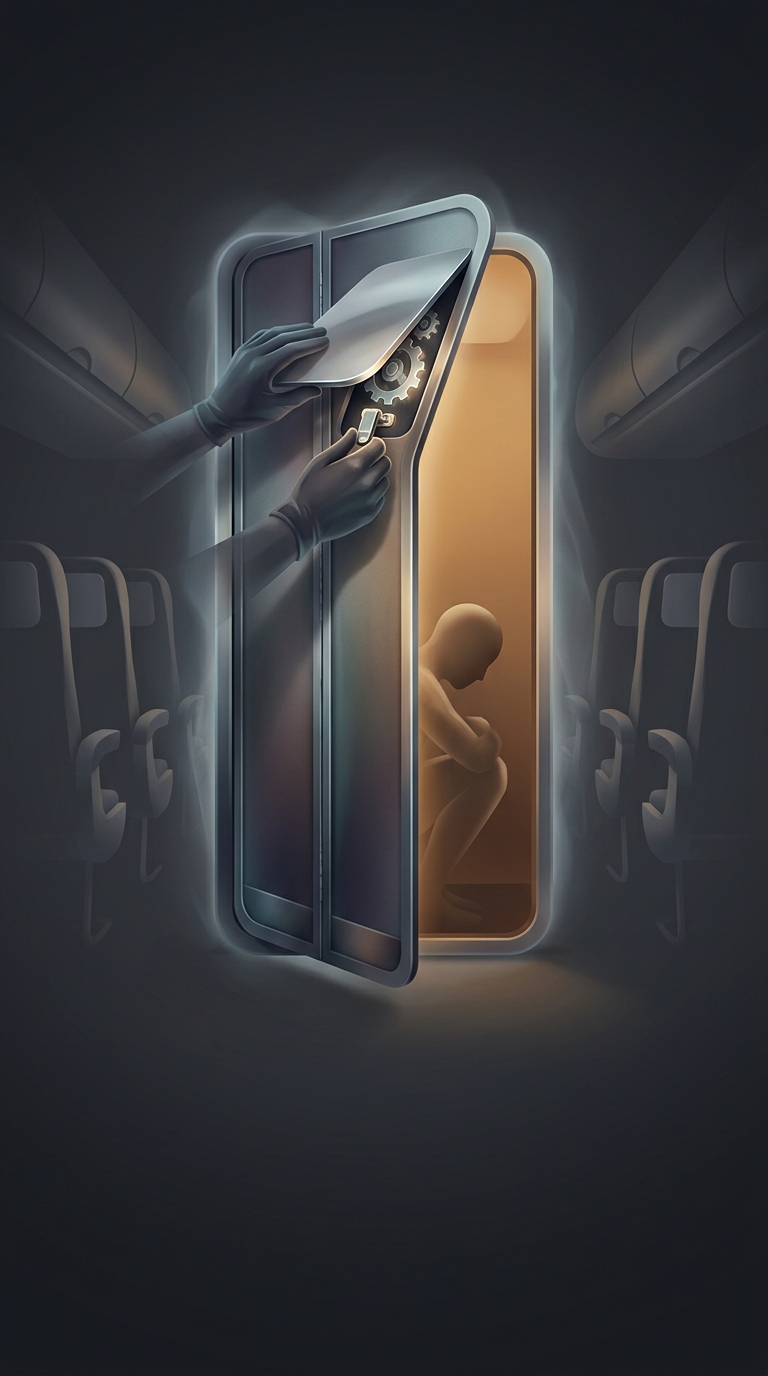
The ashtray is a backup fire-safety feature
A no-smoking rule cannot guarantee that nobody will light a cigarette. Someone might ignore the ban, misunderstand it, or try to smoke in a lavatory. An aircraft therefore needs a safer place for a lit cigarette to be put out than an ordinary waste bin, where paper and other rubbish could catch fire.
That is why aviation safety requirements have called for ashtrays in or near aircraft lavatories, even as smoking has been prohibited. The fixture is there for the unlikely event of a violation—not to suggest that smoking is allowed.
Why the lavatory matters
Aircraft lavatories contain waste bins, and a smoldering cigarette tossed into one can ignite its contents. An ashtray gives a smoker a designated, noncombustible place to extinguish the cigarette. It is one layer of protection, not a substitute for the ban, cabin monitoring, or fire-resistant waste-bin design.
The same logic explains why the ashtray can remain on a newly built or refurbished aircraft: safety equipment is designed for foreseeable misuse as well as normal operation. Requirements depend on the aircraft and its certification, so the feature is not necessarily identical on every plane. But where it is fitted, its purpose is straightforward: make a forbidden act less likely to become an onboard fire.