A Ship Climbed the Isthmus One Chamber at a Time
A canal lock is a water-filled chamber with gates at both ends. A ship enters, the gates close behind it, and water is let in or drained until the chamber matches the level on the other side. The ship can then move forward. Rather than cutting a sea-level passage through Panama’s rugged interior, the canal carried vessels up to the level of Gatun Lake and later lowered them toward the opposite ocean.
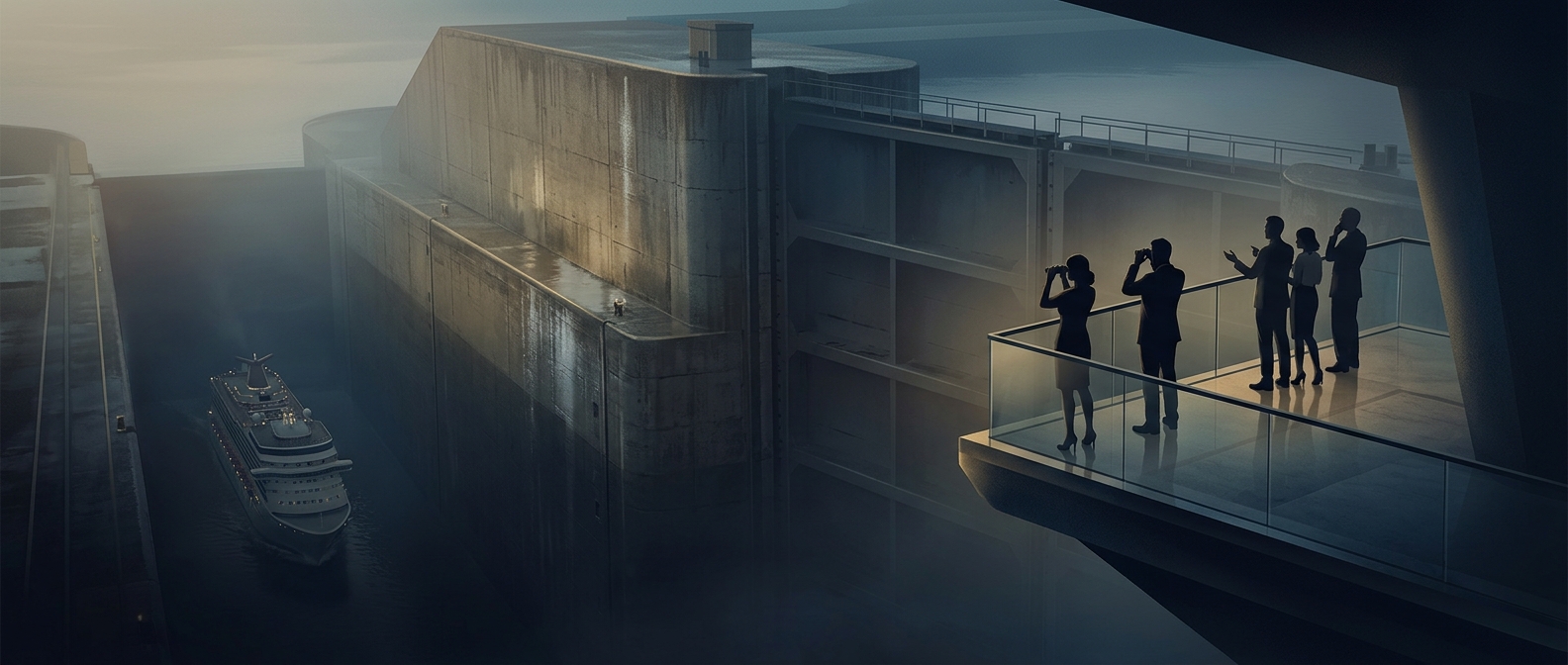
That made a transit a moving demonstration of the canal’s central engineering idea. From a passenger deck, travelers could watch a huge vessel held in place while water shifted around it, then see the gates part and the ship continue. Each lock passage turned an otherwise invisible change in elevation into a slow, visible sequence.
The Journey Was the Attraction
The locks were not a sideshow added to a cruise; they were the machinery that made crossing the isthmus possible. For travelers, passing through them meant following the same controlled route that cargo ships depended on to avoid the long voyage around South America. The appeal lay in seeing a working passage operate at close range: gates, water, and ship all moving in a carefully ordered progression.
A canal transit also made geography feel tangible. In a short stretch of travel, passengers could watch a vessel rise inland and then descend toward another ocean. The gates opened and closed for commerce, but to tourists they turned the Panama Canal into a spectacle measured not in speed, but in water level.