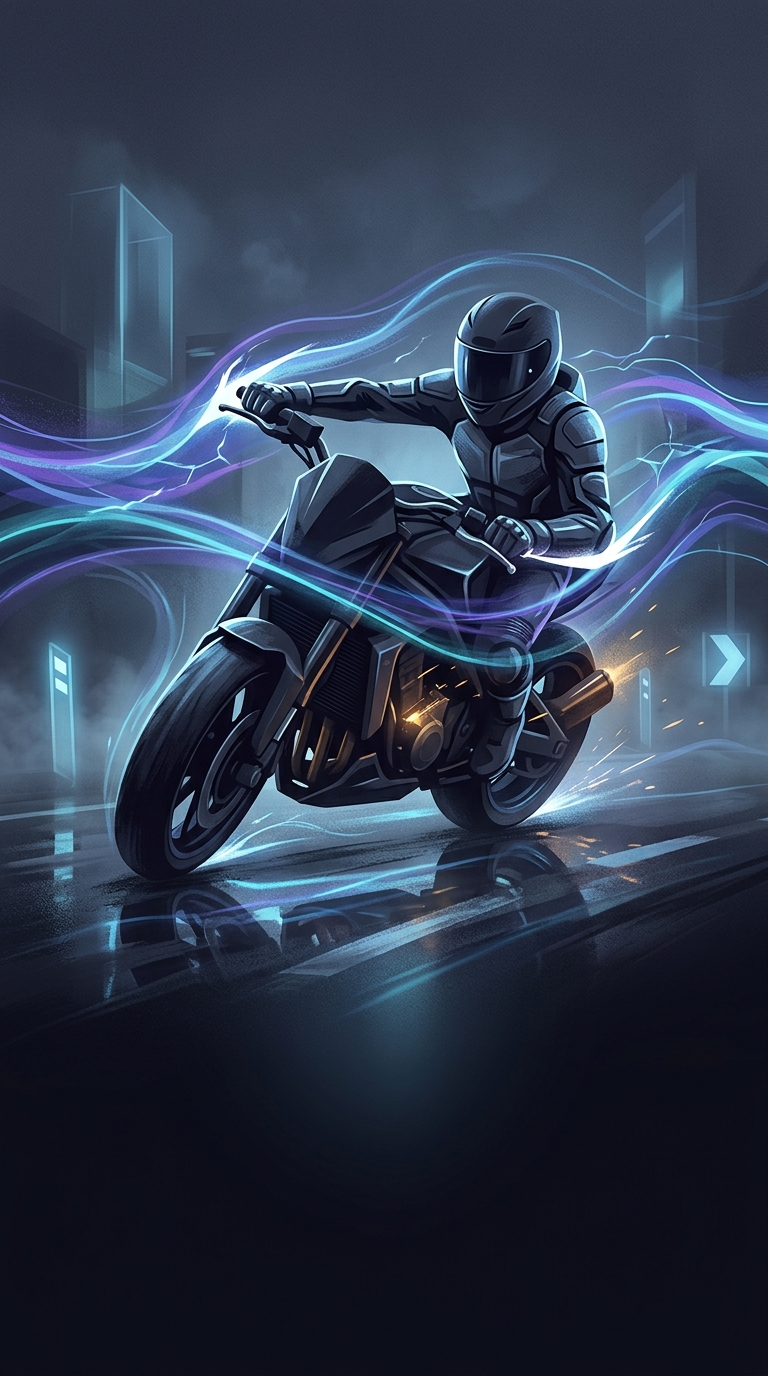
To Lean Left, Briefly Steer Right
At road speed, a rider begins a left turn by pressing the left handlebar forward—or, equivalently, pressing the right handlebar back. This briefly points the front wheel to the right, the opposite of the intended turn. The maneuver is called countersteering.
That short steering input makes the tire-road forces shift the motorcycle’s balance. The bike rolls left; as it leans, its wheels and frame settle into a path curving left. The front wheel then turns into the left-hand curve, helping the motorcycle follow it. The initial rightward steering is a way to start the lean, not the direction the bike ultimately travels.
Why the Opposite Input Works
A motorcycle is balanced through its contact with the road, not simply by the rider tipping it like a bicycle on a stand. Steering changes the direction of the tire’s force at the pavement, nudging the bike’s lower part sideways relative to its mass. That imbalance starts the roll. Wheel rotation and the bike’s steering geometry also affect how it responds, but countersteering is the rider’s practical way to initiate a lean at speed.
Once the bike is leaned, the tires can provide the sideways force needed to follow a curved path. More lean generally corresponds to a tighter turn at the same speed; a rider can begin a right turn with the mirror-image input, a brief push on the right handlebar. This is why, in an emergency, a deliberate handlebar press can redirect a moving motorcycle more quickly than trying to lean the body alone.