Sea-life silhouettes made simple pixels feel alien
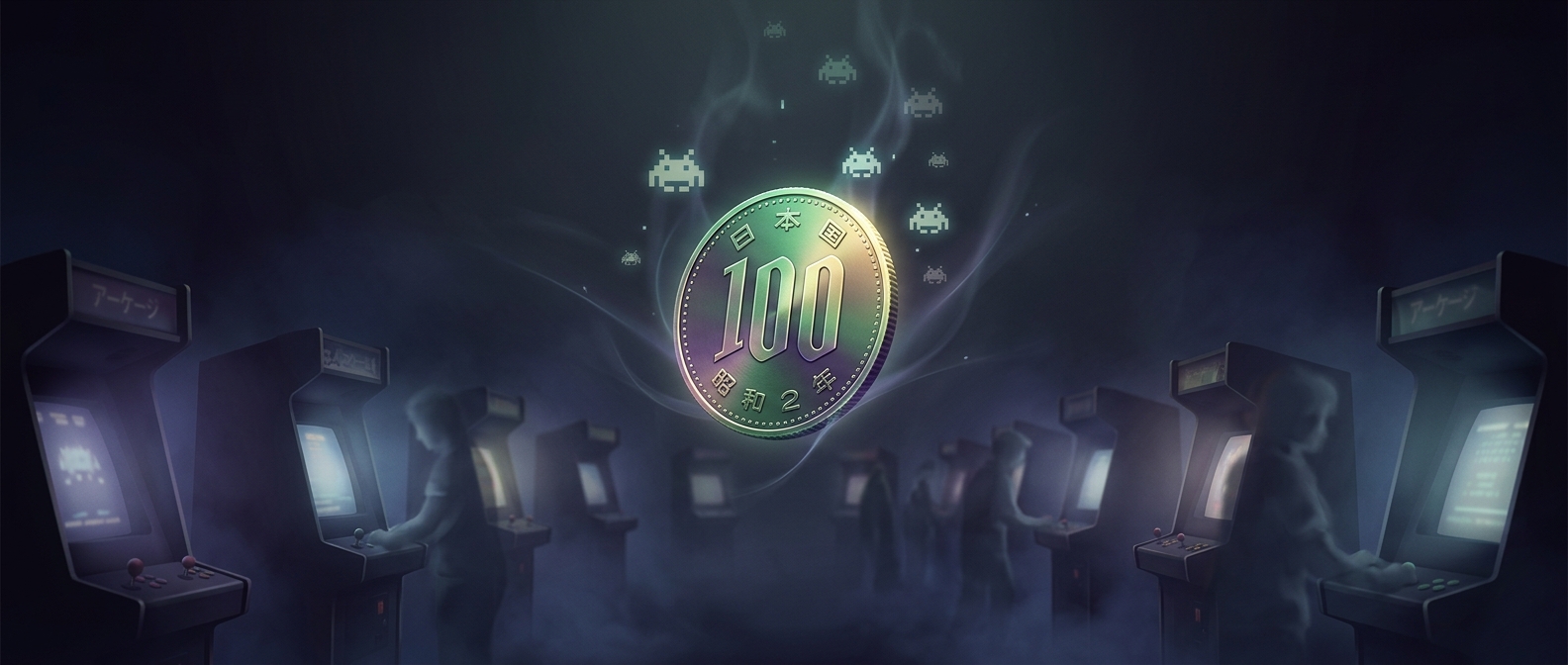
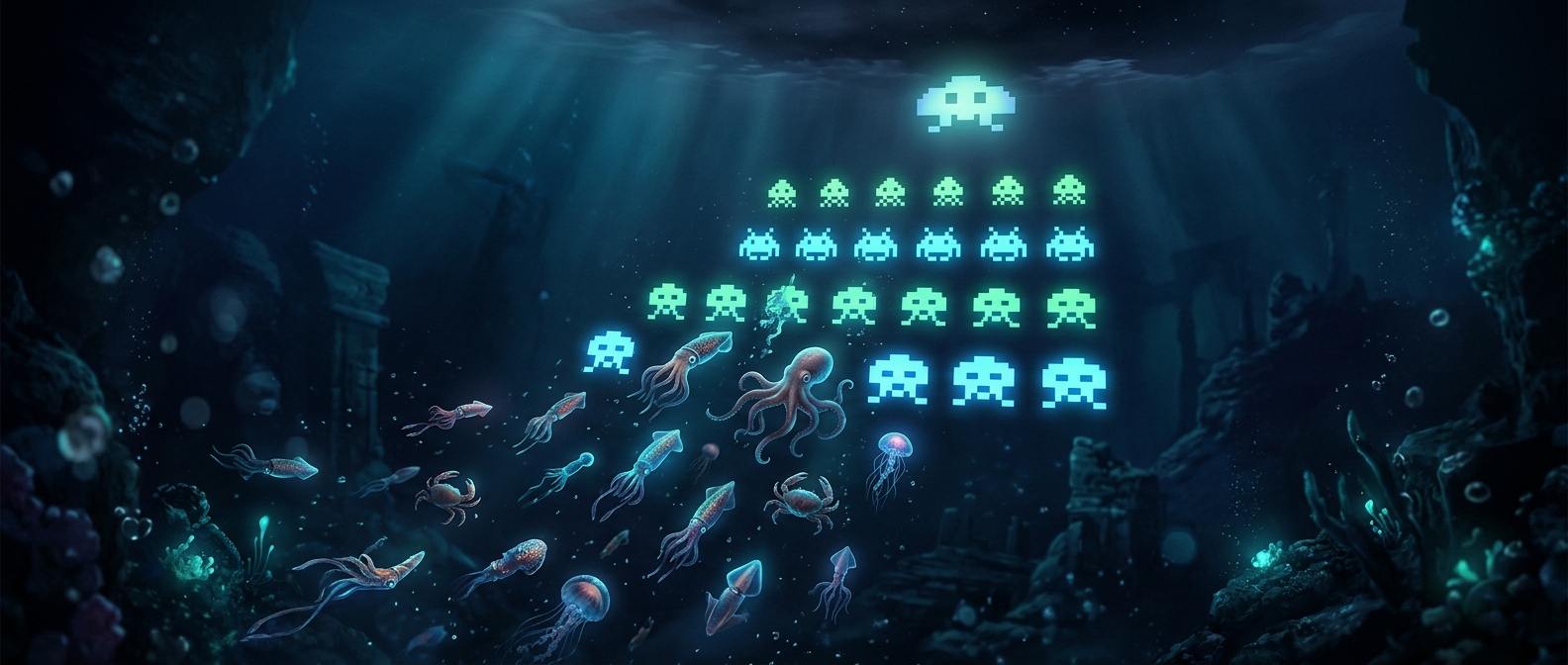
In Space Invaders, each enemy had to read as a creature on a tiny screen, using only a compact grid of colored pixels. Sea animals offered useful starting shapes: a squid’s body and dangling arms, an octopus’s rounded form, or a crab’s spread-out limbs could be reduced to bold silhouettes without needing facial details or realistic anatomy.
That reduction mattered in play. The invaders appear in ranks, so players need to recognize and track them while the formation moves. Distinct outlines make the enemies legible at a glance; small changes between animation frames can then suggest motion without drawing a fully detailed creature.
A mechanical march, an organic appearance
The aliens’ movement is rigid and synchronized: the whole formation shifts across the screen and drops lower as it advances. Their designs pull in the opposite direction. Tentacles, claws, and uneven bodies suggest living things rather than machines, even though the enemies move like a single mechanism.
That contrast helps the game’s simple images feel expressive. The shapes do not depict specific sea creatures so much as borrow familiar visual cues—arms, claws, rounded bodies—and recombine them into something unfamiliar. A few pixels can imply life when the outline is recognizable, even if the movement is entirely mechanical.