How a glacier made the fjord so narrow
Nærøyfjord is a branch of Sognefjord, cut inland by glaciers during repeated ice ages. A glacier behaves like a slow-moving river of ice: as it advances, rock debris trapped beneath it grinds and scrapes the valley floor and sides. The result is a deep, steep-sided trough that the sea later flooded when the ice retreated.
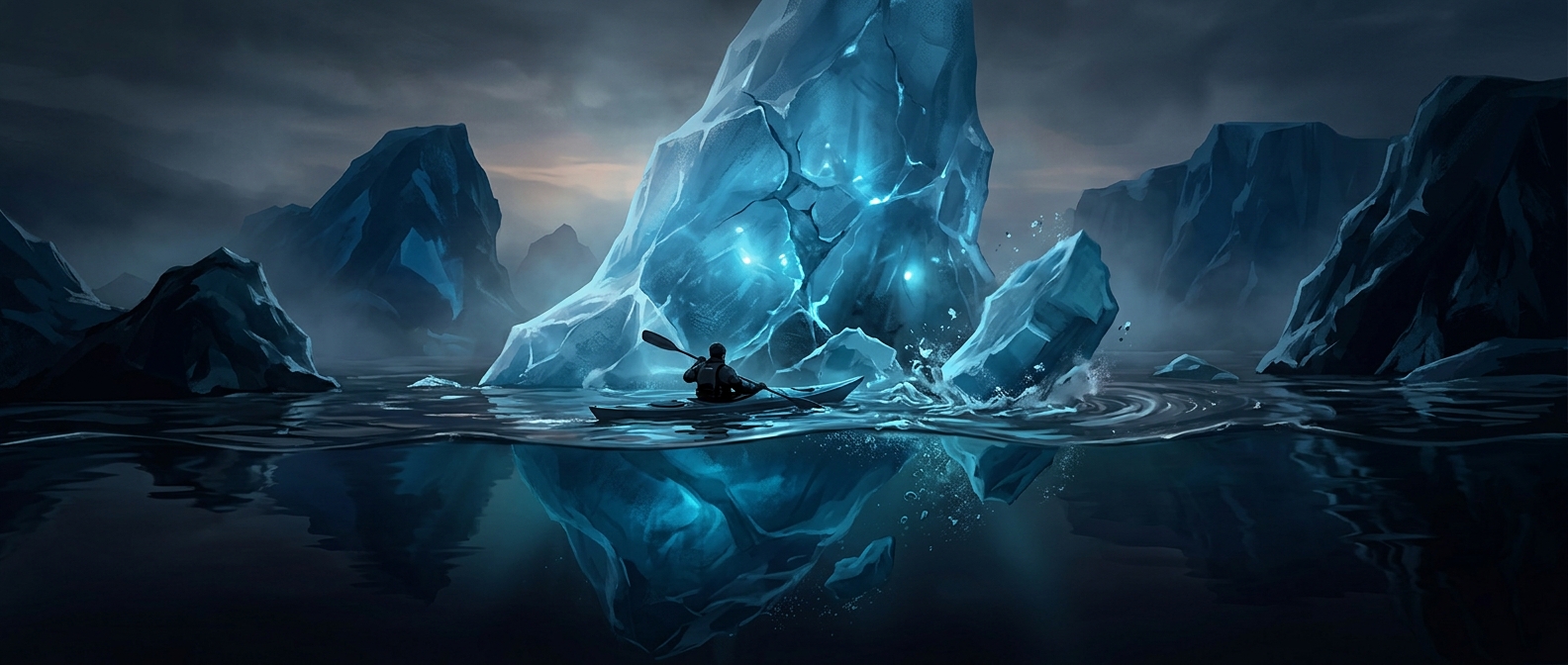
The fjord’s tight shape makes its scale feel unusually immediate from a kayak. There is little broad shoreline to soften the view; steep slopes rise close to the water, and the narrowing passage can make the cliffs seem to close around the boat.
Why waterfalls appear on the walls
Many streams reach the fjord from high ground, dropping sharply down the sides of the glacial valley. Meltwater and rain feed those streams, so their volume can change with the season and the weather. From the water, a cascade can look as though it begins high above the fjord and falls almost directly into it.
The contrast has a geological cause: the main glacier carved the deep central valley, while smaller glaciers and streams shaped the side valleys. Where a side valley meets the much lower fjord, water has to descend the remaining height in a waterfall.
A close-up view of a large landscape
A kayak does not make the fjord less imposing; it changes the scale at which it is experienced. Paddlers travel slowly and near the waterline, where small waves, cold spray, and the echo of falling water are harder to tune out than they would be from a distant overlook. The same narrowness that makes Nærøyfjord dramatic also brings its geology within arm’s reach—without making the cliffs or the water any less powerful.