How engineers exposed the American Falls
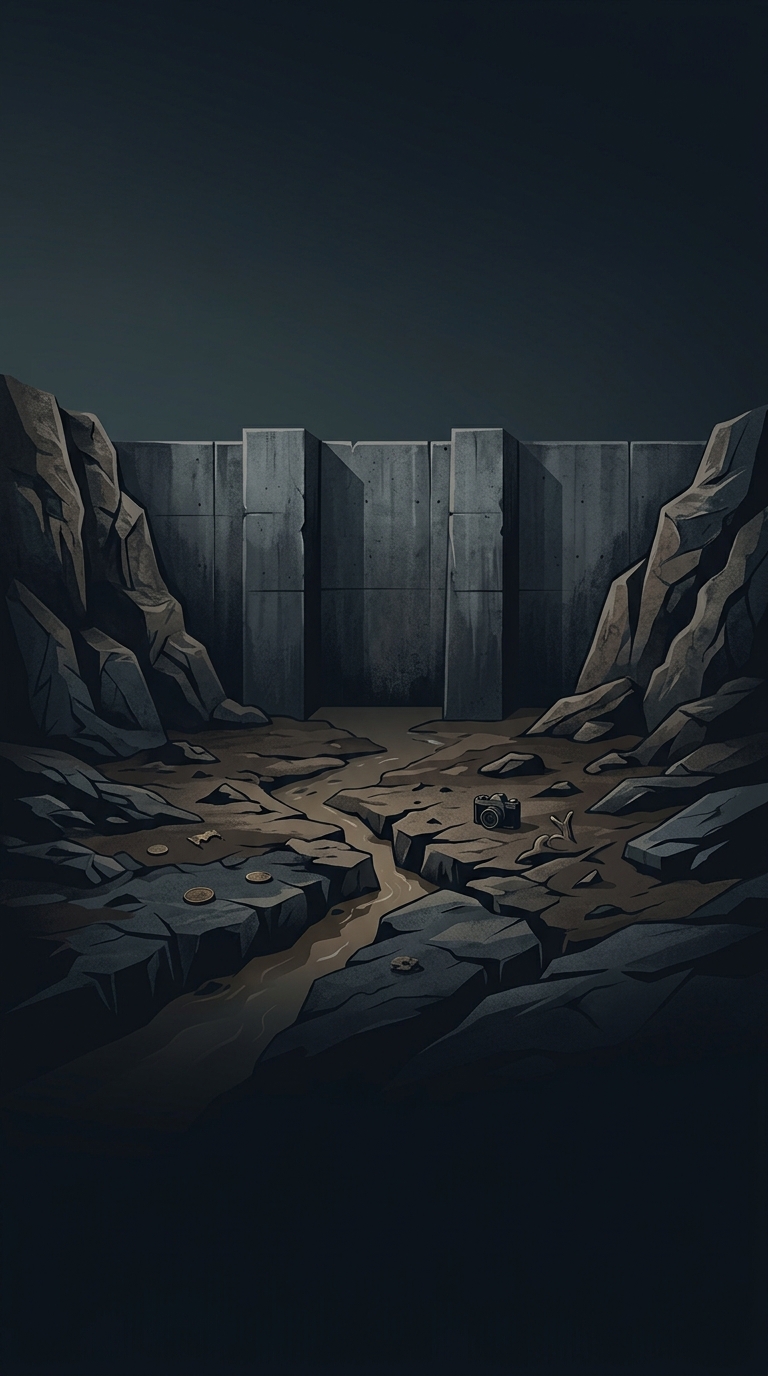
In 1969, engineers built a temporary barrier across the Niagara River upstream of the American Falls. The barrier—called a cofferdam—held back water on the American side and directed most of the river’s flow toward the Canadian Horseshoe Falls. With the current diverted, the American Falls’ rock face and the broad pile of fallen stone at its base became visible.
The falls were not switched off like a tap: the river kept flowing, but along a different route. That change revealed the usually submerged terrain that made the American side look so different from a full, flowing waterfall.
The question beneath the spectacle
The work was prompted by concern about erosion and the stability of the rock at the falls. When pieces of the cliff break away, they join the talus—the sloping mass of rock debris at the bottom. Engineers and geologists wanted to examine the exposed bedrock and assess what was happening beneath the water, where ordinary observation was difficult.
The exposed landscape offered a rare view, but it also made the tradeoff unmistakable: studying and potentially managing an active natural feature meant interrupting the familiar spectacle for visitors. The investigation did not lead to a dramatic reconstruction of the American Falls. After the study, officials chose to leave the rock debris in place and let the river resume its usual course.
A temporary change with a lasting image
The barrier was removed later that year, and water returned over the American Falls. For months, however, visitors saw a largely bare cliff instead of the expected curtain of water—a reminder that Niagara’s appearance depends not only on geology, but also on where the river is allowed to flow.