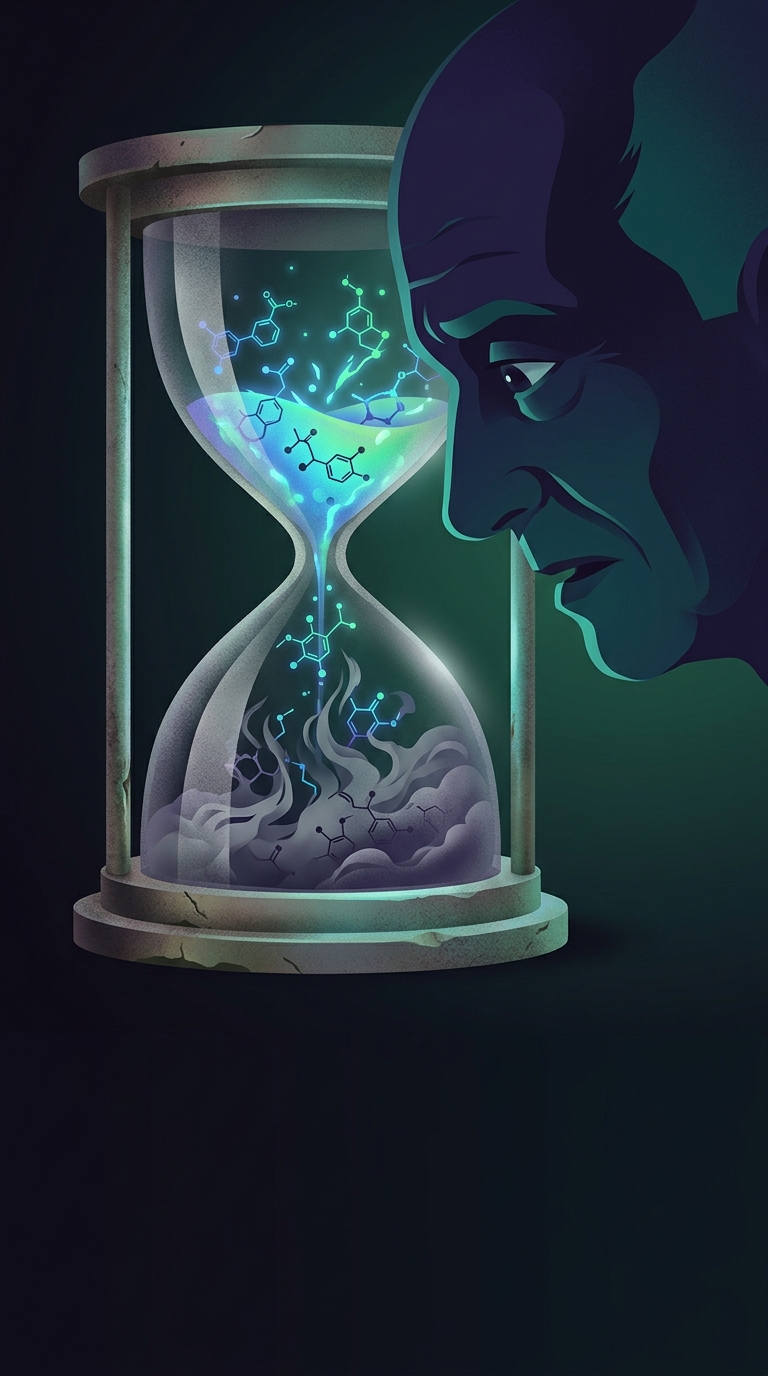
The cost of using oxygen for energy
Cells extract energy from food through a series of reactions that pass electrons along molecular “handoffs.” Oxygen receives electrons at the end of this chain, allowing the process to keep running. Most of the time, that transfer is controlled. But some electrons escape early and react with nearby molecules, producing reactive oxygen species—chemically active compounds such as superoxide and hydrogen peroxide.
These compounds are not simply waste. In small, controlled amounts, cells use them as signals, helping regulate functions such as defense and adaptation to stress. Trouble arises when production outpaces the systems that neutralize them or repair what they affect. A reactive molecule can alter a protein’s shape, damage the fats in a cell membrane, or leave a chemical lesion in DNA.
Why damage accumulates unevenly
Cells have several layers of protection: enzymes that convert reactive compounds into less harmful substances, molecular repair crews, and processes that dismantle and replace damaged parts. The outcome depends on the balance between damage and upkeep, which can vary among tissues and shift with stress, illness, and age.
That helps explain why oxygen’s role in aging is not a simple matter of “more oxygen, faster aging.” Reactive chemistry is part of ordinary life, and some of it is useful; damage becomes consequential when it escapes control or repair. Over time, wear across many cellular systems can make tissues function less reliably. The striking tradeoff is that oxygen helps power the reactions that keep us alive, while the same chemistry creates a steady maintenance job for our cells.