Why a Runway Can Get a New Number
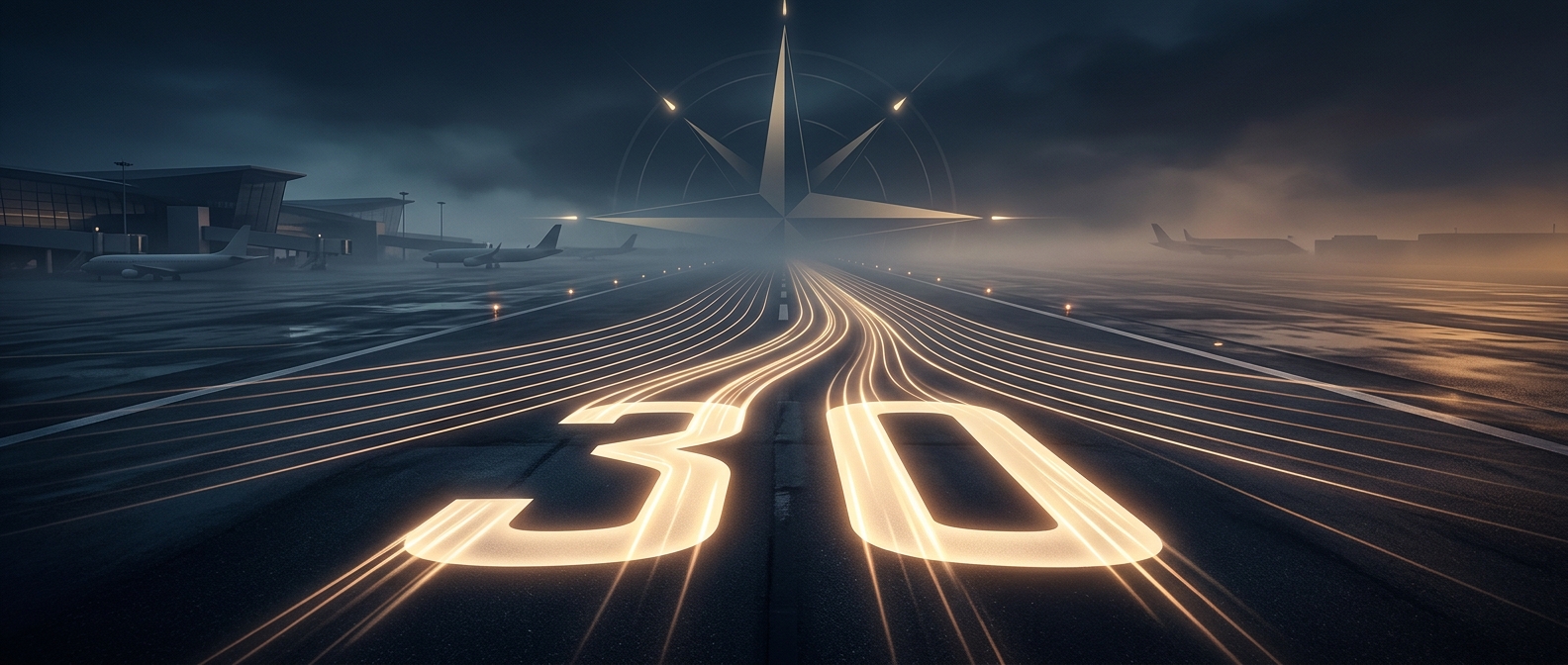
A runway’s number is a rounded compass direction, not a label chosen for its length or location. Pilots use it to identify the direction they will take off or land: runway 27 points roughly toward 270 degrees on a magnetic compass, while the opposite end is numbered 09. The last digit is dropped, and the heading is rounded to the nearest ten degrees.
That magnetic reference matters because magnetic north is not fixed. As Earth’s magnetic field changes, the direction a compass indicates shifts slightly from place to place. A runway itself stays put, but its magnetic heading can drift enough over time to round to a different number.
A Small Shift Can Change the Sign
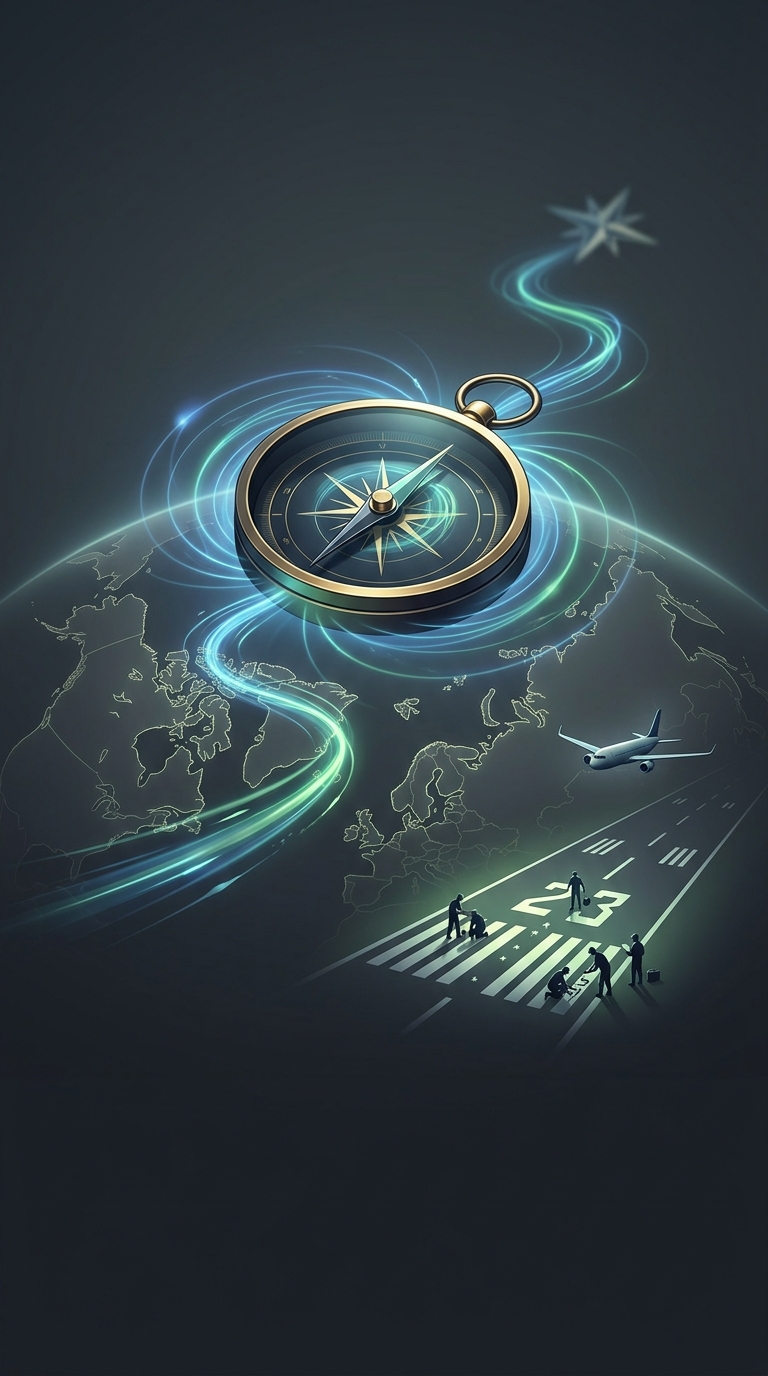
Suppose a runway’s magnetic heading gradually moves across the rounding boundary between two designations. Once the new rounded heading is appropriate, the airport may need to change the large numbers painted at the runway ends. The opposite end changes too, since its heading is about 180 degrees away.
The paint is only the most visible part. Airports also have to update signs, charts, and flight procedures so that pilots, air traffic controllers, and navigation systems are all referring to the same runway designation. Keeping those references consistent is essential: a mismatch could create confusion during a busy arrival or departure.
Why the Change Is Not Constant
Magnetic variation—the difference between magnetic north and true north—does not shift by the same amount everywhere, and a runway number changes only when the heading’s rounded value changes. So the pole’s movement does not mean airports repaint every year. It means a fixed runway can eventually acquire a new compass-based identity, while its concrete orientation remains exactly the same.