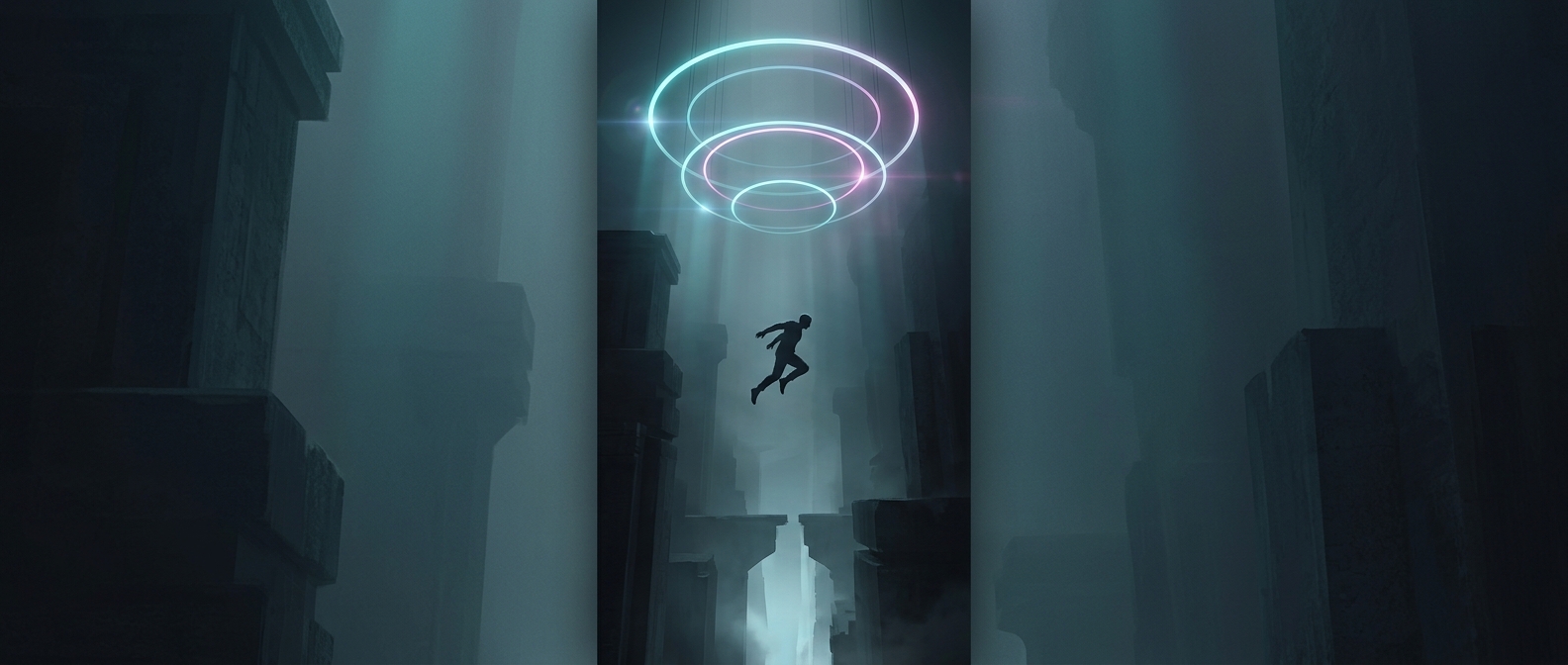
A Fall Can Be a Countdown
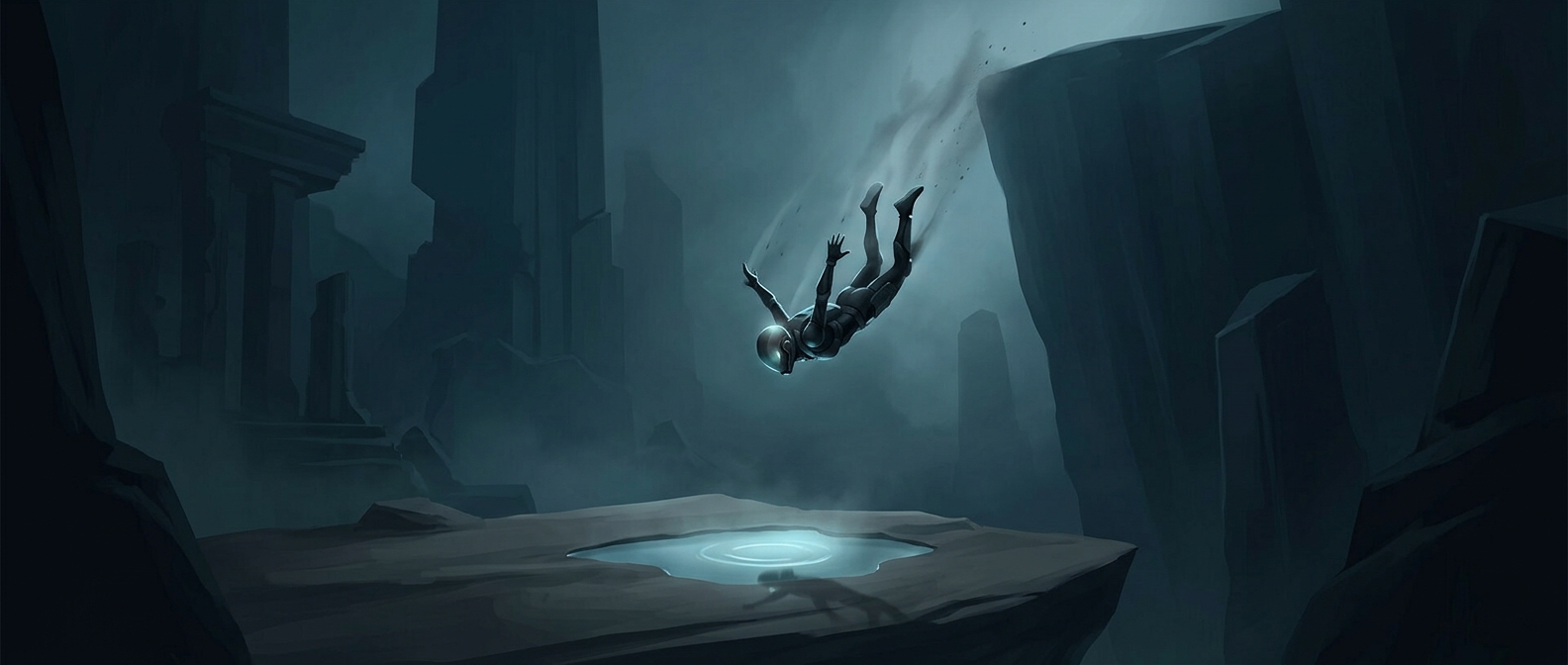
A game does not always need to measure how fast a character is moving downward to decide whether a landing is fatal. One simpler method is to start a clock when the character leaves the ground and check it when they touch down. If enough time has passed, the game marks the fall as lethal.
That timer stands in for danger: under ordinary gravity, a longer uninterrupted fall generally means a harder impact. The game can therefore use elapsed time as a rough proxy for impact severity, rather than calculating the character’s speed and comparing it with a damage threshold.
What the Timer Simplifies—and Misses
A timer is easy to tune. Designers can set a safe window for small drops and a danger point for longer ones, without building a detailed model of how the character accelerates, collides, or absorbs an impact. The same rule can also make landing outcomes predictable: players learn that a fall becomes dangerous after a particular stretch in the air.
But time aloft is not the same thing as impact speed. A character launched upward may spend a long time airborne before landing, while a character dropped from a ledge may hit the ground quickly. A timer-based rule can treat those situations alike even though their physical motion differs. Games can reduce such oddities with extra checks—for example, tracking whether the character was rising or falling—but the simple version prioritizes a clear gameplay rule over physical realism.
A Design Rule, Not a Physics Law
This approach is especially useful when a game wants falls to be readable and easy to balance. The threshold becomes part of the level’s design: a ledge can be safe to descend from, while a taller drop crosses the timer’s limit. The result may look like a physics calculation, but the decisive event is often much simpler: the clock ran out before the character landed.