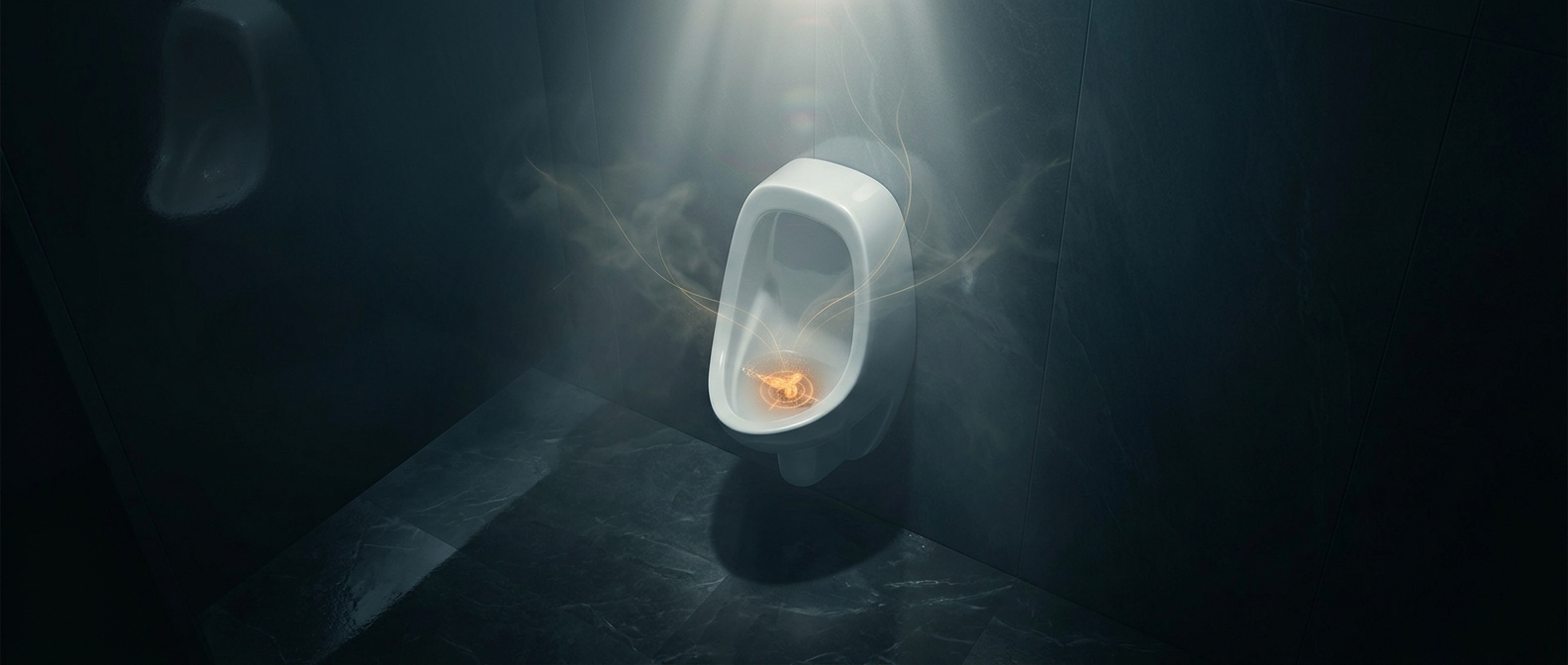
A Small Target Changed Where People Looked
A urinal drain is a natural place to aim, but it is easy to miss when someone is standing at a distance. The tiny fly gave users a more precise visual target. Instead of making a broad, sometimes-messy attempt to hit the drain, they could focus on a small mark nearby.
That is a simple form of behavioral design: changing the surroundings so a desired action becomes easier to notice and carry out. The fly did not force anyone to aim carefully or require a new device. It redirected attention at the moment it mattered.
Why the Mark Mattered to Cleaning Crews
A miss can leave liquid on the floor or around the fixture, creating extra work for janitorial staff and making the restroom less pleasant for the next person. A small etched target offered a low-effort way to address that recurring problem at its source, rather than relying only on reminders or repeated cleanup.
The intervention was modest, but its logic was practical: if a small change in aim could prevent even some spills, it could save cleaning effort over many visits. The fly’s real job was not decoration. It turned an easily overlooked drain into a target—and made a routine restroom task a little less costly to maintain.