Why the expedition went out in the Antarctic winter
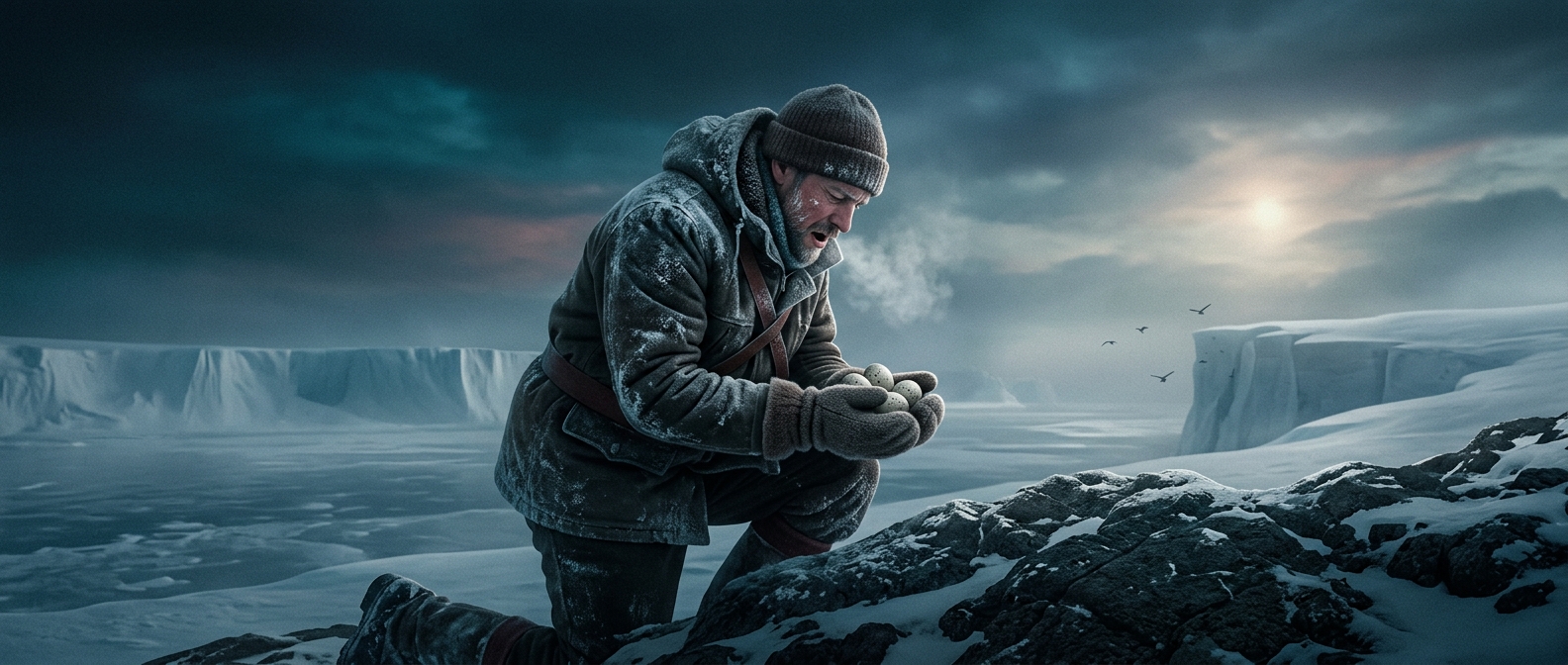
The eggs were not collected as curiosities. Apsley Cherry-Garrard and his companions set out from the British Antarctic expedition’s base for Cape Crozier, where emperor penguins breed. Their goal was to bring back embryos at different stages of development. At the time, some scientists hoped that studying how a bird develops inside an egg might illuminate its evolutionary relationship to reptiles.
That scientific question dictated the timing: the team had to reach the colony during the polar winter, when emperor penguins lay. The journey therefore meant travelling in darkness and severe cold across a landscape where wind, snow and low visibility could make even a short distance dangerous.
What made the route so punishing
The explorers hauled their equipment and the eggs themselves over the ice. In that cold, ordinary tasks became obstacles: clothing could freeze, hands were hard to use, and shivering made it difficult to rest. The eggs were a fragile scientific cargo, but the men carrying them also had to survive the return journey. Cherry-Garrard later described the expedition in The Worst Journey in the World, a title that captured how the trip was remembered even though it achieved its immediate aim of bringing specimens back.
The eggs’ uncertain reception
Reaching London did not guarantee that the collection would transform science. The embryos were examined, but the hoped-for evolutionary clues proved harder to draw from them than the explorers’ hardship might suggest. The contrast is striking: a journey could be extraordinary without producing a discovery that its organizers considered decisive. The eggs’ story is thus not only about Antarctic endurance, but about the gap between the effort required to obtain scientific evidence and the conclusions that evidence can support.