Plaque is a film, not just trapped food
A rinse can carry away particles that are already loose. Dental plaque is harder to dislodge: it is a thin, sticky community of bacteria attached to tooth surfaces, including the narrow sides where teeth touch. Because it clings to the surface, water passing through the gap may wash around it without removing it all.
Floss cleans by contact
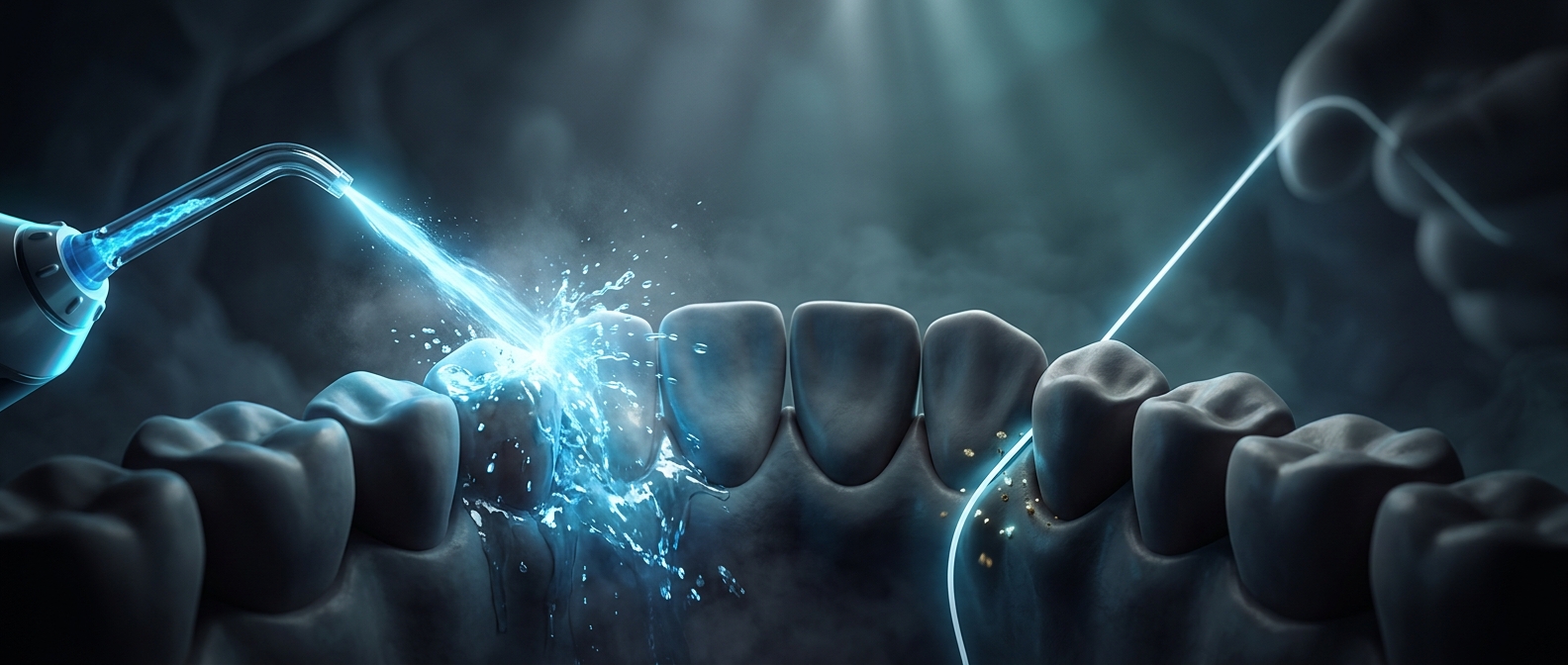
String floss can be guided against each tooth and moved up and down, creating friction that breaks up the plaque film. A water flosser sends a stream into the space, but it does not press and rub along the tooth in the same way. That difference matters most at surfaces that the jet does not directly reach or disturb.
A water flosser can still help clear debris and is useful for people who find string floss difficult to handle. But the two tools work differently: flushing a gap is not the same as physically wiping its walls. The practical test is whether the cleaning method reaches the tooth surface where plaque is attached, not simply whether it makes the space feel rinsed.