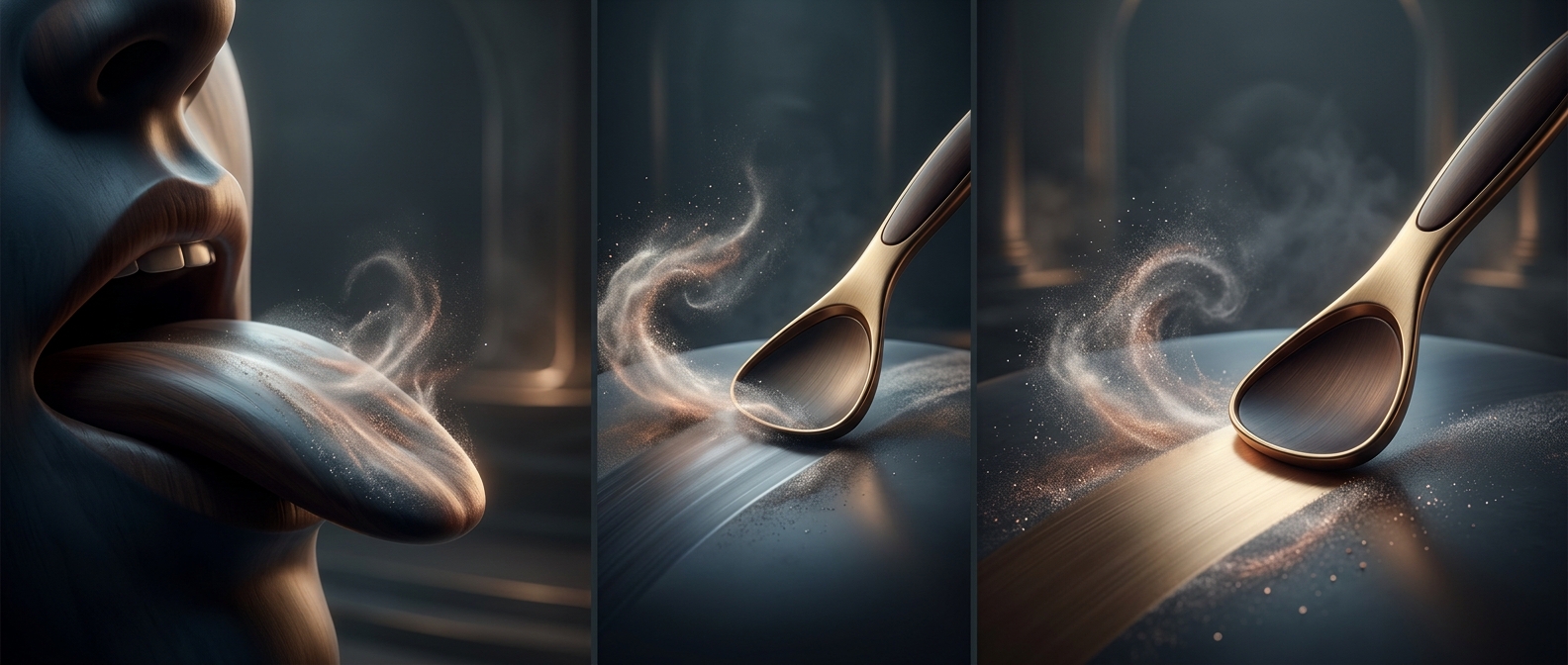
Why the Tongue Holds on to Debris
The tongue is not a smooth surface. Tiny bumps called papillae give it texture, and the spaces between them can trap shed cells, food particles, and microbes. Together, these materials can form a pale or yellowish coating, especially toward the back of the tongue, where the surface is harder to reach and saliva may clear it less effectively.
That coating can contribute to bad breath: some mouth bacteria break down proteins in trapped material and release smelly compounds. Removing the buildup reduces one source of odor, though it does not address every cause of bad breath, such as gum disease or dry mouth.
Why a Scraper Can Feel Different from a Brush
A toothbrush’s bristles move across a small area at a time. A scraper spans more of the tongue, so one controlled stroke can gather material across a wider strip. The aim is to lift coating, not to scrape the tongue raw. Gentle pressure matters because the surface can become irritated if it is rubbed too hard or too often.
The back of the tongue is also where many people feel a gag reflex. Starting farther forward and gradually reaching back, without forcing the motion, can make cleaning easier. Rinsing the scraper between passes carries away what it has collected; the visible coating is debris being removed, not evidence that the mouth has been “detoxed.”