Why fluoride needs time on the teeth
Fluoride in toothpaste works mainly at the tooth surface. It helps enamel—the hard outer layer—resist acids made when mouth bacteria break down sugars. It can also help replace minerals lost during early acid damage, a process called remineralization.
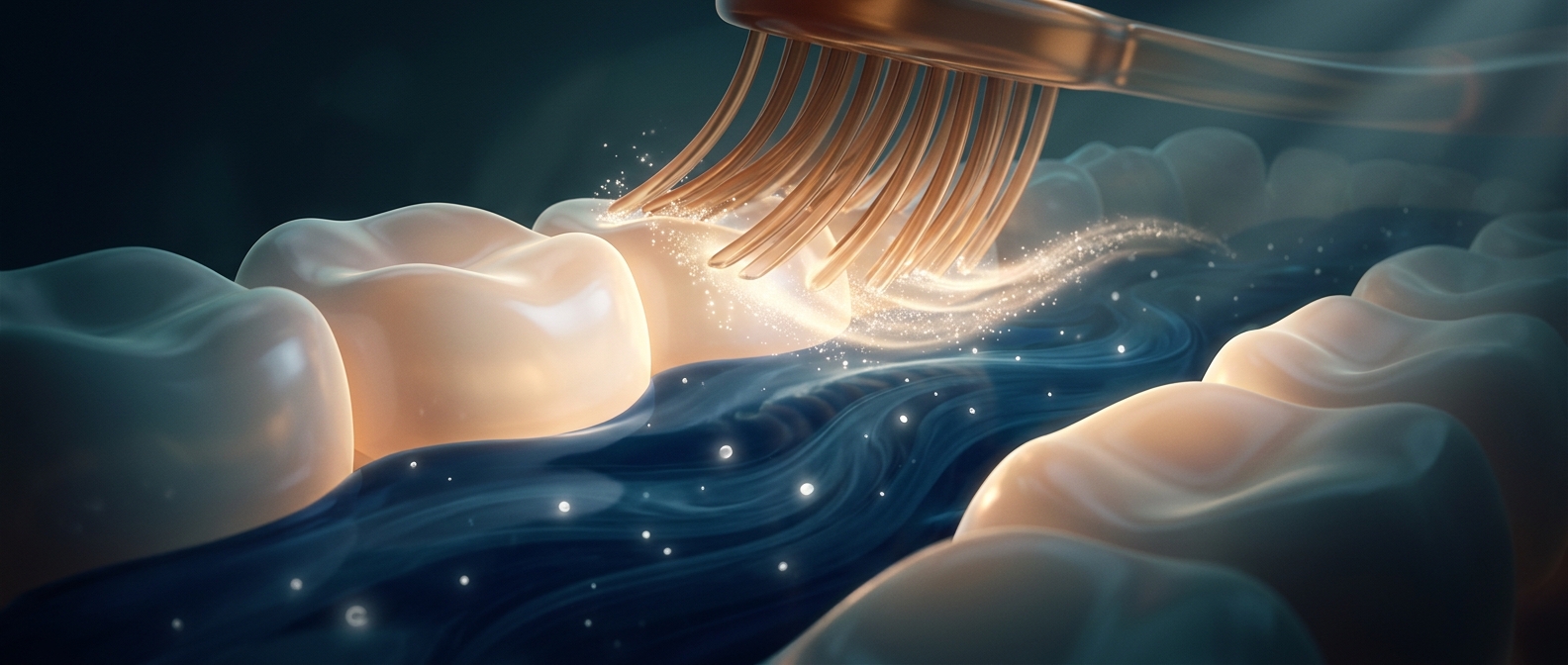
After brushing, a thin film of toothpaste and saliva remains around the teeth. That keeps some fluoride available at the surface. An immediate rinse with mouthwash dilutes and carries away part of that residue, so less may remain in contact with the teeth. The mouth can feel fresher even as some of the toothpaste’s fluoride is washed out.
The rinse’s ingredients matter
“Mouthwash” is not one formula. Some rinses contain fluoride and can provide fluoride themselves; others do not. A non-fluoride rinse used right after brushing may replace the concentrated toothpaste residue with a more diluted mixture, while a fluoride rinse has a different role. The label matters more than the clean feeling.
To preserve toothpaste’s benefit, avoid rinsing immediately after brushing; follow the product directions or a dental professional’s advice. If you use a mouthwash, another time of day can keep it from immediately washing away the fluoride left by brushing. The key is not that rinsing is always harmful, but that timing and fluoride content determine what remains on the teeth.