How a Fossil Kept Its Color Clues
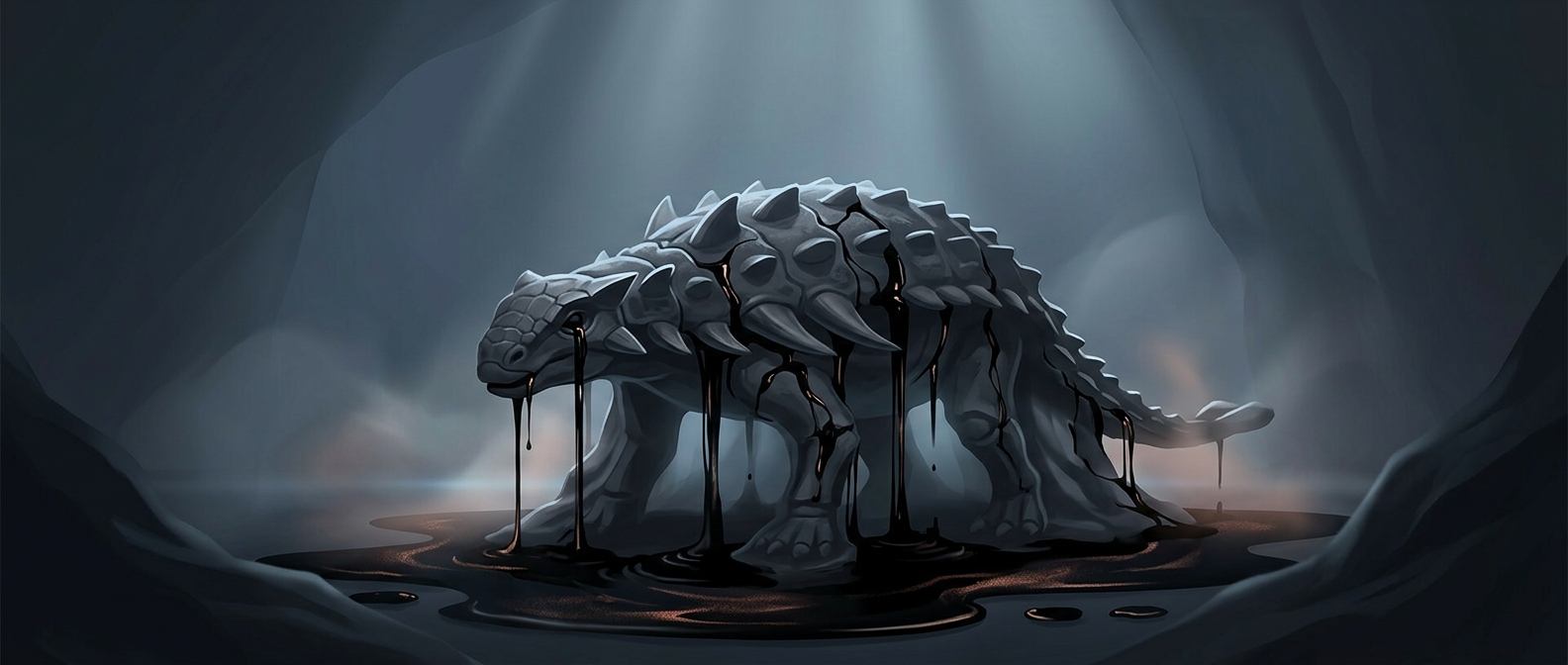
Borealopelta’s reddish-brown back and lighter underside were inferred from chemical traces left in its exceptionally preserved skin. Researchers examined pigment-related material across different parts of the fossil, rather than judging color from the surrounding rock. Such traces can survive long after the original soft tissues have decayed, although they do not preserve every detail of an animal’s living appearance.
The result offers more than a guess at what this armored dinosaur looked like. The contrast between its darker upper surface and paler belly matches countershading, a pattern found in many living animals.
Why Dark Above and Light Below?
Light from the sky tends to illuminate an animal’s back, while its belly falls into shadow. That lighting can make the body’s rounded shape stand out: bright on top, dark underneath. A pale underside partly counters the shadow, while a darker back reduces the contrast with the brighter surroundings. To an observer, the animal can look flatter and less conspicuous.
This kind of camouflage would not make Borealopelta invisible. It could, however, make its outline harder to pick out, especially in the natural light and vegetation of its habitat. The pattern is evidence that concealment may have mattered even for a dinosaur protected by heavy armor. Armor could help when an attack came; camouflage could make an encounter less likely in the first place.
The striking implication is that the fossil’s armor does not tell the whole story of its defenses. Its coloring points to a quieter strategy—being difficult to notice before a predator got close.