Why the Date Palm Mattered in Mesopotamia
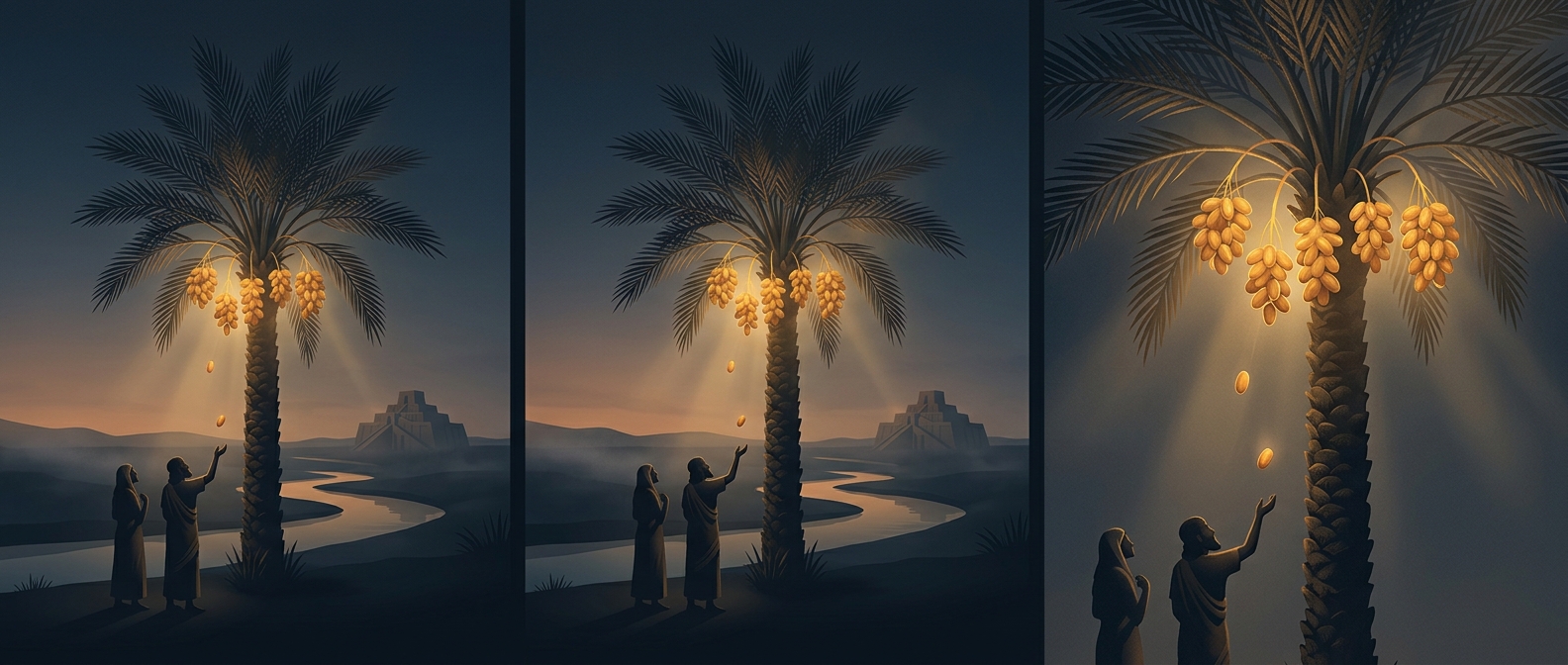
In ancient Mesopotamia, a date palm was more than a source of fresh fruit. Its dates could be eaten ripe or dried, turning a seasonal harvest into food that lasted beyond the picking period. That made the fruit useful not only at harvest time but also when other fresh foods were scarce.
The palm suited the region’s heat, especially where people could bring water to their fields. Once established, a tree could yield fruit year after year, so tending palms offered a continuing return rather than a single harvest. For households, groves, and communities, that dependable crop helped make food supplies less vulnerable to the timing of other harvests.
A Harvest That Could Be Kept
Fresh dates are soft and sweet; as they dry, much of their water evaporates, leaving a denser fruit that is easier to store and carry. That simple change mattered in a world without refrigeration. Preserved dates could be kept for later use, while fresh fruit provided a concentrated source of energy during the harvest season.
The practical value was therefore in both the tree and the timing: it produced an edible crop repeatedly, and the crop could be saved. A date palm turned a brief season of abundance into food that could bridge the months after it.