Why woad had to ferment before it could dye
Fresh woad leaves were not simply blue paint waiting to be squeezed out. They held colorless or pale compounds that had to be transformed before they could produce the familiar blue. Fermentation—letting the harvested leaves break down in a controlled, damp mass—helped release the dye-forming material from the plant.
That work also began the unpleasant part. As leaves and other plant matter decomposed, microbes produced strong-smelling compounds. The odor was a sign of an active process, not a fragrance added to the dye.
The color appeared only after the vat did its work
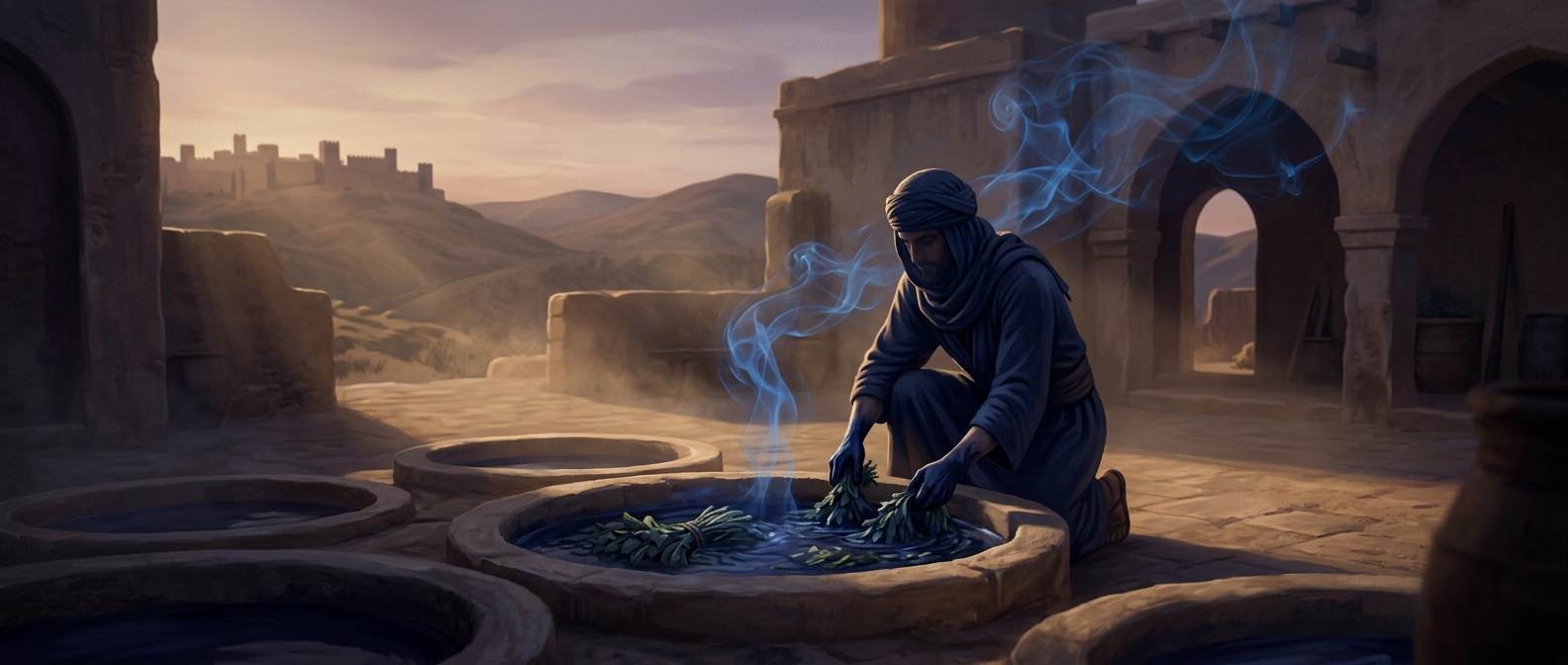
The blue pigment, indigotin, does not dissolve readily in water. In traditional dyeing, processing created conditions that converted it into a soluble form, allowing it to enter the fibers. Once cloth was lifted from the vat and exposed to air, the dissolved dye changed back into insoluble blue pigment. Repeated dipping and airing could deepen the shade.
This is why making blue cloth was a sequence of transformations: plant material first had to be processed, the dye made usable in the vat, and air then brought out the color on the fabric. The vivid blue was the visible end of a messy, smelly chain of work.