Why roots made useful red dye
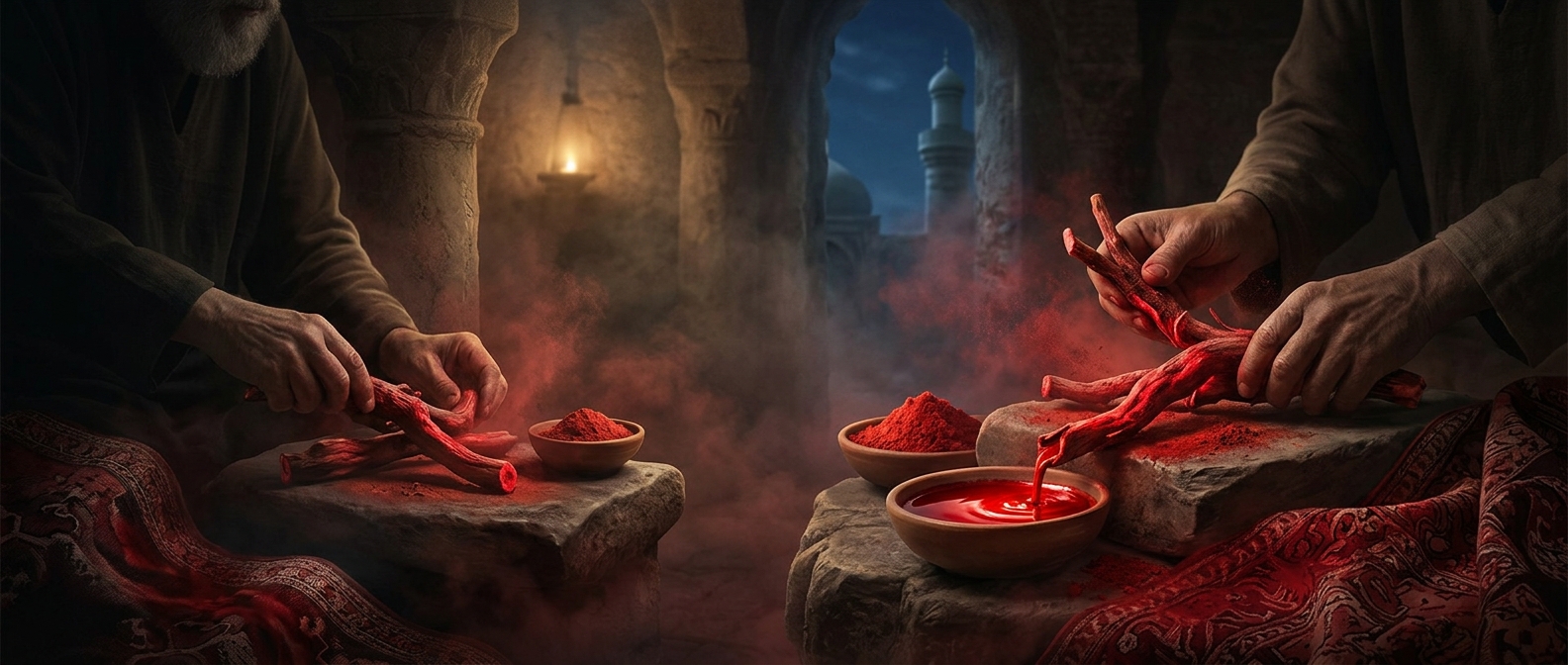
A root’s color is stored in plant compounds, not ready-made as a bottle of paint. Drying the roots made them easier to keep and handle; boiling then drew some of those compounds into the vat’s water, creating a bath that could color fibers. The work took time because the dyer had to prepare the plant material before the cloth could be dyed.
Getting color to stay in the cloth
A strong-looking bath does not automatically make a lasting fabric color. Dye molecules must also cling to the fibers. In many traditional dyeing processes, dyers used a mordant—a substance that helps dye bind to cloth—to improve that hold. The exact preparation varied, but the practical aim was the same: turn plant color into color that would survive use and washing better.
That extra preparation made root dye valuable beyond the moment of dyeing. A deep red that endured could keep cloth vivid through repeated wear, making the effort spent gathering, drying, and boiling roots part of the garment’s long-term worth.