How a garden produced an unfamiliar fruit
A hybrid forms when pollen from one kind of citrus fertilizes the flower of another. In the grapefruit’s case, the parents were a sweet orange and a pomelo, a large citrus fruit with a thick rind. Their pollen did not combine because anyone had planned a breeding project; the two kinds simply grew close enough for pollination to happen, often with insects carrying pollen between flowers.
The cross happened inside a seed. A tree grown from that seed inherited a new mix of traits, and its fruit could differ from either parent. The grapefruit was therefore not an orange that gradually changed into something else, but the offspring of two distinct citrus types.
Chance made it; propagation kept it
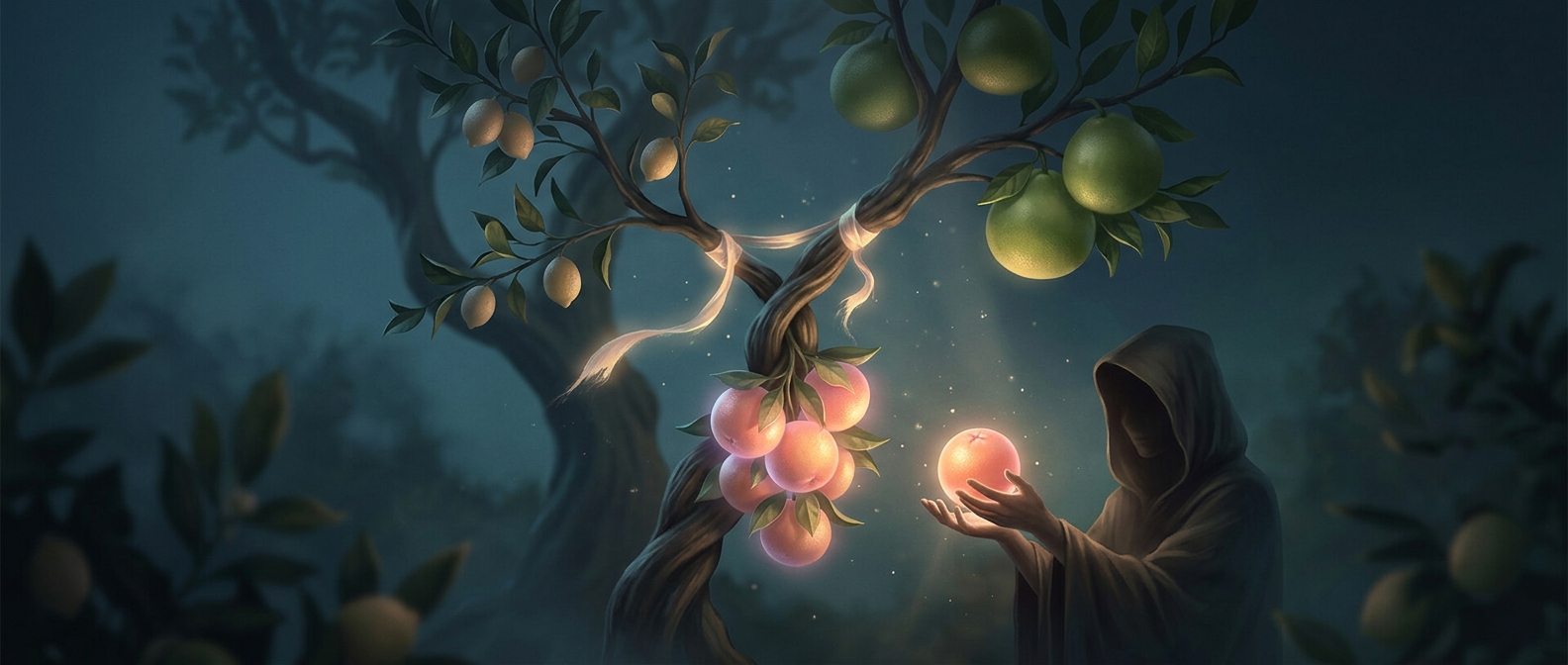
A one-off hybrid would not necessarily become a lasting crop. To preserve a desirable tree, growers can reproduce it by grafting: joining a piece of the tree onto another citrus tree’s roots. The new growth carries the original tree’s traits, rather than creating another unpredictable mix from seed.
That distinction turns an accident into a crop. Nature supplied the unusual combination; people could then keep growing trees with the same recognizable fruit. The grapefruit’s origin is a reminder that cultivated plants are not always designed from the start—sometimes a garden creates the possibility, and later growers make it repeatable.