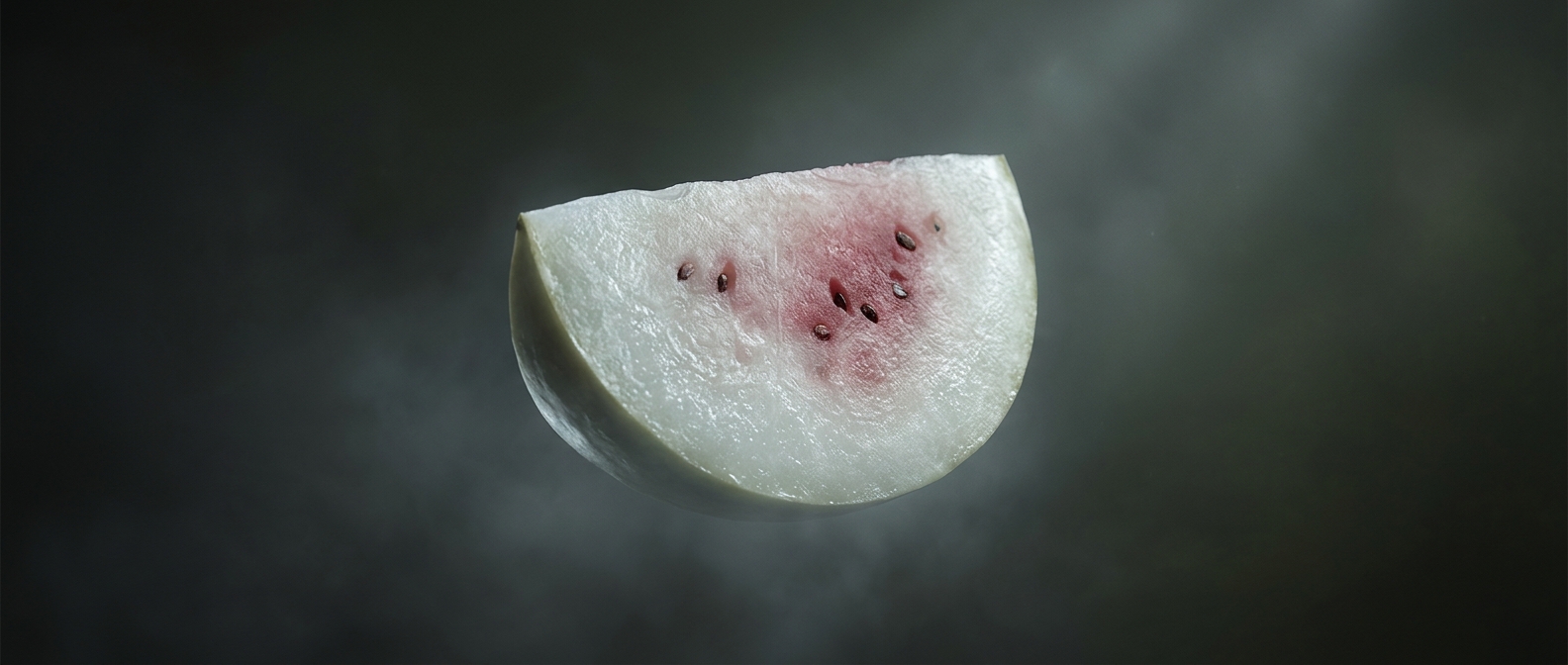
A fruit built to carry water
Before watermelons became the sweet summer treat familiar today, their practical value was simpler: the flesh held a great deal of water. A whole fruit could be taken along and opened when a traveler needed something to drink. Unlike water poured into a container, that supply was enclosed in a thick rind, which helped keep the wet interior contained during transport.
The fruit was not a lightweight canteen. A watermelon is bulky and heavy, so carrying one made most sense when people could bring it from a harvest or move it by pack animal or boat—not when every ounce mattered. Its advantage was that it combined water and food in one package, with no vessel to fill or risk spilling.
Sweetness came later
Early watermelons were not necessarily the crisp, sugary fruit people expect now. Over generations, growers favored plants whose fruits were more pleasant to eat, selecting for traits such as sweetness and texture. That gradual change made the watermelon increasingly a dessert fruit, but it did not erase the older utility: a ripe melon still holds its moisture behind a rind that can travel intact.
On a dry journey, the useful thing was not a clever container. It was that the container was alive, edible, and full of water.