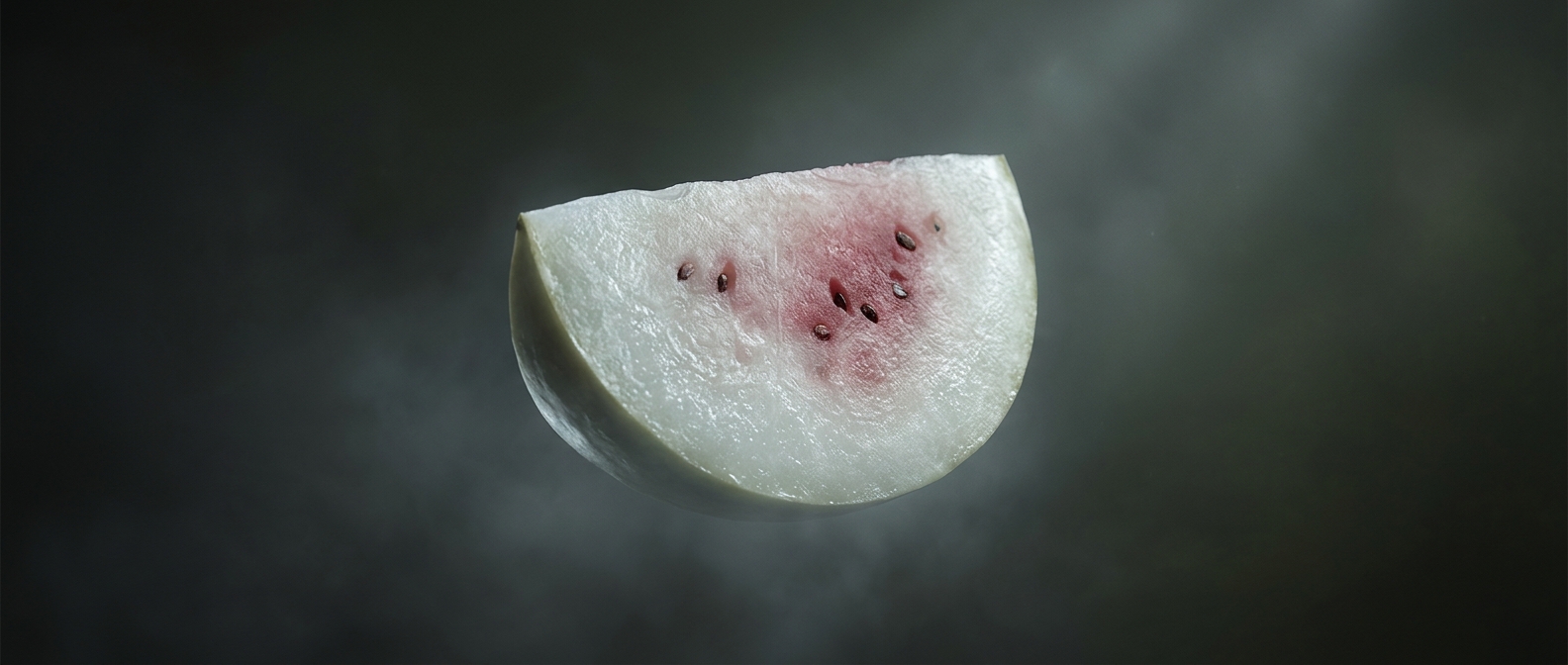
The white part was mostly flesh, not the outer rind
A watermelon’s green skin is the outer rind; the thick white layer just beneath it is also rind. In early and less-improved watermelons, the edible interior could be pale, firm, and relatively sparse, with only patches of pink or red. So the old fruit was not a modern watermelon with its colors simply reversed: it offered less sweet flesh to eat.
Each generation reflected a grower’s choices
Watermelons grown from seed vary. A farmer saving seeds from plants with more edible flesh, a sweeter taste, or a more appealing color could make those traits more common in later crops. Repeating that choice over many generations gradually changed the fruit. It was not a single transformation, but selection among ordinary differences in each harvest.
Red flesh became a conspicuous sign of the change. Its color comes largely from lycopene, the same natural pigment that colors tomatoes. Meanwhile, selection for sweetness and a softer texture made the fruit more enjoyable to eat. These traits did not have to arrive all at once: growers could favor several desirable qualities over successive generations.
A familiar fruit made through gradual change
The thick white rind still visible today is a reminder of the watermelon’s less edible interior. What changed most was the balance: more of the fruit became juicy, sweet flesh, and that flesh more often developed the red color now associated with a ripe watermelon. The modern slice is the accumulated result of many harvests in which someone chose which seeds to plant next.