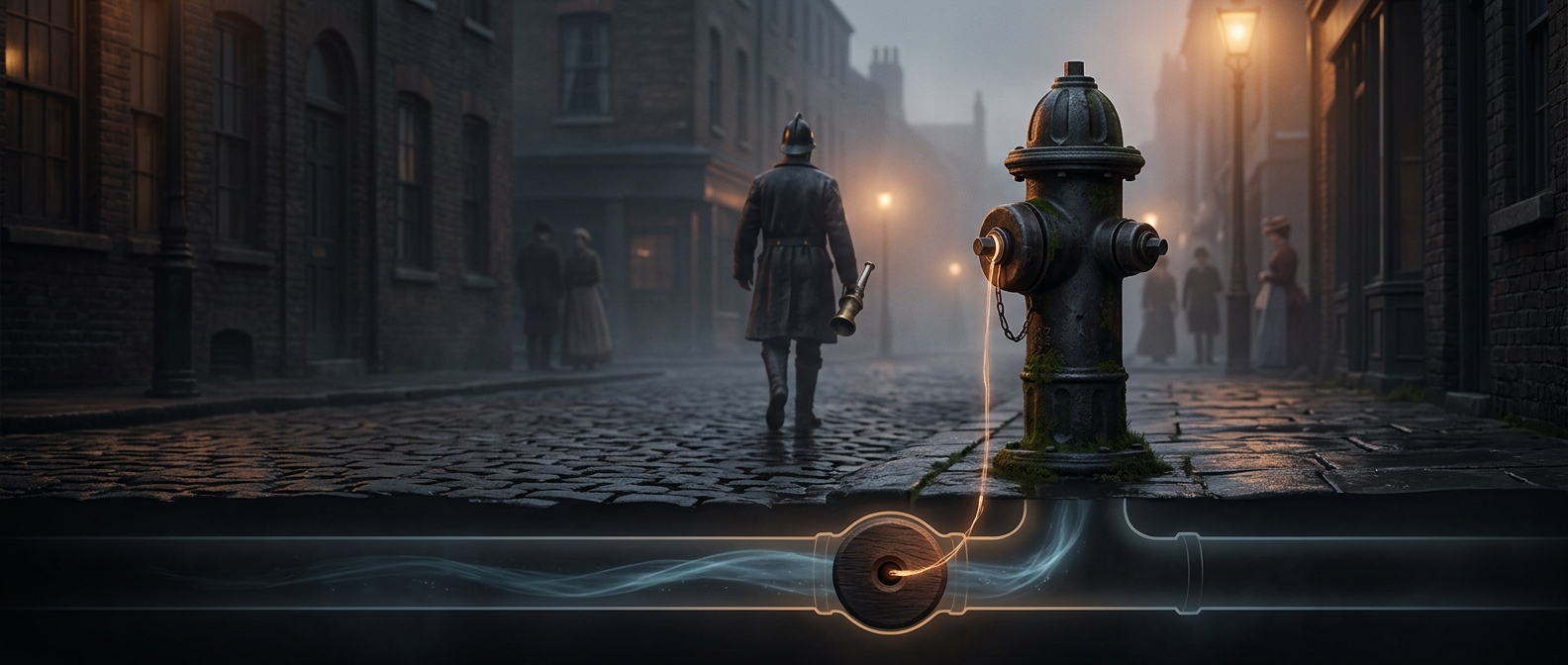
A Water Main You Could Tap Only Once
A wooden water main was not a pipe with a ready-made outlet. It was a buried trunk carrying water through the street, and reaching that water meant opening the trunk itself. During a fire, crews had to uncover the main and bore into its wooden wall to make a connection for the hose.
That turned the water system into something firefighters had to modify in the middle of an emergency. The hole gave them access, but it also interrupted the pipe’s intact surface. When the work was over, they drove in a wooden plug to close the opening and keep water in the main.
From Emergency Work to Street Fixture
The method reflects the materials cities had available: hollowed trees could serve as sections of a water-distribution network, but they could not easily provide durable outlets at every point. Instead, crews made an opening where and when they needed one. The plug was a simple repair for a system whose access point had been created on the spot.
That approach helps explain the old term “fire plug,” still used in some places for a hydrant. Modern hydrants provide a built-in connection, so firefighters can draw water without digging up and drilling into the main. The change was more than a sturdier fitting: it shifted the work of making an outlet from the fire crew to the design of the water network itself.