A patio chair became an aircraft problem
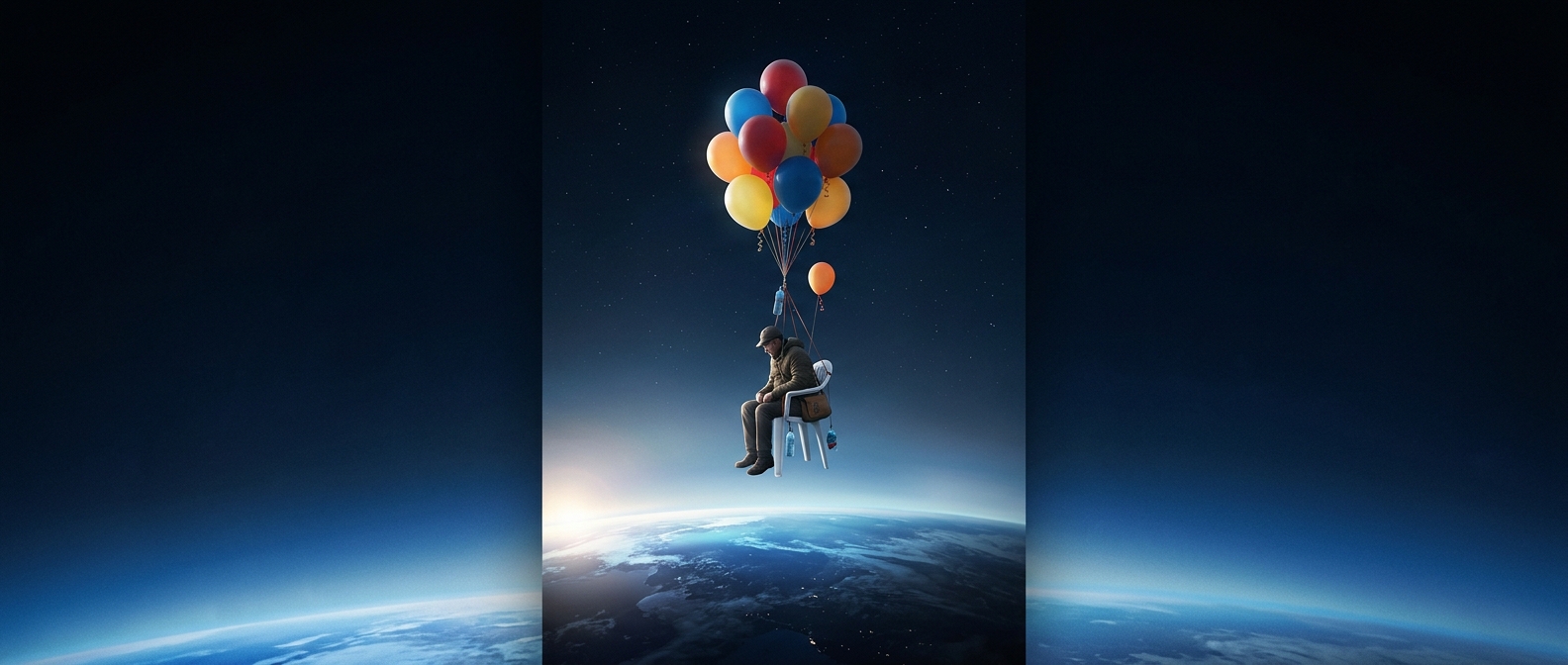
Larry Walters’s ascent began with a simple physical principle: helium-filled balloons pull upward because they displace heavier surrounding air. Tie enough of them to a chair, and their combined lift can raise a person. But unlike a powered aircraft, Walters’s improvised rig had no engine or reliable way to steer. Once it left the ground, wind and buoyancy—not a flight plan—determined where it went.
That lack of control mattered more than the homemade appearance of the craft. At 16,000 feet, the chair had climbed into airspace used by commercial planes. Aircraft moving at high speed need pilots and air-traffic controllers to know where other traffic is; an untracked person suspended beneath balloons was a hazard they could not manage like an ordinary flight.
Getting down was part of the danger
Walters carried a pellet gun so he could shoot the balloons and reduce their lift. The idea was to bring the chair back down, but puncturing balloons did not provide the controlled descent a pilot gets from an aircraft’s systems. The same upward force that had lifted him could change abruptly as balloons were popped, leaving him dependent on a precarious setup to return to the ground.
He survived, but reaching the sky did not make the flight lawful. The fine reflected a distinction that the stunt made vivid: being able to get airborne is not the same as having permission—or the means—to fly safely. A patio chair could rise into commercial airspace; it could not carry the responsibilities that come with operating there.