A new observatory became a political liability
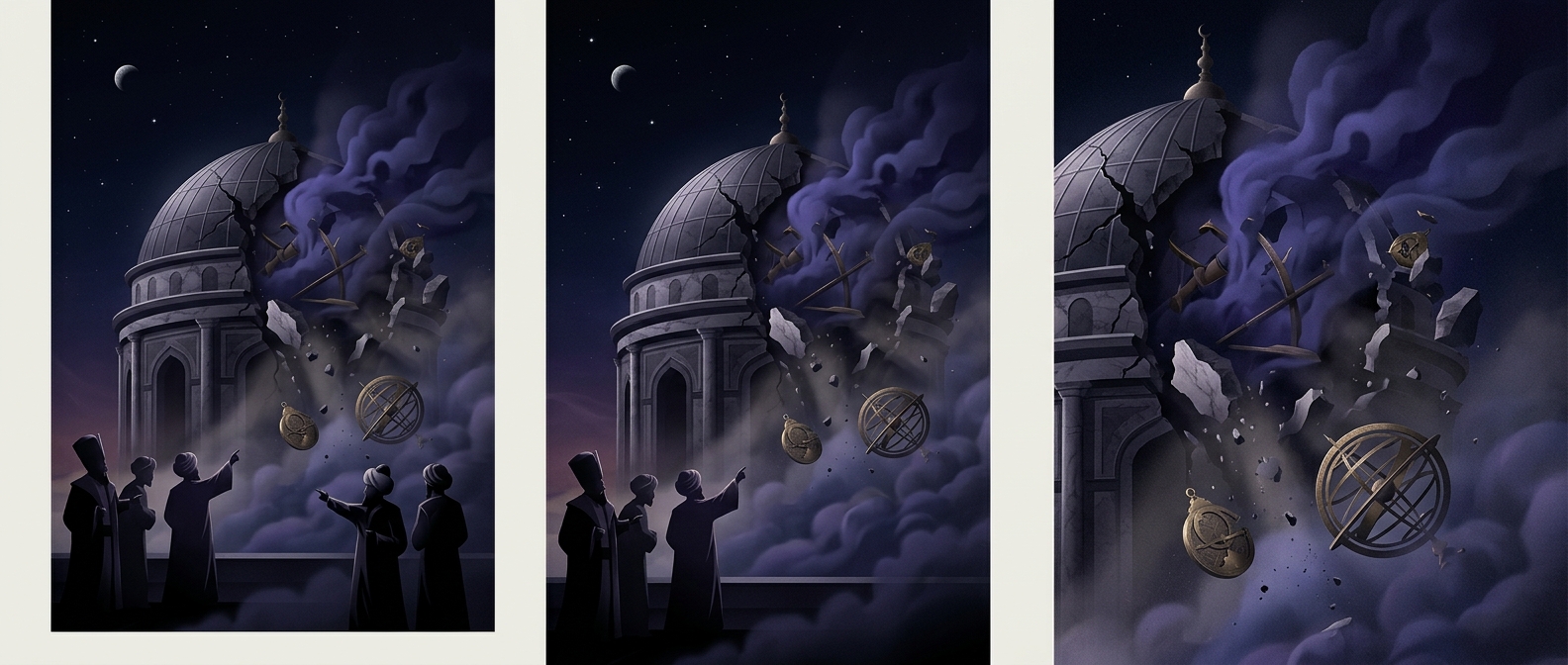
In the late 1570s, the Ottoman astronomer Taqi al-Din built an observatory in Istanbul with the sultan’s support. It was more than a place to watch the sky: its instruments and staff made sustained, organized observation possible. But an institution that depended on royal favor could be vulnerable when court politics shifted.
The comet of 1577 supplied Taqi al-Din’s opponents with a potent argument. When plague followed, they linked the two events and portrayed the observatory’s work as an offense against God. That was an accusation, not evidence that astronomy had caused either the comet or the disease. Its political force lay in giving a frightening sequence of events a human target—and making the observatory, rather than an abstract misfortune, answerable for it.
Why the building could be sacrificed
A sultan’s protection could establish an ambitious project, but it could also be withdrawn. The observatory was a visible institution associated with its patron and its court rivalries; demolishing it offered a decisive way to end the controversy. The order turned a dispute over the meaning of celestial events into the destruction of the place where they were being studied.
That did not make the comet responsible for the observatory’s fate in any physical sense. The chain ran through people: a disaster intensified fear, political opponents shaped that fear into a charge, and the ruler acted on it. The observatory’s destruction shows how quickly scientific work could become entangled with the politics of interpreting an omen.