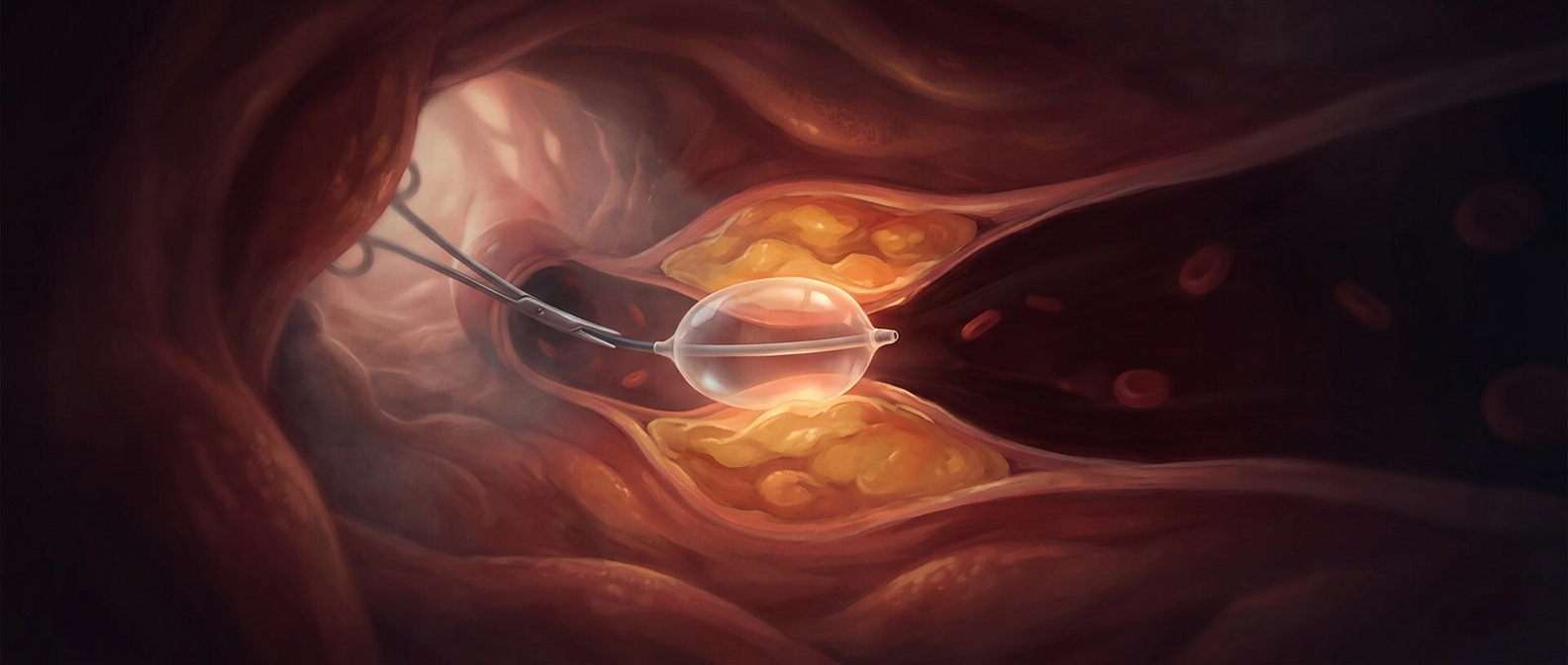
A Balloon Makes Room Without Removing the Blockage
Artery-narrowing plaque is a buildup of fatty material and other substances in the vessel wall. A balloon catheter—a thin, flexible tube with a small inflatable tip—can reach a tight spot through a blood vessel, avoiding the need to open the chest to get to a coronary artery.
Doctors guide the deflated balloon to the narrowing and inflate it briefly. The pressure stretches the artery and pushes plaque outward against its wall, widening the channel for blood. The balloon does not scoop out the buildup; it reshapes the narrowed passage.
A Brief Inflation, a Lasting Tradeoff
While inflated, the balloon temporarily restricts blood flow through that section. Once it is deflated and withdrawn, blood can pass through the widened area again. The procedure is called balloon angioplasty, and imaging helps the medical team position the catheter and check the result.
Widening the artery does not guarantee that it will stay open: the vessel can narrow again as it heals. For that reason, doctors may place a stent, a small mesh tube that supports the artery from within. The key change is the route in: instead of exposing the heart surgically, clinicians can work through a narrow vessel and treat the blockage from inside the artery itself.