A grid turns distance into a ruling
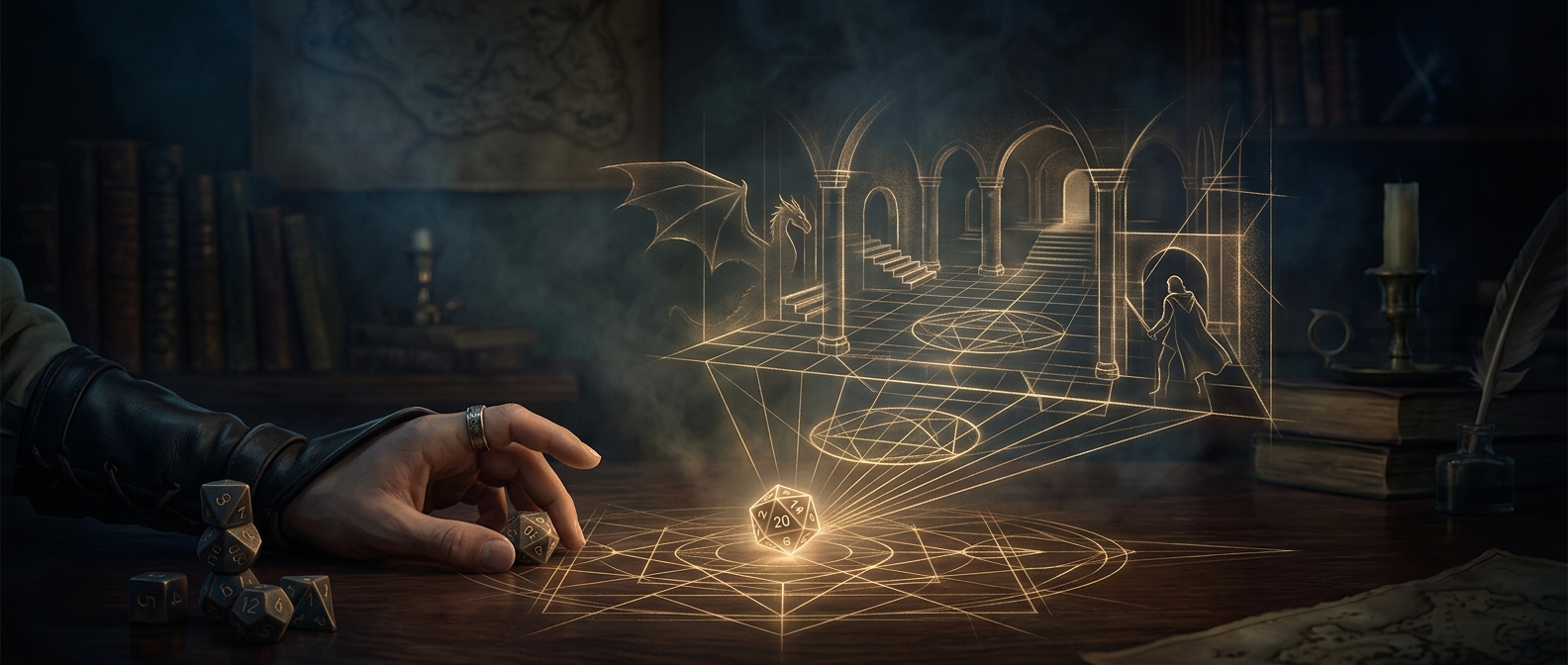
Dungeons & Dragons describes spells in ordinary geometric terms: a burst might spread a certain distance from a point, while a line or cone covers a different shape. But many groups place miniatures on a square grid, where each square stands for a patch of the imagined world. The grid makes movement and positioning easier to track; it also forces a continuous shape onto a checkerboard.
That mismatch matters when a circular spell reaches across the map. Its radius is measured from the spell’s point of origin, not simply by counting a neat number of squares in every direction. A creature near the edge may occupy a square that the circle clips, while another creature at a similar-looking distance may sit just outside it. The table has to decide how the rules’ geometric description maps onto those squares.
The map is a tool, not the battlefield
There is no single visual trick that resolves every edge case. A group can use a measured radius, draw or imagine the spell’s boundary, or adopt a consistent grid convention. The important thing is applying the same approach when the same shape comes up again; otherwise, a creature’s safety can hinge on which player is doing the counting.
This is a small example of tabletop role-playing’s division of labor: the rules supply a model, and the people at the table interpret it together. A square grid offers speed and clarity, but it cannot reproduce every curve without compromise. In a dragon fight, that compromise can decide whether a spell catches one extra target—so a few imaginary feet can become a real tactical choice.