The puzzle is about planning, not just reaching
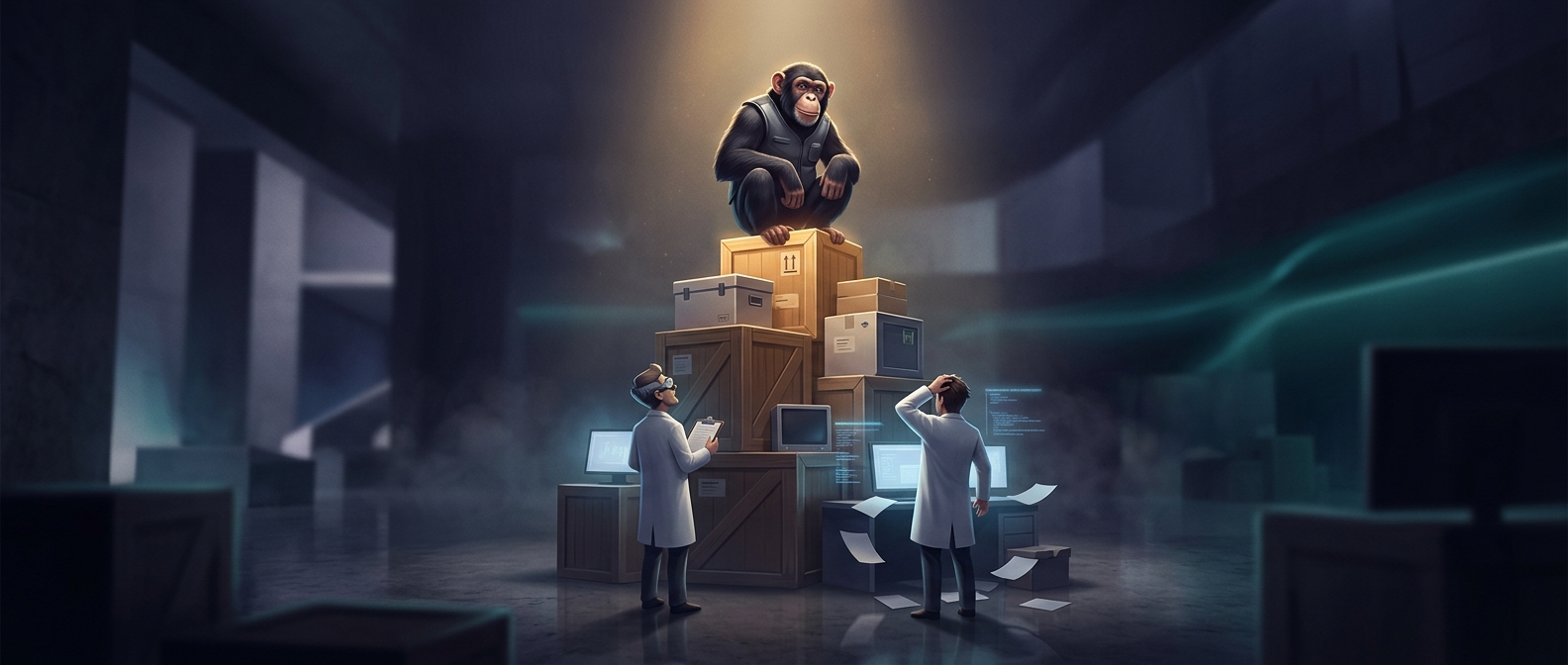
When a banana hangs beyond arm’s reach, an unstacked box is not much help. The chimpanzee must connect several steps: move a box beneath the fruit, place another box on top if needed, and climb the resulting platform. The goal stays fixed while the arrangement of the room changes.
That makes the task a simple test of means–end reasoning: recognizing that an action has value because it helps bring about a later result. A box is no longer merely something to sit on or push around; in that moment, it can serve as a step toward the banana.
How objects become part of the solution
The crucial shift is from acting directly on the goal to changing the conditions around it. Reaching fails, so the chimp moves an object; one box is too low, so it adds another. Each move alters what is possible next. The solution depends on using the objects’ physical properties—especially their height and stability—rather than simply repeating an unsuccessful reach.
This does not require imagining every step in a human-like verbal plan. A chimp can respond to the setup, try an arrangement, and adjust it as the result becomes clear. What the puzzle reveals is practical flexibility: the animal can treat nearby objects as tools and reorganize them to overcome an obstacle.
Why the room matters
The boxes are not background scenery. They supply the missing height, and their placement determines whether climbing can work. In that sense, problem-solving happens through a combination of the chimp’s actions and the environment it reshapes.
The memorable part is not simply that the chimp can climb. It is that the banana becomes reachable only after the animal turns an ordinary box—and then the room’s arrangement—into part of the answer.