A stumble threatens more than balance
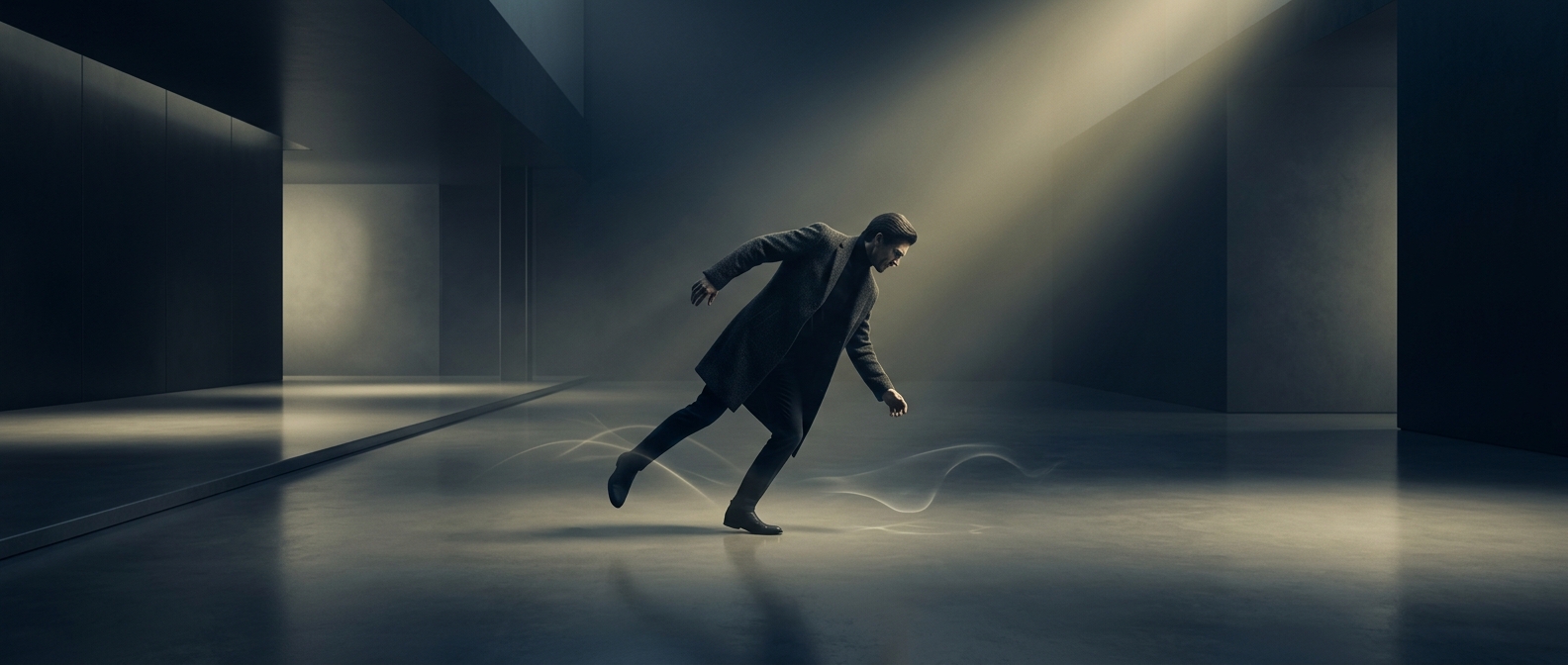
A trip is a small public test of competence: for a moment, the body fails to do something that usually feels automatic. When other people are watching, that awkwardness can sharpen the urge to explain what happened. Pointing to a raised edge or slick patch makes the incident about a temporary condition, rather than a lasting flaw in one’s coordination.
Psychologists call this kind of pattern self-serving attribution: people often explain setbacks in ways that protect their view of themselves. It need not be a calculated excuse. The explanation may arrive almost immediately, as the mind searches for a cause that makes the event feel understandable and less embarrassing.
Why the floor makes a handy culprit
The surface is visible, easy to point to, and outside the walker’s control. That makes it a convenient explanation for an abrupt failure, especially when the alternative—“I wasn’t paying attention” or “I lost my balance”—feels like a judgment about personal ability. Blaming the floor can also redirect the attention of onlookers from the fall itself to a practical question: was there something unsafe underfoot?
That shift can serve a useful purpose. If a rug really is curled up or a step is uneven, naming the hazard may help prevent another person from falling. The explanation becomes misleading only when it replaces attention to what actually happened. A person can trip because of a floor hazard, a lapse in attention, a balance problem, or some combination; protecting one’s pride does not establish which cause was responsible.
An explanation can save face—and still be checked
The instinct is revealing because it shows how quickly people connect a momentary mistake to a broader fear about who they are. A stumble does not prove someone cannot walk; it is usually just a stumble. But when embarrassment makes an outside cause feel especially attractive, pausing to inspect the spot can separate a real hazard from a face-saving story.