What “straight” means at a joint
A joint’s angle is only one part of how it moves. At the elbow and knee, muscles pull on the bones to straighten the limb, while the joint’s shape and surrounding tissues limit how far it can go. The endpoint is not necessarily identical for everyone: some people’s elbows or knees naturally rest a little beyond a visually straight line.
When more motion becomes strain
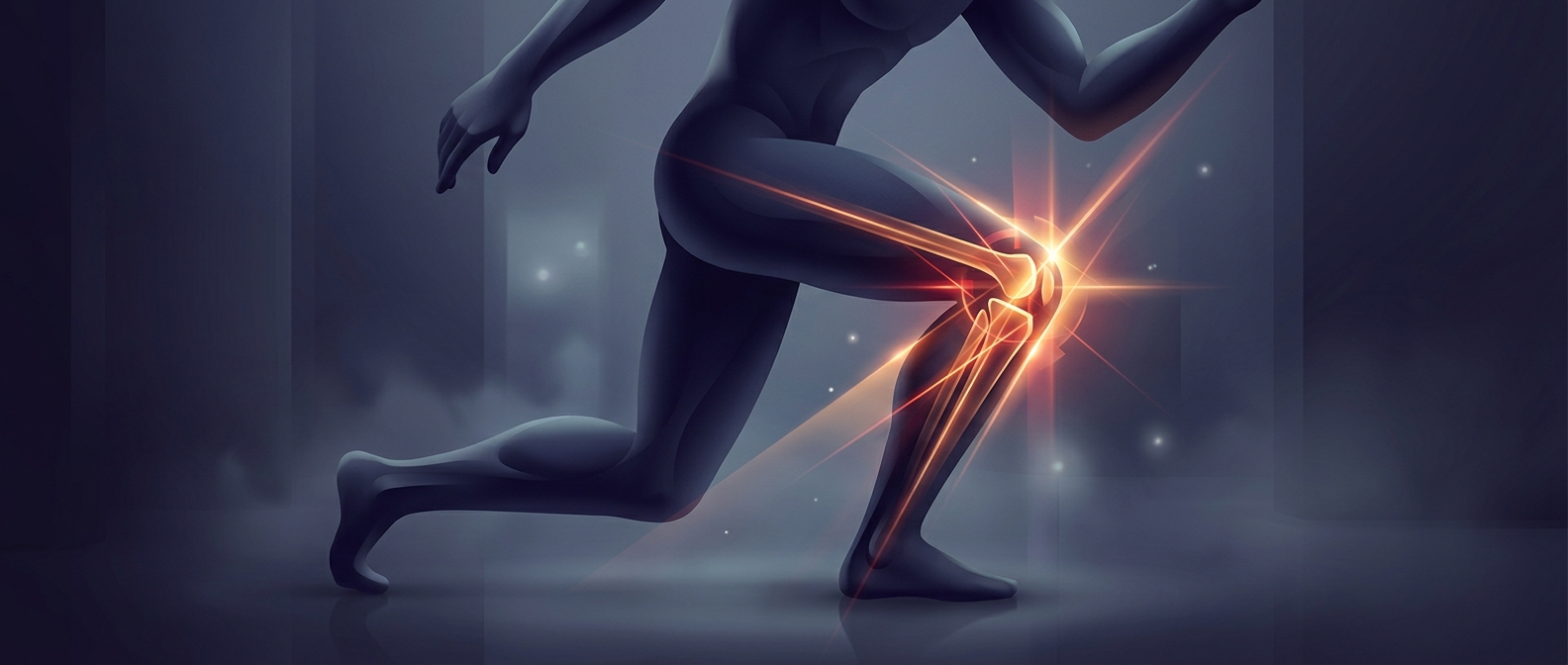
Forcing past a joint’s comfortable range does not improve the basic action of straightening. It can instead load the structures that check excessive movement, including ligaments and the joint capsule—the tough tissue enclosing the joint. At the knee, for example, leaning back into a locked position can shift stress onto these passive supports rather than keeping the movement controlled by the muscles.
That is why anatomical terms describe direction, not an instruction to chase the largest possible angle. Extension is the movement toward straight; hyperextension is movement beyond the usual straight position. In exercise or everyday movement, control and comfort matter more than pressing into an extreme endpoint. A joint that repeatedly hurts, swells, or feels unstable warrants attention rather than more force.