Why a simple movement takes a team
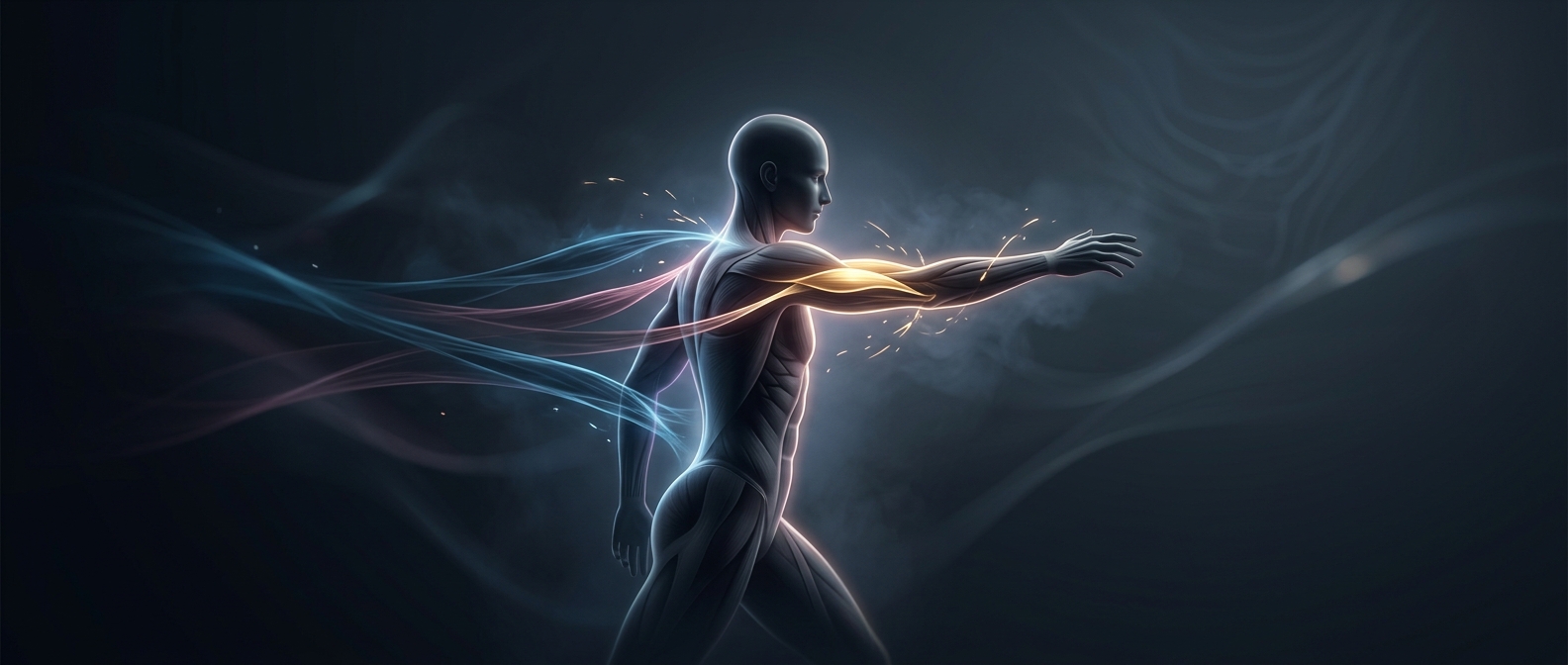
When you bend your elbow to lift a mug, the biceps is a prime mover: a muscle that supplies much of the force for the main action. But the arm does not move smoothly on the biceps alone. Other muscles help produce the same motion, while still others steady the shoulder and wrist so the force goes where you intend.
Muscles that assist the prime mover are called synergists. Their contribution may be small compared with the main muscle’s, but it can make a movement more controlled and efficient. The nervous system coordinates their activity, adjusting how strongly each muscle contracts as the task changes.
Assistance can mean holding still
Not every helper muscle creates visible motion. Some contract to stabilize a joint or body part, giving the prime mover a firm base. As you raise a cup, for example, muscles around the shoulder help keep the upper arm positioned while the elbow bends. Muscles in the hand and forearm also help maintain a secure grip.
A muscle can even help by limiting an unwanted movement. If the prime mover’s pull would otherwise make a joint wobble or shift, other muscles can counter that tendency. This balancing work is often too subtle to notice, but without it, the same action could feel shaky or send the limb off course.
Why the movement feels like one action
The brain does not need to issue a separate conscious command for every muscle. It coordinates groups of muscles to meet a goal—lifting, reaching, or holding—while sensory feedback helps adjust the effort. The precise lineup depends on the task: lifting a light cup calls for a different amount of force and stabilization than lifting a heavy one.
That teamwork explains why the muscle you notice is not the whole story. A smooth lift is the visible result; behind it, assisting muscles are adding force, controlling joints, and keeping the rest of the body steady.