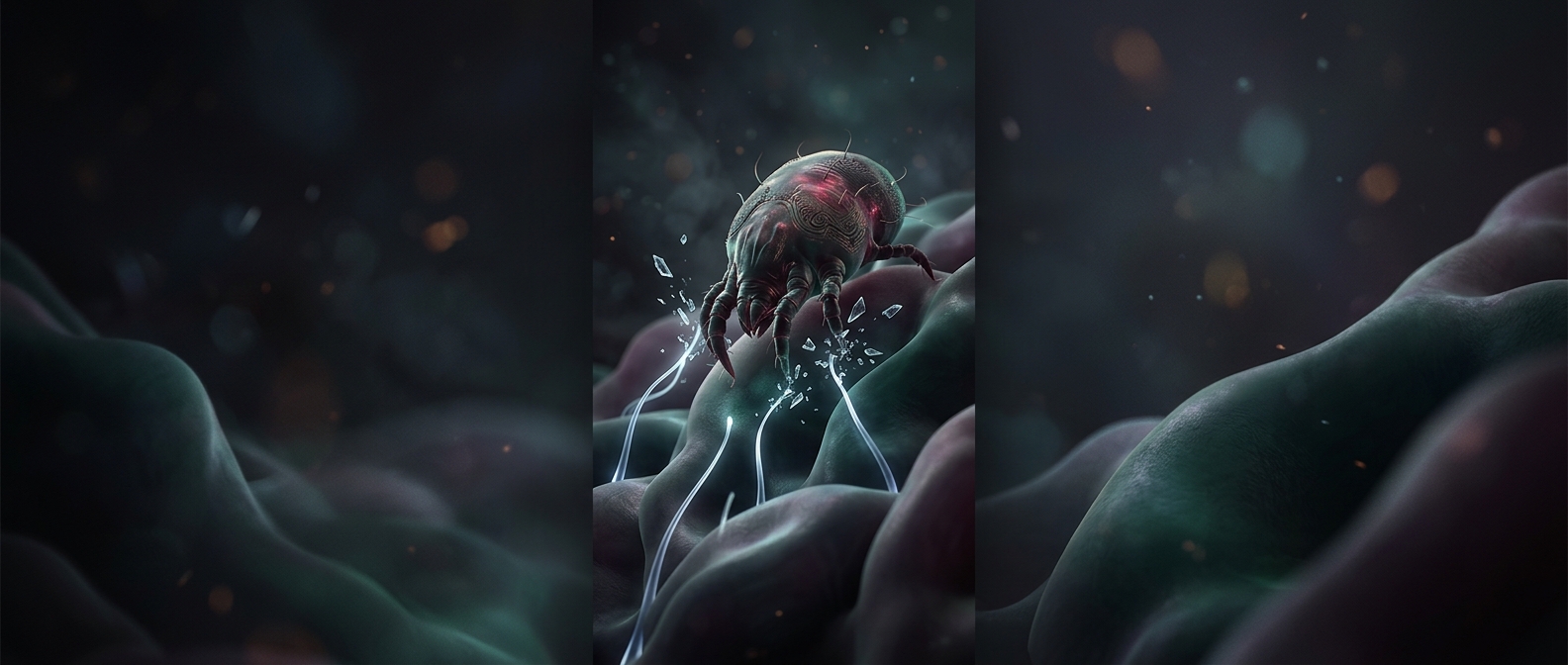
How treatment resistance takes hold
Scabies mites live in the outer layer of human skin, where they burrow and lay eggs. A treatment exposes mites to a lethal dose, but it may not affect every mite equally. If a mite carries a genetic variation that helps it survive, it is more likely than other mites to remain alive and reproduce. Its offspring may inherit that advantage. Repeated exposure can therefore shift a mite population toward one that is harder for the same drug to control—a process called drug resistance.
Why a failed treatment is not always resistance
Scabies can be difficult to clear even when mites remain susceptible. Treatment may miss patches of skin, eggs may hatch after an application, or an untreated close contact may pass mites back to someone who has been treated. Itching can also continue for a while after mites are gone, because the skin is still reacting to them. These possibilities matter: persistent symptoms alone do not prove that resistance has developed.
A harder-to-break chain of transmission
Resistance becomes especially consequential when an infestation spreads through households or other close-contact settings. If the same treatment no longer reliably kills mites, more may survive long enough to spread to new people. Breaking that chain can then require careful diagnosis, correct use of treatment, and attention to close contacts—not simply repeating the same approach. The key change is in the population: each round of treatment can leave behind a larger share of mites able to withstand it.