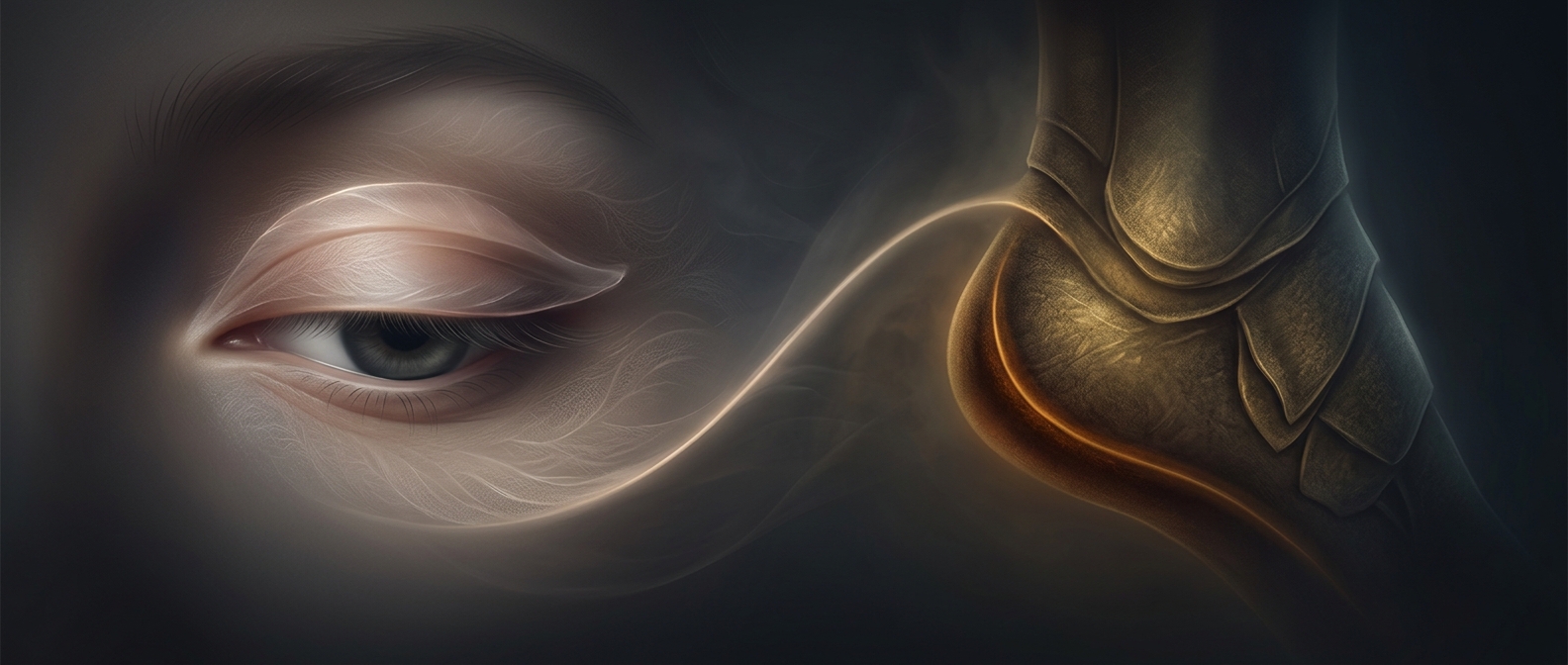
Two Jobs, Two Different Kinds of Skin
Eyelids and heels are both covered by skin, but they face opposite mechanical demands. An eyelid must fold and slide across the eye repeatedly, so its skin is exceptionally thin and flexible. The heel must tolerate pressure and rubbing, so its surface is built to resist abrasion—the gradual wearing away caused by friction.
The visible difference comes largely from the outermost skin layer, the stratum corneum. It is made of flattened, dead cells packed with keratin, a tough structural protein. On the sole of the foot, this layer is naturally thick; repeated pressure and friction can make it thicken further, forming a callus. The heel also has a cushion of soft tissue beneath the skin, which helps absorb force. The keratin layer protects the surface, while the deeper cushion helps manage impact.
How Repeated Pressure Changes the Surface
Skin is continually renewed. Cells form in deeper layers, move outward, and eventually flake away. When a spot on the foot is exposed to persistent rubbing or pressure, the skin can produce and retain a thicker protective outer layer. That response spreads the wear across more material, much as adding a sacrificial surface can protect what lies beneath.
This protection has limits. A modest callus can reduce surface wear, but excessive thickening may crack or become painful, especially when pressure is concentrated in one spot. It is not simply a sign that the heel needs still more armor; the distribution of pressure matters too.
The contrast is a practical tradeoff: the eyelid is built for low-resistance movement, while the heel’s surface is built to endure contact. The heel’s toughness is not what absorbs every step by itself—the underlying padding helps—but it keeps repeated contact from quickly wearing through the skin.