Why sweat can keep a human moving
Most mammals shed heat mainly by panting: rapid breathing moves air over wet surfaces in the mouth and airways, where evaporation cools the body. Humans rely heavily on a different route. Eccrine glands—tiny structures spread across much of the skin—release watery sweat. When that water evaporates, it takes heat from the skin with it, helping cool the blood circulating near the surface.
That system can work across a large area of the body without requiring an animal to stop moving. Fur can make evaporation less effective, and many mammals have fewer sweat glands or depend more on panting. Humans’ relatively sparse body hair and widespread sweating help make sustained activity in heat possible, though they do not make us immune to overheating.
The advantage—and its limits
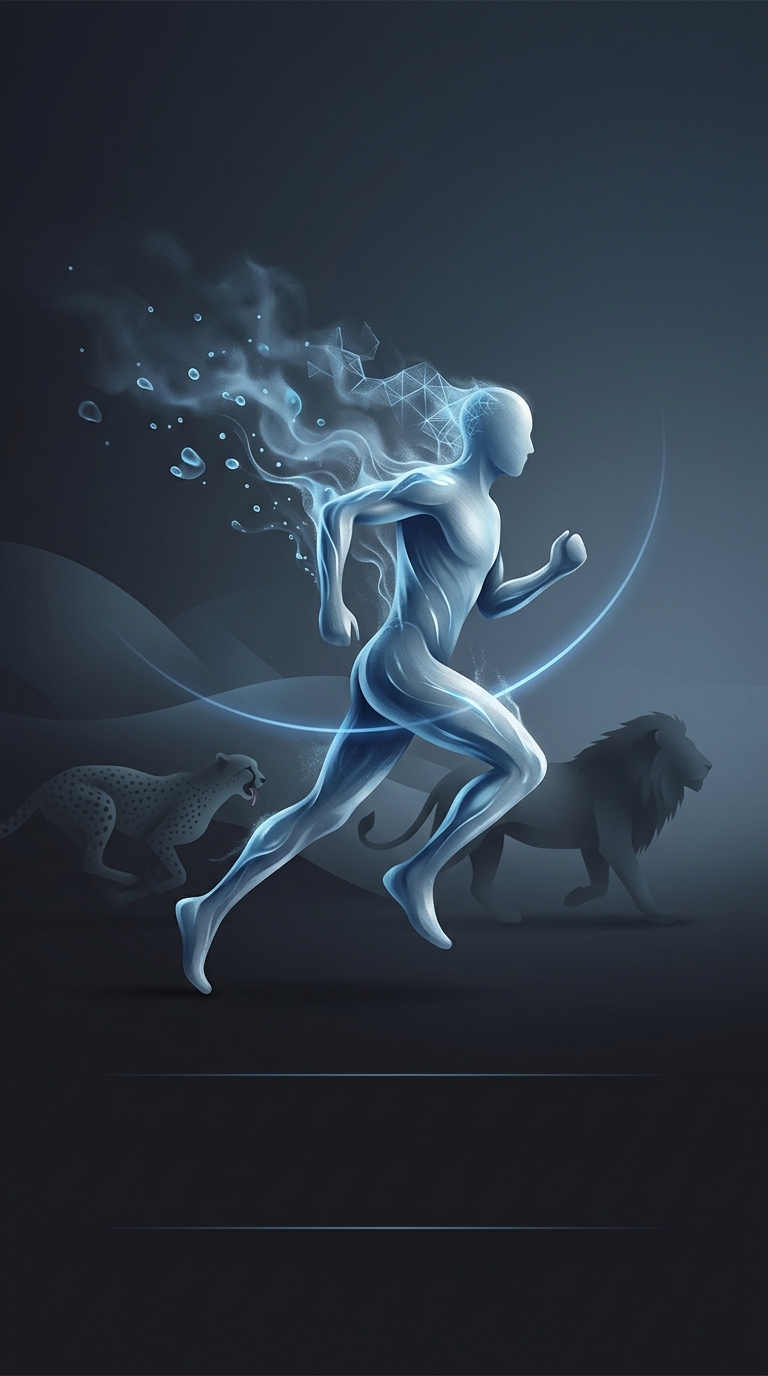
This cooling capacity is one reason researchers have proposed that early humans could pursue prey over long distances. A fast-running animal may overheat during repeated bursts of effort, while a human can keep moving at a slower pace and continue shedding heat through sweat. This strategy, called persistence hunting, is a plausible account of how endurance and cooling could work together—not proof that all early humans hunted this way or that hunting was the sole reason sweating evolved.
Sweat only cools effectively when it evaporates. In humid air, or beneath clothes that trap moisture, it may simply run off, carrying water and salts away without removing as much heat. That is why prolonged exertion in hot conditions can still lead to dehydration and dangerous overheating; replacing fluids and taking breaks matter even for a body built for endurance.
The same mechanism operates during a tense call: stress can activate sweating, but evaporation—not the sweat itself—is what cools the skin. A damp shirt may be an awkward side effect, while the underlying system is still doing the practical work of moving heat out of the body.