Why a False Call Can Feel Real
Swatting exploits an information gap. The caller supplies a dramatic account to emergency dispatchers, but the people who receive it are responding to the account, not witnessing the caller’s deception. A report that sounds urgent can therefore shape the first decisions made at the scene before anyone inside the home has a chance to explain what is happening.
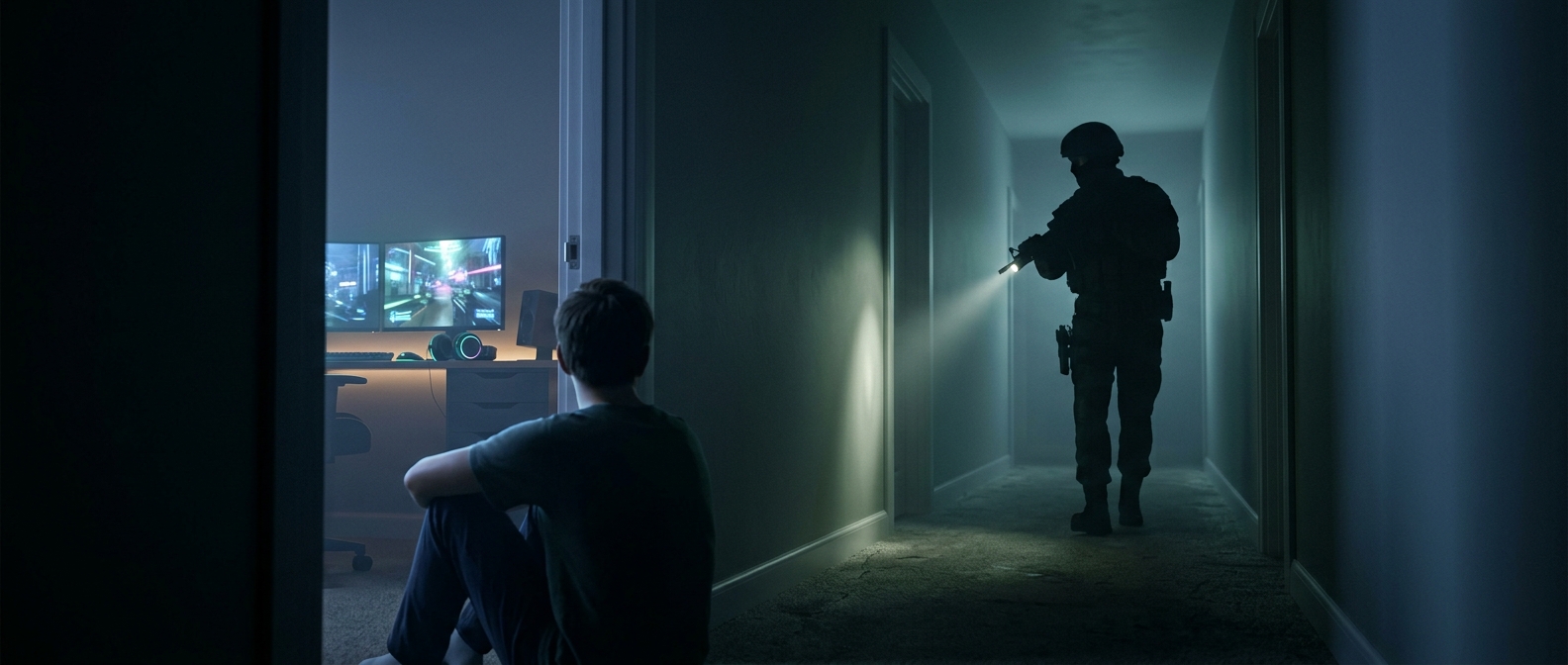
For officers, uncertainty favors caution: they may have to treat a reported threat as genuine until they can assess it. For the person at home, the same uncertainty runs in the opposite direction. They may be startled awake or interrupted in an ordinary activity, with no warning that anyone has reported an emergency. The two sides enter the encounter with radically different information.
Fear Makes the Mismatch More Dangerous
A sudden confrontation with armed responders can trigger the body’s threat response: attention narrows, heart rate rises, and it becomes harder to process instructions quickly. That reaction is not evidence of guilt or defiance; it is a predictable response to danger as the person perceives it. Yet hesitation or confusion can be misread when responders are working from an alarming report and trying to control an uncertain scene.
The harm does not require the caller to be physically present. The deception recruits a real emergency system and places the risk on people who did not choose to take part: the resident, responding officers, neighbors, and others nearby. Even after the mistake becomes clear, the shock and loss of trust can remain. The chilling consequence is that a routine night at home can be turned into a high-stakes encounter by a story told somewhere else.